CM Sai Meets Padma Shri Folk Singer Usha Barle in Raipur
Synopsis
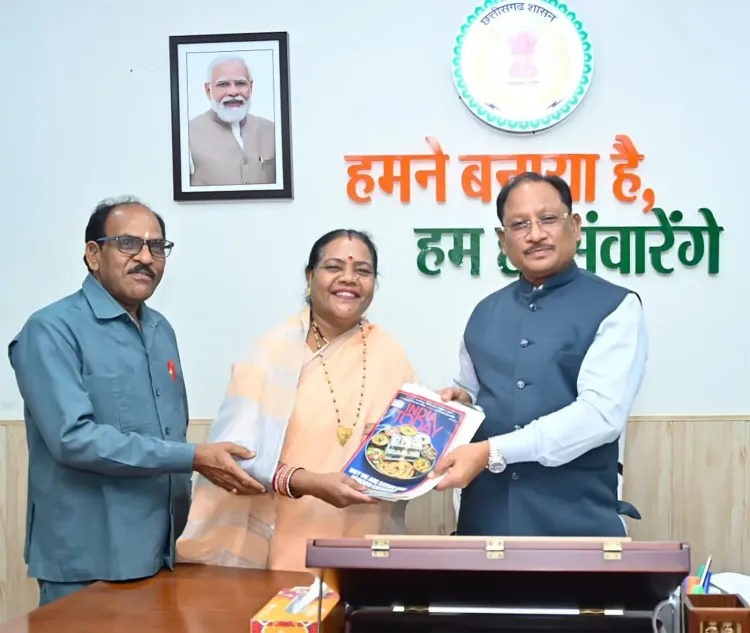
Chhattisgarh Chief Minister Vishnu Deo Sai met Padma Shri Pandavani folk singer Usha Barle at his Raipur residence on 7 July 2026. The two discussed conservation and promotion of the state's folk culture and performing arts traditions.
Key Takeaways
CM Vishnu Deo Sai hosted Padma Shri awardee and Pandavani singer Usha Barle at his official residence in Raipur on 7 July 2026 .
Discussions focused on the preservation and promotion of Chhattisgarh's folk culture and performing arts .
Pandavani is a traditional oral performance form from Chhattisgarh that narrates Mahabharata episodes through song and recitation.
Usha Barle is one of the state's most celebrated folk artists and has received the Padma Shri , India's fourth-highest civilian honour.
No specific policy announcements or scheme commitments were confirmed from the meeting.
The engagement reflects a broader pattern of Indian state governments consulting Padma-recognised artists to shape cultural heritage policy.
Chhattisgarh Chief Minister Vishnu Deo Sai received a courtesy call from Padma Shri-awardee and renowned Pandavani folk singer Usha Barle at his official residence in Raipur on Monday, 7 July 2026. The meeting centred on the preservation and promotion of Chhattisgarh's living folk culture and performing arts traditions.
Context
In his post on X, CM Sai described the visit as a 'saujanya bhent' (courtesy meeting), noting that discussions touched on 'lok sanskriti aur kala ke sanrakshan evam samvardhan' — the conservation and enrichment of folk culture and art. Usha Barle is one of Chhattisgarh's most celebrated exponents of Pandavani, a traditional oral performance form that narrates episodes from the Mahabharata through song and dramatic recitation.
Barle's Padma Shri recognition places her among a select group of folk artists honoured at the national level for sustaining indigenous performing traditions that might otherwise face decline in the face of urbanisation and changing audience tastes.
Policy Backdrop
The Central Ministry of Culture has, since the 2010s, channelled recognition and limited grants to folk and tribal artists through national awards including the Padma series, providing a degree of institutional visibility to performers like Barle. State governments across India, particularly those with significant tribal and oral-performance heritage, have increasingly complemented these central efforts with their own cultural promotion frameworks.
Chhattisgarh, home to a large tribal population and a rich constellation of folk forms — from Pandavani and Raut Nacha to Karma and Saila — has a direct stake in ensuring these traditions remain viable. Cultural preservation in the state is also tied to identity-building and heritage tourism objectives that successive governments have pursued.
Stakeholders and Impact
The meeting brings together two significant voices in Chhattisgarh's cultural ecosystem: the state's political leadership under CM Sai, who assumed office in December 2023 following the BJP's assembly election victory, and a grassroots practitioner who has spent decades keeping a centuries-old oral tradition alive. For folk artists and cultural organisations across the state, high-visibility engagements of this kind signal that the government views heritage preservation as a policy priority.
Pandavani performers, many of whom operate without institutional backing, stand to benefit if such consultations translate into training infrastructure, performance platforms, or dedicated budgetary support at the state level.
What's Next
While no specific commitments or scheme announcements have been confirmed from the meeting, the discussion is likely to inform the state government's cultural agenda in the months ahead. Observers will watch for any budgetary allocations toward Pandavani training centres, inclusion of folk artists in national cultural festivals, or new state-level honours for traditional performers. The engagement underscores a broader pattern in which Indian state governments use direct consultations with Padma-recognised artists to shape culturally grounded policy, blending heritage conservation with the state's wider development narrative.
Point of View
Such engagements serve both a governance and a political signalling function. The broader arc here is one of Indian states increasingly treating intangible cultural heritage — oral traditions, folk performance, tribal art — as assets requiring active institutional stewardship rather than passive survival. Whether this meeting produces concrete policy outcomes will determine if it amounts to more than optics.
NationPress
7 Jul 2026
Frequently Asked Questions
Who is Usha Barle and why is she significant?
Usha Barle is a renowned Pandavani folk singer from Chhattisgarh who has been awarded the Padma Shri, India's fourth-highest civilian honour, for her contributions to traditional performing arts. She is one of the foremost exponents of Pandavani, an oral tradition that narrates Mahabharata stories through song and dramatic performance.
What did CM Vishnu Deo Sai and Usha Barle discuss?
According to CM Sai's post on X, the two discussed topics related to the conservation and promotion of Chhattisgarh's folk culture and arts. No specific policy decisions or scheme announcements were confirmed from the meeting.
When did Vishnu Deo Sai become Chief Minister of Chhattisgarh?
Vishnu Deo Sai was sworn in as Chief Minister of Chhattisgarh in December 2023 after the BJP won the state assembly elections.
What is the government doing to preserve Chhattisgarh's folk arts?
The Central Ministry of Culture has provided recognition and limited grants to folk artists through awards like the Padma Shri since the 2010s. State governments, including Chhattisgarh's, have held consultations with artists to discuss heritage preservation, though specific new schemes from this particular meeting have not been announced.