CM Sai Hails Padma Shri for Bastar's Godbole Couple
Synopsis
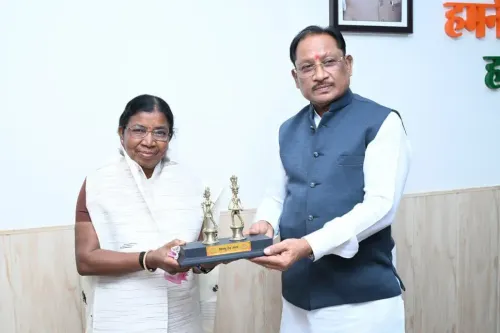
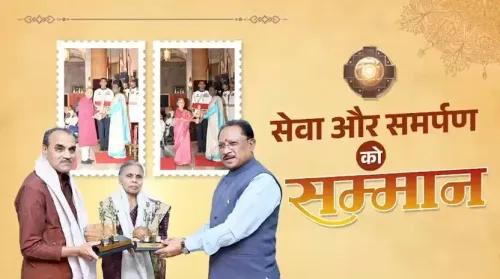
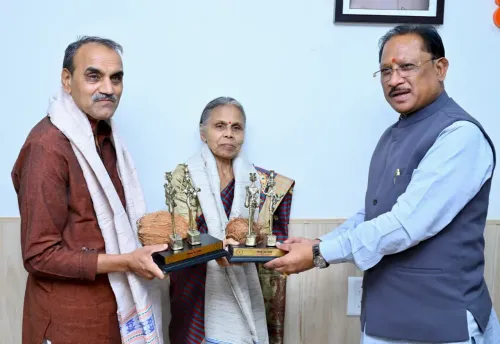
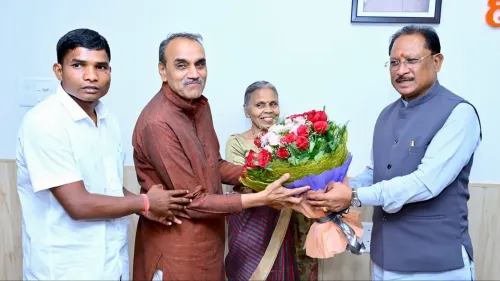
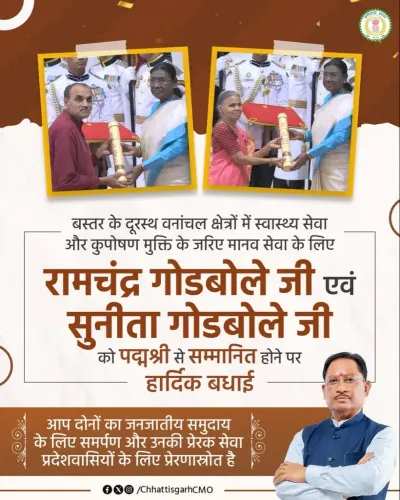
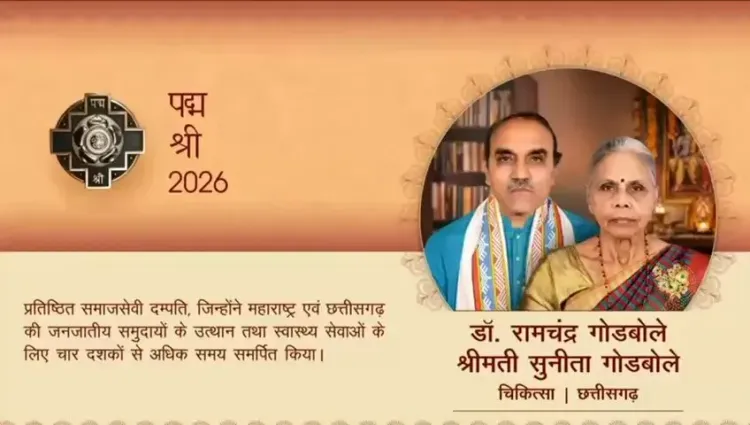
Chhattisgarh Chief Minister Vishnu Deo Sai hailed the Padma Shri conferred by President Draupadi Murmu on Dr. Ramchandra Godbole and Smt. Sunita Godbole, who spent decades delivering free healthcare and nutrition support to tribal communities in remote Bastar through the Vanvasi Kalyan Ashram.
Key Takeaways
President Draupadi Murmu conferred the Padma Shri on Dr.
Ramchandra Godbole and Smt.
Sunita Godbole for decades of selfless medical service in Bastar .
Chief Minister Vishnu Deo Sai called the honour a matter of immense joy and pride for all of Chhattisgarh .
The Godbole couple worked through the Vanvasi Kalyan Ashram , providing free treatment, malnutrition relief, and health awareness in the remote town of Barsur .
Bastar has historically lacked formal healthcare infrastructure due to dense forests, difficult terrain, and security challenges.
The Padma Shri is India's fourth-highest civilian honour, awarded annually by the President for distinguished service.
The recognition underscores a broader national pattern of using civilian awards to spotlight grassroots contributors in tribal Scheduled Areas.
Chhattisgarh Chief Minister Vishnu Deo Sai on Monday, 25 May 2026 congratulated Dr. Ramchandra Godbole and Smt. Sunita Godbole after President Draupadi Murmu conferred the Padma Shri on the couple for decades of selfless medical service in the remote tribal heartland of Bastar, calling the honour a matter of immense pride for the entire state of Chhattisgarh.
Context
Posting in Hindi on X, Chief Minister Sai described the recognition as 'समूचे छत्तीसगढ़ के लिए अत्यंत हर्ष और गौरव का विषय' — 'a matter of immense joy and pride for the whole of Chhattisgarh.' He praised the Godbole couple for presenting 'an extraordinary example of selfless medical service, health awareness and humanity' in the distant tribal regions of Bastar over many decades. The post was addressed jointly to the Rashtrapati Bhavan handle, signalling the Chief Minister's acknowledgement of the presidential conferment.
The Padma Shri, India's fourth-highest civilian honour, is awarded annually by the President to individuals who have rendered distinguished service in their respective fields. The award for the Godbole couple falls under the broad category of social work and public health.
Policy Backdrop
Bastar, a sprawling region in southern Chhattisgarh, has historically faced severe shortfalls in formal healthcare infrastructure owing to its dense forest cover, difficult terrain, and long-standing security challenges. Successive governments have struggled to retain trained medical professionals in these Scheduled Areas, making voluntary, community-embedded healthcare workers particularly consequential.
Dr. Ramchandra Godbole and Smt. Sunita Godbole anchored their work through the Vanvasi Kalyan Ashram, a civil society organisation active in tribal welfare, education, and health across central India. Operating out of Barsur — a remote settlement in the forested interiors of Bastar — the couple provided free treatment, tackled malnutrition, ran health-awareness drives, and built community trust over a span described by the Chief Minister as encompassing 'their entire lives.' Civilian honours have periodically spotlighted such grassroots contributors working in geographically and administratively challenging tribal belts, reinforcing a national narrative of inclusive development.
Stakeholders and Impact
The primary beneficiaries of the Godboles' work are the tribal communities of Bastar — populations that have historically had limited access to qualified doctors, diagnostic facilities, or nutrition support. Chief Minister Sai specifically cited free treatment, malnutrition relief, and 'jan-vishwas nirman' (community trust-building) as pillars of the couple's contribution, highlighting that their service model is both 'inspirational and worthy of emulation.'
The recognition also carries symbolic weight for voluntary organisations such as the Vanvasi Kalyan Ashram, which operates in areas where state capacity is stretched. The award lends institutional credibility to the model of civil-society-led primary healthcare in tribal districts and may encourage similar long-term commitments from other health workers and volunteers in comparable regions.
What's Next
Chief Minister Sai's public tribute signals that the Chhattisgarh government is likely to amplify the Godboles' story as part of its broader communication around tribal welfare and inclusive development. Attention will now turn to whether the state follows up with concrete policy measures — such as expanding mobile health units or nutrition programmes in Bastar and other tribal districts — that build on the voluntary model the Godbole couple has demonstrated. The Padma cycle also invites scrutiny of other unrecognised grassroots contributors in Scheduled Areas, and advocacy groups are expected to use this moment to press for greater state investment in rural and tribal healthcare infrastructure.
Point of View
Reinforcing the BJP's broader 'sabka saath' narrative ahead of any future electoral cycle in the state. By foregrounding the Vanvasi Kalyan Ashram's role, the post also implicitly validates the contribution of RSS-affiliated civil society organisations in filling state capacity gaps in Scheduled Areas. The Padma recognition of long-serving volunteers in conflict-affected tribal belts follows a discernible pattern of the central government using civilian honours to draw attention to areas of persistent developmental deficit. Whether this symbolic moment translates into expanded state investment in mobile health or nutrition infrastructure in Bastar will be the real measure of political intent.
NationPress
9 Oct 2026
Frequently Asked Questions
Who are Dr. Ramchandra Godbole and Sunita Godbole?
Dr. Ramchandra Godbole and Smt. Sunita Godbole are a couple who spent decades providing free medical care, nutrition support, and health awareness to tribal communities in the remote Bastar region of Chhattisgarh through the Vanvasi Kalyan Ashram.
Why were the Godbole couple given the Padma Shri?
The Godbole couple were awarded the Padma Shri by President Draupadi Murmu for their decades of selfless medical service, malnutrition relief, and community trust-building in the forested and remote tribal areas of Bastar, Chhattisgarh.
What is the Vanvasi Kalyan Ashram?
The Vanvasi Kalyan Ashram is a civil society organisation engaged in tribal welfare, education, and healthcare across central India, through which the Godbole couple conducted their work in Barsur, Bastar.
What did Chhattisgarh CM Vishnu Deo Sai say about the Padma Shri award?
Chief Minister Vishnu Deo Sai said the conferment of the Padma Shri on the Godbole couple is a matter of immense joy and pride for the entire state of Chhattisgarh, and praised their service as inspirational and worthy of emulation.
Where is Barsur and why is healthcare there significant?
Barsur is a remote settlement in the Bastar region of southern Chhattisgarh, an area historically underserved by formal healthcare due to dense forests, difficult terrain, and security challenges, making voluntary medical workers like the Godboles especially vital.