CM Sai Meets Padma Shri Godboles, Honours 40-Yr Bastar Service
Synopsis
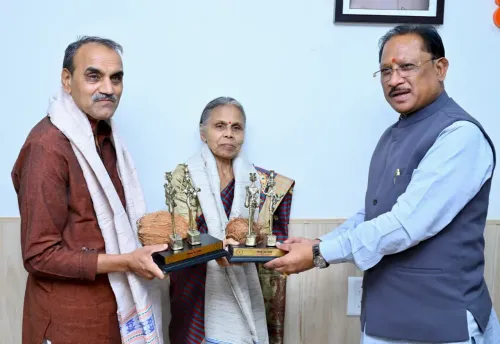
Chhattisgarh Chief Minister Vishnu Deo Sai met Padma Shri awardees Dr. Sunita Godbole and Dr. Ramchandra Godbole on 29 May 2026, publicly honouring their four-decade commitment to health, education and community service among tribal populations in Bastar and Abujhmad.
Key Takeaways
CM Vishnu Deo Sai met Padma Shri recipients Dr.
Sunita Godbole and Dr.
Ramchandra Godbole on 29 May 2026 .
The Godboles have worked in Bastar and Abujhmad for more than four decades , delivering healthcare, education and community awareness.
They communicate in Gondi and Halbi , having integrated deeply with local tribal culture and traditions.
CM Sai described their contribution as a 'living example of humanity, sensitivity and dedication.' The tribute aligns with Chhattisgarh's broader focus on trust-building and human development in Fifth Schedule tribal areas.
The Padma Shri , instituted in 1954 , recognises distinguished service in fields including social work and medicine.
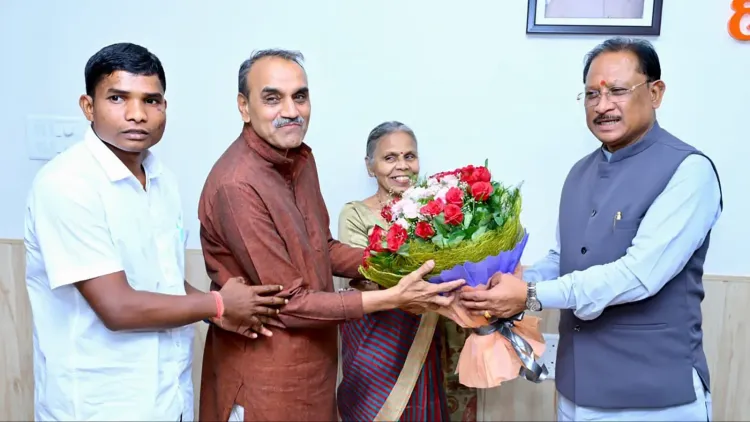
Chhattisgarh Chief Minister Vishnu Deo Sai on Friday, 29 May 2026 met Padma Shri awardees Dr. Sunita Godbole and Dr. Ramchandra Godbole, describing the meeting as an opportunity to understand more deeply their extraordinary dedication to tribal communities in Bastar and Abujhmad.
Context
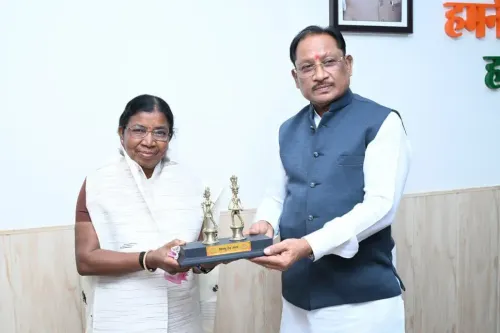
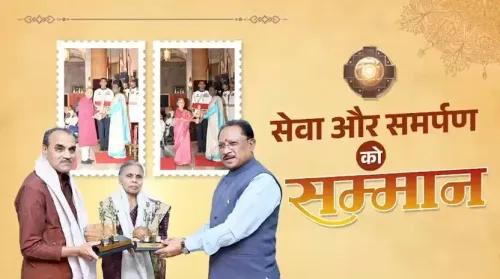
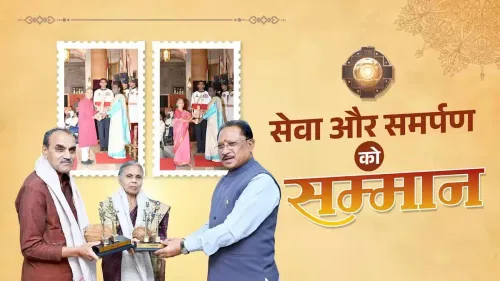
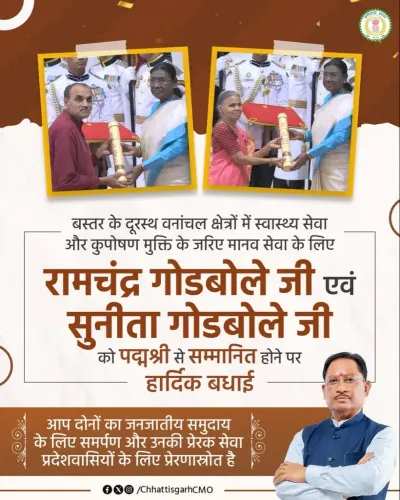
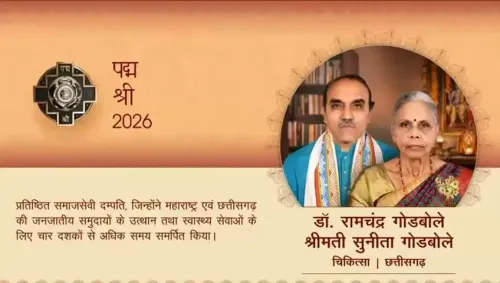
Chief Minister Sai shared the meeting on social media, writing in Hindi: 'aatmiy bhet hui' ('a heartfelt meeting took place'), and praised the couple's over four decades of selfless work in remote tribal regions. He described their contribution as 'not merely service, but a living example of humanity, sensitivity and dedication.' The post was accompanied by four photographs from the meeting.
The Godboles have spent more than four decades living among tribal communities in Bastar and the dense forests of Abujhmad — one of the most geographically inaccessible areas in southern Chhattisgarh — delivering healthcare, education and community awareness programmes.
Policy Backdrop
The Padma Shri, instituted in 1954, is among India's highest civilian honours, awarded for distinguished service including social work and medicine. The recognition of the Godboles sits within a broader constitutional framework: India's Fifth Schedule mandates special administrative and welfare provisions for Scheduled Areas, which cover large parts of Bastar.
The National Health Mission, launched in 2005 as the National Rural Health Mission, was designed to strengthen healthcare delivery in precisely the kind of underserved tribal districts where the Godboles have worked. Their grassroots presence in Abujhmad — historically affected by Left-Wing Extremism — represents the kind of trust-based community engagement that state and central governments have struggled to replicate through formal programme delivery alone.
Successive Chhattisgarh governments have publicly recognised long-serving field workers in Naxal-affected districts, viewing such acknowledgements as part of broader efforts to improve human development indicators and build civilian confidence in remote areas.
Stakeholders and Impact
Chief Minister Sai noted that the Godboles communicate in Gondi and Halbi — two of the principal languages spoken by tribal communities in the region — and have treated Bastar not as a workplace but as their own family. He said this deep cultural integration is 'proof that trust and a sense of belonging are the greatest forces behind any transformation.'
The primary beneficiaries of the Godboles' work are tribal communities across Bastar division and Abujhmad, populations that have historically faced acute shortages of qualified medical professionals and educators willing to serve in difficult terrain. Their model of long-term immersion — learning local languages, customs and traditions — has been cited as a template for community-centred development in Scheduled Areas.
CM Sai said their lives serve as an inspiration and that 'their dedication will continue to show future generations the path of service, compassion and responsibility towards society.'
What's Next
The Chief Minister's public tribute signals continued state-level emphasis on recognising grassroots contributors in tribal and forested districts. Observers will watch for follow-through in the form of government announcements on health or education schemes specifically targeting Abujhmad and Bastar, as well as possible further official outreach to similar long-serving field workers in Scheduled Areas across Chhattisgarh. The meeting also underscores a pattern of the BJP-led state government highlighting cultural integration and trust-building with indigenous communities as a governance priority.
Point of View
Community-immersive approaches to tribal welfare over purely programmatic delivery. By highlighting their fluency in Gondi and Halbi, Sai frames cultural integration as a governance tool, particularly relevant in Abujhmad, a region long associated with Left-Wing Extremism and state-access challenges. This fits a broader pattern of Chhattisgarh administrations using high-profile recognitions to build civilian confidence in Scheduled Areas. The meeting may also be a precursor to policy announcements targeting Bastar's health and education deficits.
NationPress
12 Oct 2026
Frequently Asked Questions
Who are Dr. Sunita Godbole and Dr. Ramchandra Godbole?
Dr. Sunita Godbole and Dr. Ramchandra Godbole are Padma Shri recipients who have spent over four decades providing healthcare, education and community services among tribal populations in Bastar and Abujhmad in Chhattisgarh.
Why did CM Vishnu Deo Sai meet the Godboles?
Chhattisgarh Chief Minister Vishnu Deo Sai met the Godboles on 29 May 2026 to honour their decades of selfless service to tribal communities and to understand their work more deeply, as he described in a post on social media.
What is Abujhmad and why is it significant?
Abujhmad is a remote, densely forested area within the Bastar division of Chhattisgarh, known for difficult terrain, predominantly tribal communities and historically limited access to government services.
What languages do the Godboles speak with tribal communities?
The Godboles communicate in Gondi and Halbi, two principal languages spoken by tribal communities in the Bastar region, which CM Sai cited as evidence of their deep cultural integration.
What is the Padma Shri award?
The Padma Shri is one of India's highest civilian honours, instituted in 1954, awarded for distinguished service in various fields including medicine and social work.