CM Sai Hails Padma Shri for Bastar's Dr. Budhri Tati
Synopsis
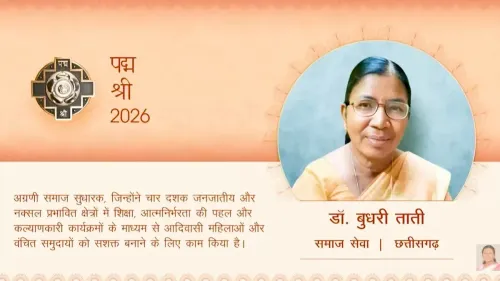
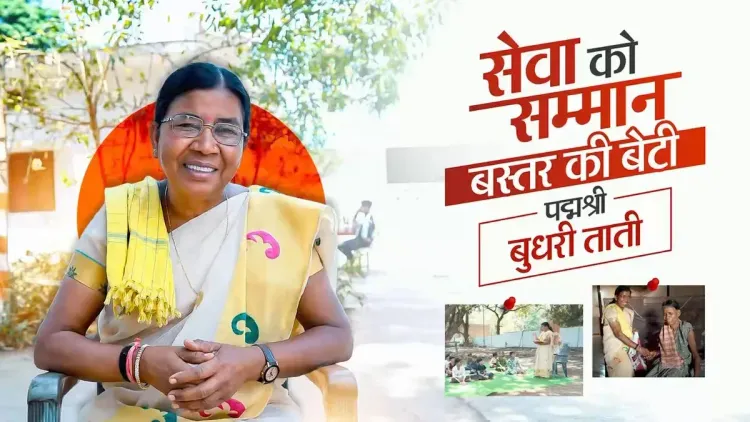
Chhattisgarh Chief Minister Vishnu Deo Sai lauded Dr. Budhri Tati, Bastar's 'Badi Didi', on receiving the Padma Shri from President Draupadi Murmu, honouring four decades of education and women's empowerment work in tribal and Naxal-affected areas.
Key Takeaways
Budhri Tati of Bastar has been conferred the Padma Shri , India's fourth-highest civilian honour, by President Draupadi Murmu .
Chief Minister Vishnu Deo Sai described the award as 'a moment of pride and honour for Chhattisgarh.' Dr.
Tati, known locally as Badi Didi , has worked for four decades in education, women's empowerment and social reform in tribal and Naxal-affected regions.
Bastar division in southern Chhattisgarh has one of India's largest tribal populations and has long faced Left-Wing Extremism challenges.
The Padma Shri has been conferred annually since 1954 to recognise distinguished contributions in social work, education and public affairs.
CM Sai framed the award as recognition of the 'people's power and service tradition of Bastar' beyond Dr.
Tati's individual achievement.
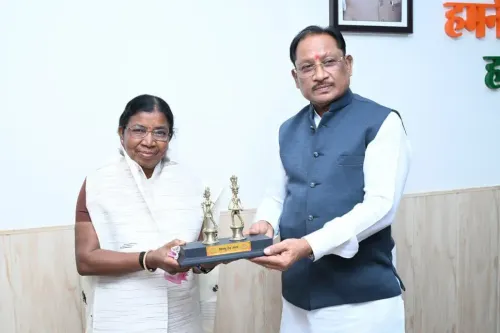
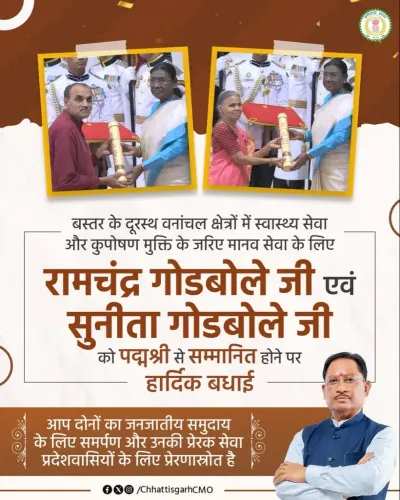
Chhattisgarh Chief Minister Vishnu Deo Sai on Wednesday, 24 June 2026 congratulated Dr. Budhri Tati, widely known as Badi Didi ('Big Sister') of Bastar, on being conferred the Padma Shri — India's fourth-highest civilian honour — by President Draupadi Murmu.
Context
Posting on X, Chief Minister Sai described the recognition as 'a moment of pride and honour for Chhattisgarh.' He wrote that Dr. Tati's 'selfless dedication of four decades to education, women's empowerment and social awakening in tribal areas and Naxal-affected regions is an inspiring example of service, sensitivity and transformation.' He tagged the official handle of Rashtrapati Bhavan, noting that the award was conferred by President Murmu's own hands — karkamalon se — underscoring the ceremonial significance of the moment.
Policy Backdrop
The Padma Shri has been awarded annually since 1954 to individuals who have rendered distinguished service in fields including social work, education and public affairs. In recent cycles, successive governments have used the Padma series to spotlight grassroots contributors from remote and conflict-affected regions, particularly the tribal belts of central India. Bastar division in southern Chhattisgarh carries one of the country's largest concentrations of Scheduled Tribe communities and has long been at the centre of Left-Wing Extremism challenges, making sustained social work there especially consequential.
Stakeholders and Impact
Dr. Tati's four-decade record of work spans education outreach, women's empowerment and social reform across Bastar's tribal hamlets — areas where access to schooling and civic services has historically been constrained by both geography and security conditions. Her recognition is seen as an affirmation of the thousands of women and tribal families whose lives her initiatives have touched. Chief Minister Sai's statement frames the award not merely as a personal honour but as a recognition of 'the people's power and service tradition of Bastar' — Bastar ki janashakti aur seva parampara ka bhi samman.
What's Next
The spotlight on Dr. Tati's work is likely to renew attention on state and central programmes targeting education and women's empowerment in Chhattisgarh's tribal districts. Future Padma award cycles will be watched for further recognition of similar grassroots contributors from Left-Wing Extremism-affected zones. The broader policy arc suggests that civilian honours remain a key instrument for drawing national attention to unsung service in India's most underserved regions.
Point of View
' Sai broadens the award's symbolism beyond a single individual, signalling that grassroots service in conflict-affected zones has political salience for the BJP-led state government. The tagging of Rashtrapati Bhavan further amplifies the ceremonial weight, connecting state leadership to the constitutional apex. Longer term, such recognitions tend to set expectations for follow-through — in funding, policy attention and programme rollout — in the very regions they celebrate.
NationPress
23 Sept 2026
Frequently Asked Questions
Who is Dr. Budhri Tati and why did she receive the Padma Shri?
Dr. Budhri Tati is a social worker from the Bastar region of Chhattisgarh, recognised for four decades of work in education, women's empowerment and social reform in tribal and Naxal-affected areas. She was conferred the Padma Shri — India's fourth-highest civilian honour — by President Draupadi Murmu.
What did Chhattisgarh CM Vishnu Deo Sai say about Dr. Budhri Tati's Padma Shri?
Chief Minister Vishnu Deo Sai called it 'a moment of pride and honour for Chhattisgarh,' praising Dr. Tati's selfless dedication over four decades and describing the award as recognition of Bastar's people's power and service tradition.
What is the Padma Shri award?
The Padma Shri is India's fourth-highest civilian award, conferred annually since 1954 by the President of India to individuals for distinguished service in fields such as social work, education, arts and public affairs.
Why is work in Bastar considered significant for social workers?
Bastar division in southern Chhattisgarh has one of India's largest concentrations of Scheduled Tribe communities and has historically faced Left-Wing Extremism, making sustained outreach in education and women's empowerment there especially challenging and impactful.
Who conferred the Padma Shri on Dr. Budhri Tati?
President of India Draupadi Murmu conferred the Padma Shri on Dr. Budhri Tati at the official award ceremony.