CM Chhattisgarh Hails Dr Budhri Tati's Padma Shri Honour
Synopsis
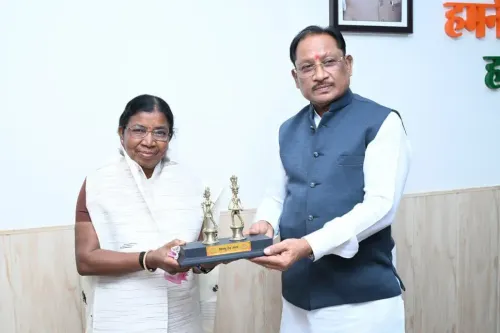
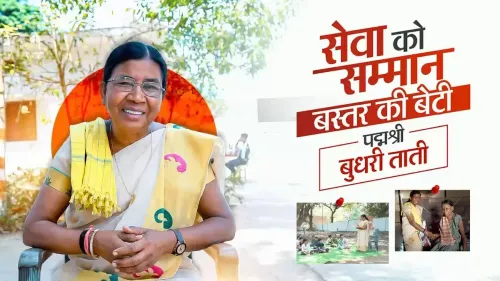
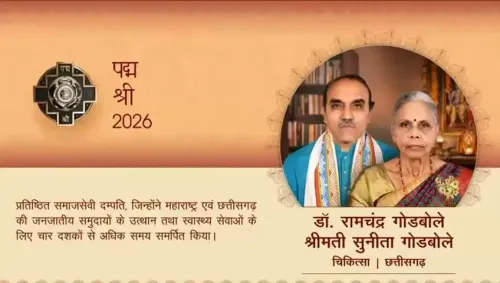
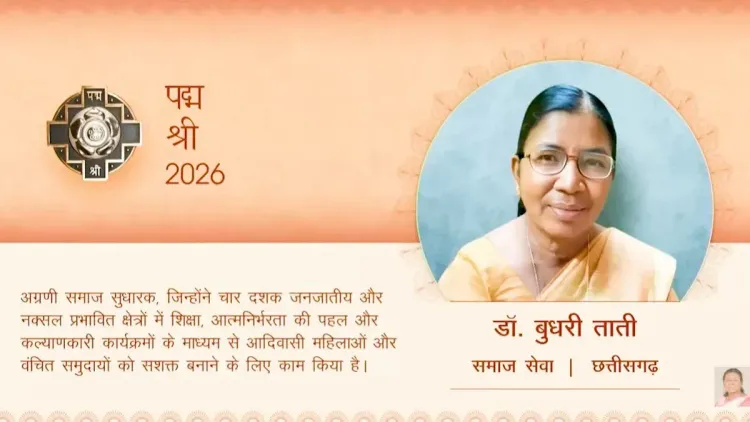
The Chhattisgarh CMO on 23 June 2026 celebrated Dr. Budhri Tati of Bastar receiving the Padma Shri from President Droupadi Murmu, honouring her 36 years of service to tribal communities, women, children and the elderly across the region.
Key Takeaways
Budhri Tati of Bastar, Chhattisgarh was conferred the Padma Shri — India's fourth-highest civilian award — by President Droupadi Murmu .
The Chief Minister's Office of Chhattisgarh publicly celebrated the honour on 23 June 2026 , tagging Rashtrapati Bhavan in its post.
Tati is credited with 36 years of grassroots work for tribal communities, women, children and the elderly in Bastar.
President Droupadi Murmu is herself the first tribal woman to hold the office of President of India, adding symbolic significance to the conferral.
The Padma Awards have been instituted since 1954 and have increasingly recognised recipients from remote tribal districts in recent years.
The recognition may encourage greater documentation of grassroots social work in Scheduled Tribe majority regions of central India for future award nominations.
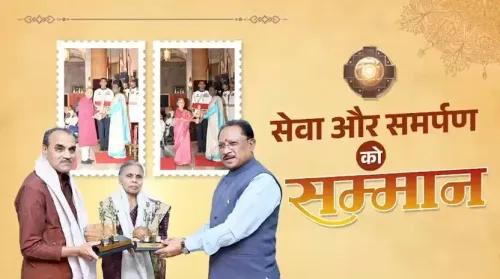
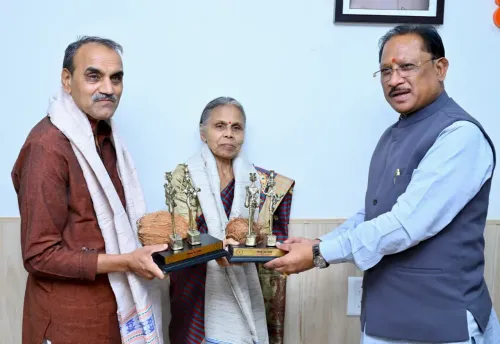
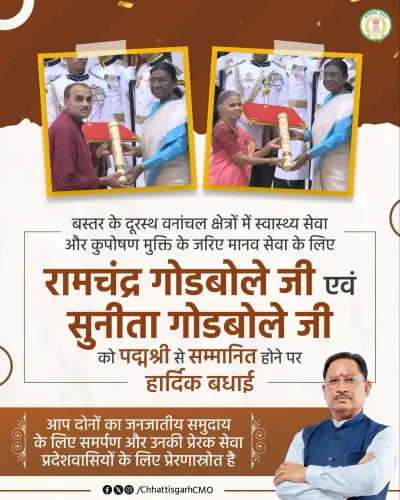
The Chief Minister's Office of Chhattisgarh on Tuesday, 23 June 2026 paid tribute to Dr. Budhri Tati, a grassroots social worker from Bastar, after she received the Padma Shri — India's fourth-highest civilian award — from President Droupadi Murmu at a formal investiture ceremony.
Context
The CMO's post described Dr. Tati as a living example of 'seva, sahas aur samarpan' (service, courage and dedication), stating that her honour had brought pride not just to Bastar but to all of Chhattisgarh. The post credited her with 36 years of dedicated work for the upliftment of tribal communities, women, children and the elderly. 'Bastar's daughter is not merely a name, but a living example of service, courage and dedication,' the CMO wrote, tagging the official handle of Rashtrapati Bhavan and Chief Minister Vishnu Deo Sai.
Policy Backdrop
The Padma Awards, instituted in 1954, recognise distinguished contributions across fields including social service, arts, science and public affairs. In recent years, the awards have increasingly spotlighted recipients from remote tribal districts engaged in grassroots work, reflecting a broader national emphasis on inclusive recognition. Chhattisgarh, carved out as a separate state in November 2000, has a significant Scheduled Tribe population concentrated in regions such as Bastar, where access to healthcare, education and welfare services has historically lagged behind urban centres.
President Droupadi Murmu, herself the first tribal woman to hold the office of President of India since July 2022, conferring the award carries symbolic weight beyond the citation — it represents a convergence of tribal identity at both the highest constitutional office and the grassroots social sector.
Stakeholders and Impact
The communities most directly touched by Dr. Tati's work — tribal families, women and children in Bastar — stand as the primary beneficiaries of the recognition. Social workers operating in conflict-affected or remote tribal belts often work without institutional support, and a Padma Shri citation can amplify their access to funding, government partnerships and public attention. The honour also signals to other grassroots workers in Scheduled Tribe majority regions of central India that long-term, unglamorous field service is visible at the national level.
State government endorsement of the award — through the CMO's post — reinforces the political salience of tribal welfare narratives in Chhattisgarh, where tribal voters constitute a substantial share of the electorate across several assembly constituencies in the southern division.
What's Next
Attention will now turn to whether the Chhattisgarh government follows up the symbolic recognition with programmatic support — such as expanded funding for tribal welfare workers or formal roles for awardees in state advisory bodies. The annual Padma list also serves as a reference point for civil society organisations nominating future candidates from underrepresented regions. Dr. Tati's citation may encourage more systematic documentation of grassroots social work in Bastar and similar tribal belts, strengthening future nomination pipelines from the state.
Point of View
Herself of tribal origin, lends the moment an unusually layered resonance that state governments in tribal-majority constituencies are unlikely to leave unexploited. Nationally, the trend of Padma citations reaching deep into remote districts reflects a deliberate broadening of the awards' geographic and demographic footprint, which successive governments have used to signal inclusive development credentials. Whether symbolic recognition translates into sustained programmatic investment for grassroots workers in Bastar will be the sharper test of the state's stated commitment.
NationPress
22 Sept 2026
Frequently Asked Questions
Who is Dr. Budhri Tati and why did she receive the Padma Shri?
Dr. Budhri Tati is a social worker from Bastar, Chhattisgarh, honoured with the Padma Shri for 36 years of dedicated service to tribal communities, women, children and the elderly in the region.
Who gave Dr. Budhri Tati the Padma Shri award?
President Droupadi Murmu conferred the Padma Shri on Dr. Budhri Tati at a formal investiture ceremony. President Murmu is the first tribal woman to hold the office of President of India.
What is the Padma Shri award?
The Padma Shri is India's fourth-highest civilian honour, instituted in 1954, awarded for distinguished service in fields including social work, arts, science and public affairs.
What did the Chhattisgarh Chief Minister's Office say about Dr. Budhri Tati?
The Chhattisgarh CMO described Dr. Tati as a living example of 'service, courage and dedication' and said her honour brought pride not just to Bastar but to all of Chhattisgarh.
Why is Bastar significant in the context of tribal welfare in India?
Bastar is a southern region of Chhattisgarh with a large tribal population and a history of development challenges; it has been a focus of central and state government tribal welfare programmes since Chhattisgarh's formation in 2000.