CM Himanta Signals Assam's Industrial Shift: Value Stays Home
Synopsis
Assam CM Himanta Biswa Sarma says the state is ending its role as a raw-material exporter, pointing to Pepsi beverage production in Nalbari and tile manufacturing in Sonitpur as early proof of an industrial value-addition drive taking hold.
Key Takeaways
Assam CM Himanta Biswa Sarma declared on October 8, 2026 that the state is reversing its historical pattern of exporting resources without capturing value.
Nalbari district now hosts Pepsi -brand beverage production, anchoring an FMCG supply chain in western Assam.
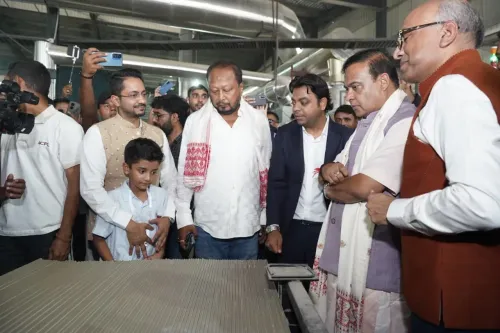
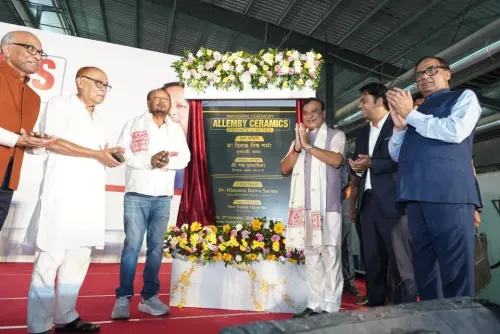
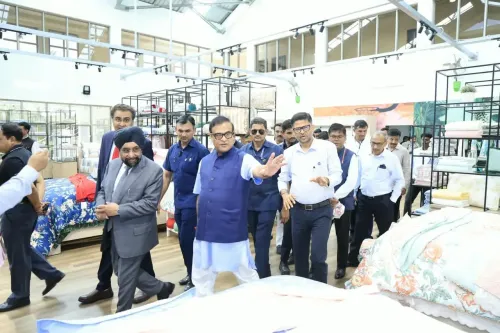
Sonitpur district has seen tile manufacturing units come online, feeding the Northeast's growing construction sector.
Both industries create layered employment — in logistics, packaging, semi-skilled manufacturing, and supply-chain support roles.
The push aligns with a broader national strategy to industrialise India's northeastern states and reduce their economic peripherality.
Sarma, as NEDA convenor, is positioning Assam as the commercial and industrial gateway of the entire Northeast region.
For decades, Assam sent its raw materials outward and watched other states pocket the profits. Assam Chief Minister Himanta Biswa Sarma declared on Thursday, October 8, 2026 that this long-standing economic drain is now reversing — pointing to concrete industrial activity in Nalbari and Sonitpur as proof that processing, manufacturing, and employment are finally taking root on Assam's own soil.
From Extraction to Value Addition: What's Happening on the Ground
The Chief Minister's post names two specific districts as evidence of the shift. Nalbari is now producing Pepsi brand beverages, while Sonitpur has seen tile manufacturing come online — both industries that transform inputs into finished goods, creating layered employment at each stage. The message is deliberate: Assam is no longer just a source; it is becoming a destination for industrial investment.
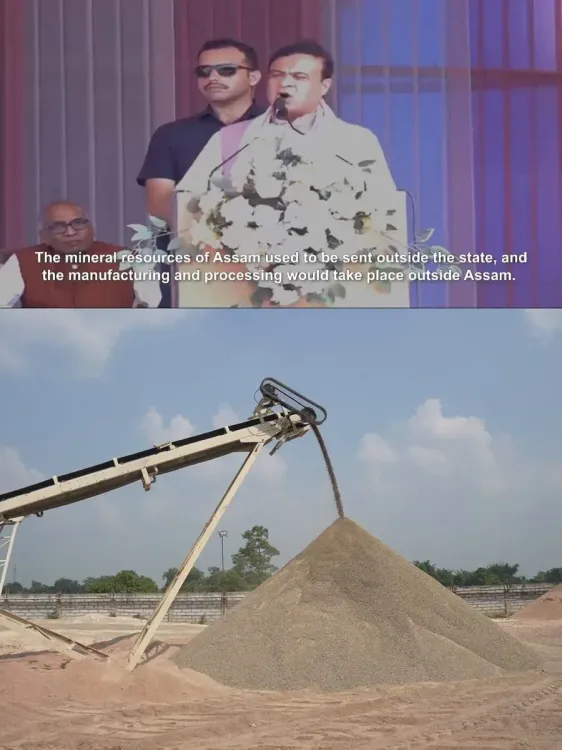
The framing — 'resources travelled out while the value was created elsewhere' — captures a structural critique that has long animated Assam's economic policy debate. Raw agricultural produce, minerals, and natural resources have historically left the state with minimal processing, meaning wages, profits, and tax revenues accrued to other regions. Sarma is now staking a visible political claim that his administration is breaking that cycle.
Nalbari's Beverage Line and Sonitpur's Tile Units
Pepsi-brand bottling or production in Nalbari signals that a major fast-moving consumer goods supply chain is now anchored in western Assam — a district that sits along key road connectivity corridors. Tile manufacturing in Sonitpur, a large district in central Assam with established transport links, points to the construction and real-estate supply chain deepening its local roots as the state's urban infrastructure expands.
Both are sectors with meaningful downstream job multipliers: beverage units require logistics, packaging, and cold-chain workers; tile plants absorb semi-skilled labour and feed into the booming construction sector across the Northeast. Together, they illustrate a pattern of import-substitution at the regional level — goods once trucked in from outside are now manufactured closer to where they are consumed.
The Larger Economic Bet on Northeast Industrialisation
Sarma's push fits into a broader national narrative around industrialising India's northeastern states, long classified as economically peripheral. As NEDA convenor and Assam's CM, Sarma has positioned the state as the commercial gateway of the Northeast — and each new factory announcement reinforces that claim. The political signal is equally clear: when industries arrive, so do jobs, and when jobs arrive, so does a durable electoral constituency.
The challenge, as always, will be sustaining investor confidence through infrastructure reliability, land acquisition clarity, and logistics depth. But the direction of travel — value addition at source — is one that economists across the spectrum would endorse.
Assam is no longer content to export potential. The factories are arriving — and CM Sarma wants every voter to know exactly which district they landed in.
Point of View
He is converting development economics into retail politics. The move also reinforces his NEDA-wide posture: that BJP-governed Northeast states are open, investable, and catching up fast. Whether the trickle of factories becomes a flood will depend on infrastructure and ease-of-doing-business metrics that a single X post cannot resolve — but the direction of the narrative is unmistakably set.
NationPress
8 Oct 2026
Frequently Asked Questions
What industries has Assam recently attracted to Nalbari and Sonitpur?
Assam CM Himanta Biswa Sarma has highlighted Pepsi-brand beverage production in Nalbari and tile manufacturing in Sonitpur as examples of industrial value addition now happening within the state.
Why is Assam focusing on value addition rather than raw material exports?
Historically, Assam's resources left the state unprocessed, meaning wages, profits, and tax revenues were generated elsewhere. CM Sarma's administration is pushing to retain that economic value by attracting processing and manufacturing units within Assam.
What is NEDA and what role does Himanta Biswa Sarma play in it?
NEDA — the North-East Democratic Alliance — is a BJP-led political coalition of parties across northeastern states. Himanta Biswa Sarma serves as its convenor, giving him a region-wide platform beyond his role as Assam Chief Minister.
How do new factories in Nalbari and Sonitpur create jobs in Assam?
Beverage production units require logistics, packaging, and distribution workers, while tile plants absorb semi-skilled manufacturing labour. Both sectors also stimulate ancillary employment across supply chains, multiplying job creation beyond the factory floor.
Is Northeast India seeing broader industrial growth in 2026?
Northeast India has been part of a sustained national push to reduce its economic peripherality, with improved road and rail connectivity, investment incentive schemes, and state-level outreach to investors. Assam, as the region's largest and best-connected state, has been at the centre of this effort.