CM Himanta begins second term with courtesy calls at Dispur
Synopsis
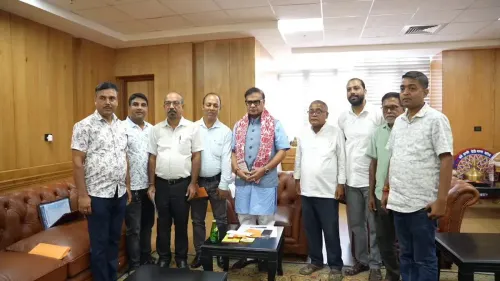
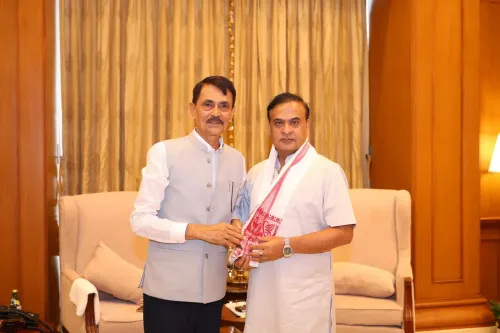
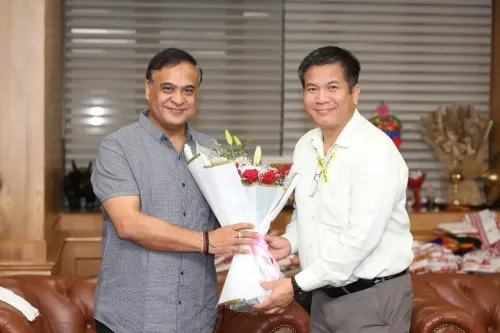
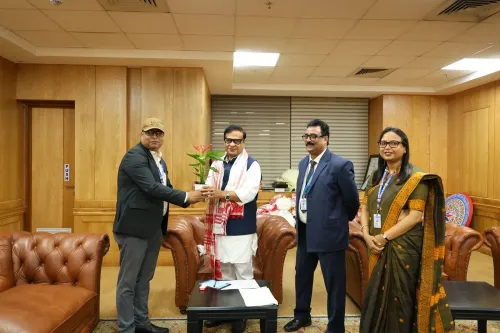
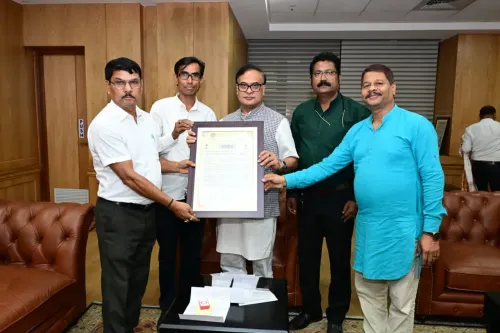
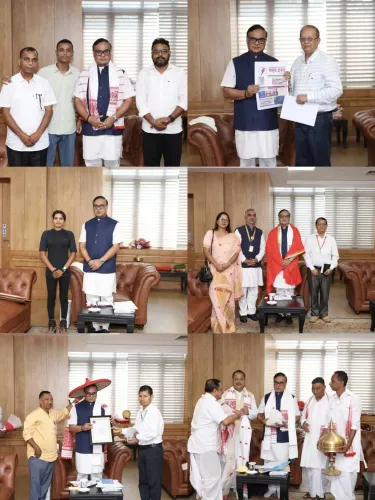
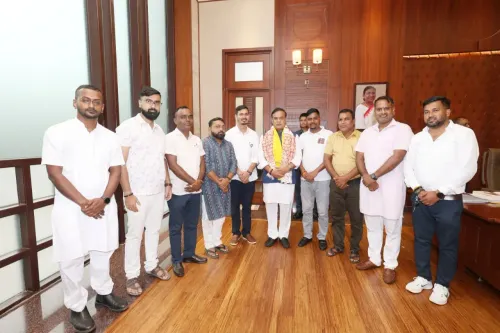
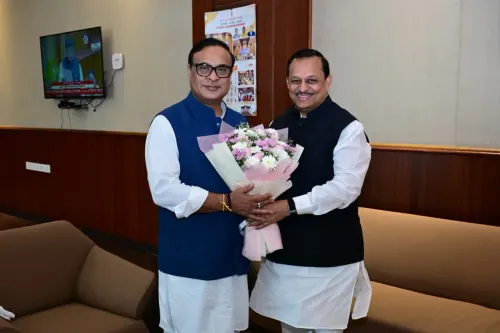
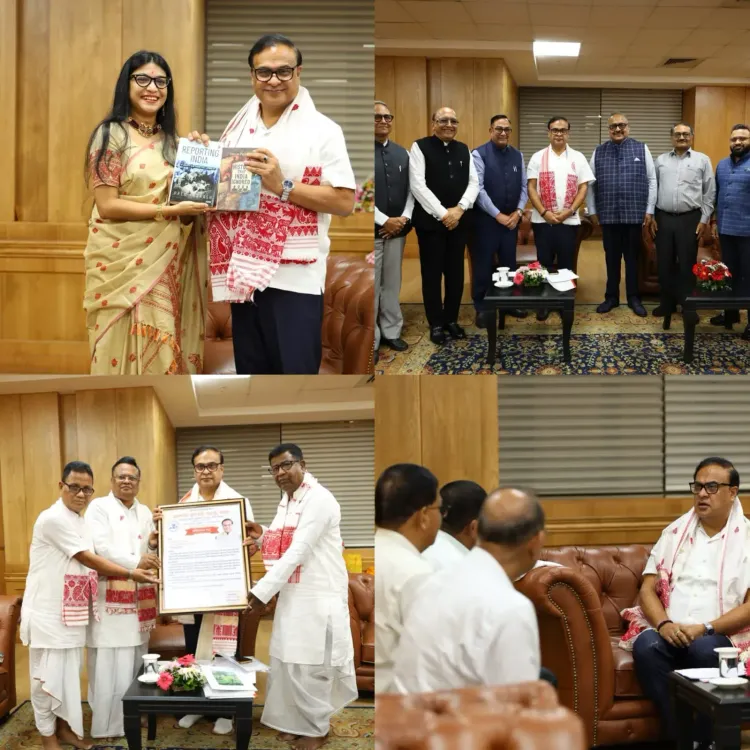
Chief Minister Dr. Himanta Biswa Sarma received prominent personalities from diverse fields at Lok Sewa Bhawan, Dispur on 29 May 2026, as he begins a second consecutive term leading Assam. He reaffirmed the government's commitment to the state's continued progress and holistic development.
Key Takeaways
Prominent personalities from different walks of life called upon CM Dr.
Himanta Biswa Sarma at Lok Sewa Bhawan, Dispur on 29 May 2026 .
The visits marked greetings to the CM on assuming office for a second consecutive term as Chief Minister of Assam.
Sarma expressed gratitude for the goodwill and reaffirmed the government's commitment to Assam's continued progress and holistic development .
His first term as CM began on 10 May 2021 after the BJP-led alliance's victory in the state assembly elections.
The BJP has governed Assam since 2016 , with the Northeast remaining a key focus of the party's political consolidation strategy.
Upcoming priorities are expected to include a state budget presentation and possible cabinet expansion or administrative reshuffles.
The Chief Minister's Office of Assam announced on 29 May 2026 that prominent personalities from diverse fields called upon Chief Minister Dr. Himanta Biswa Sarma at Lok Sewa Bhawan, Dispur, extending warm greetings on his assuming office for a second consecutive term. The CM expressed gratitude for the goodwill and reaffirmed the government's commitment to the state's continued progress and holistic development.
Context
Dr. Himanta Biswa Sarma has returned as Chief Minister of Assam for a second consecutive term, marking a significant moment of political continuity in one of India's most strategically important northeastern states. His first term began on 10 May 2021 following a decisive victory by the Bharatiya Janata Party-led alliance in the state assembly elections. The courtesy meetings at Lok Sewa Bhawan — the state secretariat in the capital district of Dispur — are a customary ritual that signals the new administration's openness to civil society and cross-sector engagement.
Visitors described as coming from 'different walks of life' typically include business leaders, cultural figures, academics, and social workers. The CM's expression of gratitude and his reaffirmation of the government's development agenda set an early public tone for the incoming term.
Policy Backdrop
The BJP has governed Assam since 2016, building its foothold in the Northeast through a combination of infrastructure investment, anti-infiltration policy, and cultural identity politics. Under Dr. Sarma's first term, the state saw aggressive pushes on flood management, road connectivity, and welfare schemes targeting women and youth. His administration also drew national attention for its crackdown on child marriage and its reforms in the education and health sectors.
A second term traditionally provides an incumbent government with both the mandate and the institutional experience to accelerate flagship programmes. Observers will watch closely for a state budget presentation and the rollout or expansion of key schemes in the months ahead.
Stakeholders and Impact
The immediate beneficiaries of a stable second-term government in Assam are its over 35 million residents, whose livelihoods are closely tied to the state's tea, oil, and agriculture sectors. Civil society organisations, business chambers, and cultural bodies — many of whose representatives likely featured among today's visitors — stand to shape early policy conversations with the returning administration.
Political leaders from across the spectrum, as well as community figures from Assam's diverse ethnic and linguistic groups, will also be watching how Dr. Sarma structures his cabinet and administrative apparatus in the coming days. The Northeast's complex inter-community dynamics mean that such early symbolic gestures of inclusivity carry real political weight.
What's Next
The government is expected to move swiftly on a state budget presentation and possible cabinet expansion or administrative reshuffles that typically accompany a new term. Dr. Sarma's reaffirmation of 'holistic development' signals continuity rather than a sharp policy pivot, suggesting existing flagship schemes will be deepened rather than replaced. How the administration balances economic growth with Assam's persistent challenges — annual flooding, border sensitivities, and demographic pressures — will define the early narrative of this second term.
Point of View
Designed to address the diverse aspirations of Assam's multi-ethnic electorate while keeping the government's core agenda intact. The real test will come with the budget and cabinet choices, which will reveal whether the second term brings policy deepening or a fresh set of priorities.
NationPress
13 Oct 2026
Frequently Asked Questions
Who is Himanta Biswa Sarma?
Dr. Himanta Biswa Sarma is the Chief Minister of Assam and a senior leader of the Bharatiya Janata Party . He previously served as Assam's health and finance minister and switched from the Congress to the BJP in 2015 , becoming CM for the first time on 10 May 2021 .
What is Lok Sewa Bhawan in Dispur?
Lok Sewa Bhawan is the state secretariat located in Dispur , the capital district of Assam, where the Chief Minister's office is based and official meetings with dignitaries are held.
Why did prominent personalities meet CM Himanta Biswa Sarma on 29 May 2026?
Prominent personalities from various fields called upon CM Dr. Himanta Biswa Sarma at Lok Sewa Bhawan on 29 May 2026 to extend greetings on his assuming office for a second consecutive term as Chief Minister of Assam.
What did CM Himanta Biswa Sarma say at the courtesy meeting?
CM Dr. Sarma expressed gratitude for the goodwill and support extended by the visitors and reaffirmed the government's commitment to Assam's continued progress and holistic development .
What are the key priorities for Assam's government in the new term?
Based on the CM's statement, the government's focus will be on continued progress and holistic development for Assam. Upcoming milestones expected to watch include a state budget presentation and potential cabinet expansion or administrative reshuffles.