CM Himanta Pays Tribute to Sanskrit Scholar Pt. Reva Prasad Dwivedi
Synopsis
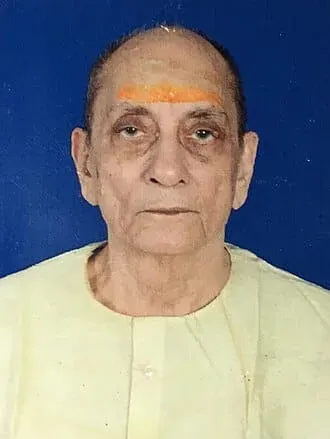
Assam Chief Minister Himanta Biswa Sarma on 21 May 2026 honoured Mahamahopadhyay Pandit Reva Prasad Dwivedi on his death anniversary, calling the scholar's literary legacy an enduring inspiration for future generations and reflecting BJP's broader emphasis on India's classical intellectual heritage.
Key Takeaways
Assam CM Himanta Biswa Sarma paid tribute to Mahamahopadhyay Pandit Reva Prasad Dwivedi on his death anniversary on 21 May 2026 .
Pandit Dwivedi was a celebrated Sanskrit scholar and poet, widely associated with Varanasi , honoured with the Mahamahopadhyay title for extraordinary contributions to classical Sanskrit.
CM Sarma described the scholar's legacy of knowledge and literature as one that 'will continue to inspire generations.' The tribute aligns with the National Education Policy 2020 's push to integrate Sanskrit and classical languages into contemporary education.
BJP-led governments have consistently issued public tributes to classical knowledge figures as part of a cultural policy emphasising India's civilisational heritage.
Analysts will watch for follow-up state decisions on Sanskrit chairs, university programmes or cultural grants in Assam.
Assam Chief Minister Himanta Biswa Sarma on Thursday, 21 May 2026, paid tribute to eminent Sanskrit scholar Mahamahopadhyay Pandit Reva Prasad Dwivedi on his death anniversary, honouring the scholar's lifelong contribution to classical Indian literature and knowledge traditions.
Posting in Hindi on X, CM Sarma wrote: 'Sanskrit sahitya ke manishi Mahamahopadhyay Pt. Reva Prasad Dwivedi ji ki punyatithi par unhe sadar naman' — offering his respectful salutations to the scholar on his death anniversary. He added that the legacy of knowledge and literature left behind by Dwivedi 'will continue to inspire generations', and that 'such luminaries depart, but their work never does.'
Context
Pandit Reva Prasad Dwivedi was an eminent Sanskrit scholar, poet and recipient of the Mahamahopadhyay title — one of the highest honours in classical Sanskrit scholarship — widely associated with Varanasi, the historic centre of Sanskrit learning in India. He was recognised for classical Sanskrit compositions and sustained efforts to preserve and interpret ancient Indian literary traditions. The Mahamahopadhyay designation, traditionally conferred for extraordinary contributions to Sanskrit, places its recipients among the foremost custodians of India's classical intellectual heritage.
Policy Backdrop
The tribute arrives in the context of a broader national policy emphasis on classical languages. The National Education Policy 2020 explicitly encourages the study of Sanskrit and other classical Indian languages, seeking to integrate traditional knowledge systems into contemporary curricula. BJP-led state governments, including Assam, have aligned state-level educational and cultural initiatives with this framework, promoting Sanskrit alongside modern subjects.
CM Sarma has consistently used public platforms to highlight scholars, poets and intellectuals from India's civilisational heritage, framing such tributes as part of a wider cultural and governance philosophy that connects statecraft with indigenous intellectual legacies. These gestures also serve to reinforce the party's emphasis on India's classical traditions as a living, relevant resource.
Stakeholders and Impact
The tribute is of direct significance to the community of Sanskrit scholars, classical literature students and researchers across India, particularly those associated with institutions in Varanasi and in Assam. Public acknowledgement by a sitting Chief Minister of a scholar of Pandit Dwivedi's stature helps sustain institutional memory and may encourage renewed academic interest in his body of work. For Assam's cultural and educational ecosystem, such statements from the Chief Minister signal continued state-level support for classical language initiatives.
What's Next
Observers of cultural policy in Assam will watch for any follow-through in the form of state decisions on Sanskrit chairs, university programmes, fellowships or cultural grants that may be announced in upcoming legislative sessions or education policy reviews. The tribute, while ceremonial in nature, fits a pattern in which public acknowledgements by senior political figures have preceded or accompanied formal institutional actions in the domain of classical language promotion.
Point of View
Reinforcing the party's civilisational-heritage narrative ahead of and during education policy cycles. The gesture connects symbolic politics with substantive policy: the National Education Policy 2020 has created institutional space for Sanskrit promotion, and chief ministerial tributes help sustain public and academic momentum for those initiatives. For Assam specifically, where the government has sought to project a culturally rooted identity alongside development credentials, such statements serve a dual function — paying genuine respect while signalling policy direction. Whether ceremonial acknowledgement translates into concrete institutional investment in Sanskrit education in Assam remains the key question to watch.
NationPress
5 Oct 2026
Frequently Asked Questions
Who is Mahamahopadhyay Pandit Reva Prasad Dwivedi?
Mahamahopadhyay Pandit Reva Prasad Dwivedi was an eminent Sanskrit scholar, poet and classical literature expert associated with Varanasi, honoured with the Mahamahopadhyay title — one of the highest distinctions in Sanskrit scholarship — for his extraordinary contributions to preserving and interpreting ancient Indian literary traditions.
Why did Himanta Biswa Sarma pay tribute to Reva Prasad Dwivedi?
Assam CM Himanta Biswa Sarma paid tribute on the scholar's death anniversary, acknowledging his lasting contribution to Sanskrit literature and stating that his legacy of knowledge would continue to inspire future generations.
What is the Mahamahopadhyay title?
Mahamahopadhyay is one of the highest honorary titles in classical Sanskrit scholarship in India, traditionally conferred on scholars who have made exceptional and sustained contributions to Sanskrit language, literature or philosophy.
How does BJP promote Sanskrit and classical Indian languages?
BJP-led governments have consistently issued tributes to Sanskrit scholars, supported Sanskrit chairs and university programmes, and aligned state education policies with the National Education Policy 2020, which explicitly encourages the study of Sanskrit and other classical Indian languages.
What is Assam's role in promoting Sanskrit education?
Under CM Himanta Biswa Sarma, Assam has aligned its cultural and educational initiatives with the national push for classical language promotion, with the Chief Minister regularly highlighting scholars and intellectuals from India's classical heritage in public communications.