CM Himanta Outlines Assam's AI Strategy for Inclusive Growth

Synopsis
Assam Chief Minister Himanta Biswa Sarma on 2 July 2026 outlined his government's foundational approach to adopting artificial intelligence for inclusive growth and competitiveness, while explicitly flagging the need to manage AI-related risks — placing Assam within a wider national trend of state-level AI policy-building.
Key Takeaways
CM Himanta Biswa Sarma announced on 2 July 2026 that Assam is taking foundational steps to adopt artificial intelligence for inclusive growth.
The Chief Minister explicitly paired the growth agenda with a commitment to 'addressing the risks' of AI, signalling a balanced policy intent.
The announcement aligns with NITI Aayog's #AIForAll strategy (2018) and the central government's IndiaAI Mission and Digital India programme.
Key stakeholders include state government departments, Assam's IT professionals and students, and rural and agricultural communities.
Formal policy documents, pilot project details, and state budget allocations will determine the depth of Assam's AI commitment.
Assam joins a broader pattern of Indian states building their own AI frameworks to complement national initiatives and attract technology investment.
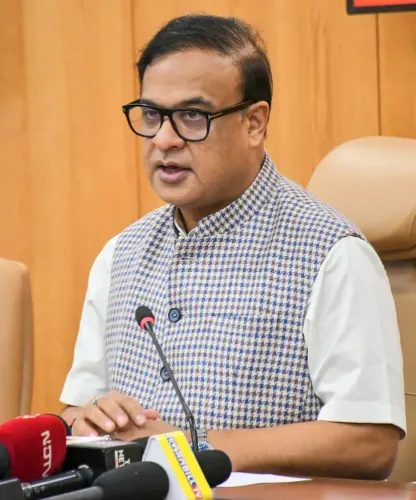
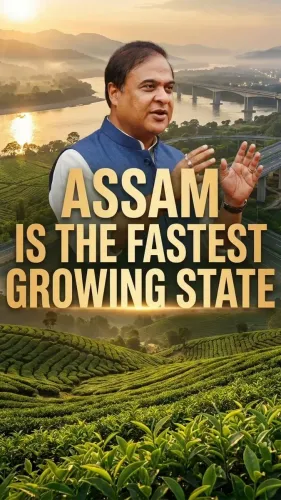
Assam Chief Minister Himanta Biswa Sarma on Thursday, 2 July 2026, shared a video outlining the foundational steps his government is taking to harness artificial intelligence for inclusive growth and improved state competitiveness, while also addressing the risks that accompany rapid AI adoption.
In his post, CM Sarma stated that 'Assam seeks to harness the transformative potential of artificial intelligence for inclusive growth and improving its competitiveness, while addressing the risks that come with it.' The accompanying video, he noted, explains the 'foundational steps' the state is taking in this regard.
Context
The announcement positions Assam among an expanding group of Indian states that are crafting their own AI frameworks to complement central government initiatives. The Chief Minister's framing — pairing growth ambitions with explicit acknowledgement of AI-related risks — signals an intent to pursue a balanced, policy-grounded approach rather than uncritical technology adoption.
Assam, a northeastern state that has long sought to bridge development gaps with the rest of India, has increasingly turned to technology-led governance under CM Sarma, who took office in 2021. Artificial intelligence represents the next frontier in that broader digital push.
Policy Backdrop
India's AI policy landscape has evolved significantly since NITI Aayog released its National Strategy for Artificial Intelligence — branded #AIForAll — in 2018. That document laid out principles for responsible and inclusive AI adoption across sectors and sub-national governments, and has since informed state-level thinking on the subject.
The central government's Digital India programme, launched in 2015, expanded digital infrastructure and e-governance across states, creating the connectivity backbone on which AI applications now depend. More recently, the IndiaAI Mission has reinforced national emphasis on building domestic AI capacity, data infrastructure, and regulatory safeguards — all of which states like Assam are expected to align with.
Northeastern states face distinctive challenges: sparse digital infrastructure in rural and hilly areas, a large agrarian population, and a relatively smaller pool of trained IT professionals. Any effective AI strategy for Assam must therefore address skilling, data access, and connectivity alongside higher-level applications.
Stakeholders and Impact
The primary stakeholders in Assam's AI push include state government departments seeking efficiency gains, students and IT professionals looking for skilling and employment opportunities, and rural and agricultural communities who stand to benefit most from inclusive technology deployment — but who also face the greatest risk of being left behind if implementation is uneven.
For farmers and rural residents, AI applications in agriculture — such as crop-disease detection, weather forecasting, and market-price advisory — could translate into tangible income improvements. For the state administration, AI-driven analytics could improve service delivery and resource allocation across Assam's diverse districts.
At the same time, risks around data privacy, algorithmic bias, and job displacement in semi-skilled sectors will require careful regulatory attention. CM Sarma's explicit mention of 'addressing the risks' suggests these concerns are on the government's radar.
What's Next
Observers will watch for the release of a formal Assam AI policy document or pilot project announcements that give substance to the 'foundational steps' described in the Chief Minister's video. State budget allocations for AI-related skilling, data infrastructure, and public-private partnerships will be key indicators of how serious and well-resourced the initiative is.
The broader pattern across Indian states suggests that those which move early to build institutional capacity and regulatory clarity tend to attract more investment and talent in the technology sector. For Assam, a credible AI roadmap could also strengthen its case for central funding under national missions and position the state as a technology leader within the North-East Democratic Alliance (NEDA) bloc.
Point of View
Framing Assam as a proactive technology state at a time when AI policy is becoming a marker of governance ambition across India. The explicit acknowledgement of AI risks is politically astute — it pre-empts criticism from labour and civil-society groups while signalling policy maturity to potential investors and central government funders. This fits a broader arc in which northeastern states, historically seen as lagging on development metrics, are using technology narratives to reframe their identities. Whether the announcement translates into a funded, time-bound policy will be the real test of intent.
NationPress
1 Oct 2026
Frequently Asked Questions
What is Assam's AI policy about?
Assam's AI initiative, announced by Chief Minister Himanta Biswa Sarma on 2 July 2026, focuses on using artificial intelligence to drive inclusive growth and improve the state's competitiveness, while also managing risks such as data privacy, algorithmic bias, and employment disruption.
What foundational steps is Assam taking for AI?
CM Sarma shared a video outlining the state's foundational steps, though specific details of those steps — such as named programmes, budget allocations, or pilot projects — are expected to be detailed in forthcoming formal policy documents.
How does Assam's AI plan connect to national schemes?
Assam's approach aligns with NITI Aayog's National Strategy for AI (#AIForAll, 2018), the central government's Digital India programme, and the IndiaAI Mission, all of which encourage states to build local AI capacity within a national framework.
Who benefits from Assam's AI initiative?
The primary beneficiaries are expected to be state government departments seeking efficiency gains, students and IT professionals looking for skilling and jobs, and rural and agricultural communities who could gain from AI applications in farming, weather forecasting, and public service delivery.
Is Assam the first northeastern state to pursue AI?
Assam is part of a broader pattern of Indian states, including northeastern ones, developing AI or emerging-technology strategies. Its announcement positions it as an early mover in the region, but it is not acting in isolation from national or peer-state trends.