CM Himanta Vows Round-the-Clock Relief Amid Assam Floods

Synopsis
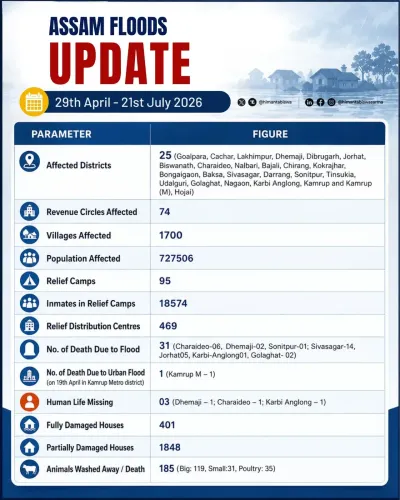
Assam Chief Minister Himanta Biswa Sarma on 26 July 2026 declared that 'Team Assam' is working day and night on flood relief and rescue, with the administration and local communities united to support affected families during the annual Brahmaputra valley deluge.
Key Takeaways
CM Himanta Biswa Sarma posted on 26 July 2026 affirming round-the-clock relief and rescue operations for flood-hit families in Assam .
The Chief Minister said colleagues, the administration, and local communities are 'united during #AssamFloods .' Assam faces annual monsoon flooding from the Brahmaputra River and its tributaries, typically between June and September .
The Brahmaputra Board (est.
1980 ) and the National Disaster Management Authority (est.
2005 ) provide the institutional framework for flood response.
NDRF and SDRF units are routinely deployed alongside local administration during peak flood periods.
Release of central flood-relief funds and a possible special package are the key policy developments to watch next.
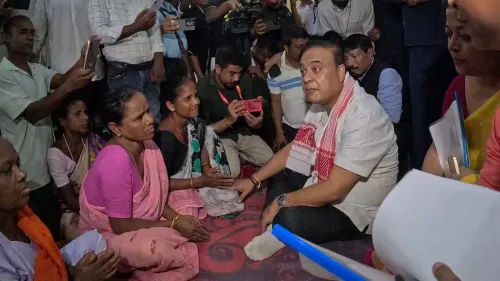
Assam Chief Minister Himanta Biswa Sarma on Sunday, 26 July 2026, reaffirmed the state government's commitment to flood-affected families, saying that 'Team Assam' was working day and night on relief and rescue operations as the annual monsoon deluge continued to batter the Brahmaputra valley.
Context
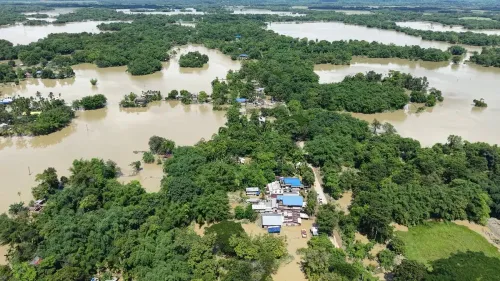
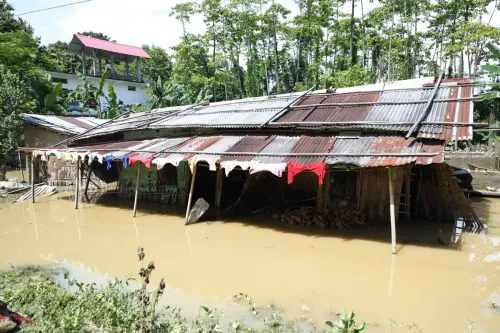
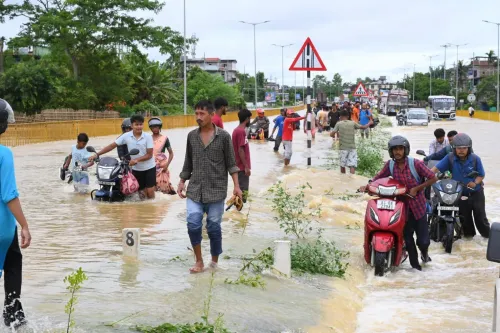
Assam endures one of the most predictable and destructive flood cycles in South Asia, with the Brahmaputra River and its tributaries inundating large swathes of the state every year between June and September. The flooding displaces lakhs of people annually, damages crops and infrastructure, and places acute pressure on state emergency services. CM Sarma took to social media to signal that the administration was fully mobilised, writing that colleagues, the administration, and local communities were 'united during #AssamFloods' and that 'together, we will overcome this challenge.'
Policy Backdrop
Flood management in Assam has a long institutional history. The Brahmaputra Board, constituted in 1980, was tasked with planning flood-control and erosion-mitigation measures across the valley. The National Disaster Management Authority (NDMA), established in 2005, provides the overarching framework for coordinating central and state responses to recurring natural calamities, including the deployment of National Disaster Response Force (NDRF) and State Disaster Response Force (SDRF) units.
Despite decades of institutional effort, structural solutions to Assam's flood problem — including embankment reinforcement, dredging of the Brahmaputra, and upstream water-management agreements — remain works in progress. Annual relief operations have thus become a recurring feature of governance in the state.
Stakeholders and Impact
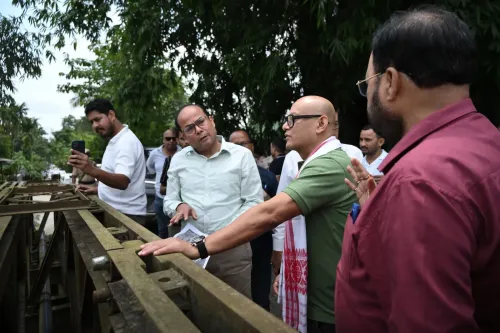
The most immediate stakeholders are the flood-affected families across low-lying districts of the Brahmaputra valley, who depend on timely rescue, temporary shelter, and food relief. Local administration, revenue officials, and community volunteers form the first line of response, and CM Sarma's post specifically acknowledged the role of 'local communities' in the ongoing effort.
Beyond individual households, the floods affect farmers facing crop loss, cattle owners, and residents of riverine islands known as chars. Relief camps, boat-based evacuations, and temporary embankment repairs are typically coordinated across multiple districts simultaneously during peak flood periods.
What's Next
Attention will now turn to the release of central flood-relief funds and whether the Union government announces a special assistance package for Assam through Parliament or direct executive action. The state government is also expected to submit damage assessment reports to the National Disaster Management Authority to unlock funds from the State Disaster Response Fund (SDRF) and the National Disaster Response Fund (NDRF). CM Sarma's public messaging signals that the political leadership is closely monitoring the situation, with further updates likely as the monsoon season progresses through August.
Point of View
Real-time political communication during Assam's annual flood crisis — a period that tests any state government's administrative credibility. By publicly invoking 'Team Assam' and the unity of communities, he is simultaneously signalling administrative control and building a political narrative of responsive governance. The post also implicitly sets the stage for the next move: pressing the Centre for timely relief funds, a recurring friction point between state and Union governments during disaster seasons. How quickly central assistance materialises will be the real measure of this solidarity messaging.
NationPress
27 Jul 2026
Frequently Asked Questions
What did Assam CM Himanta Biswa Sarma say about the 2026 Assam floods?
On 26 July 2026, CM Himanta Biswa Sarma said that 'Team Assam' is working day and night on relief and rescue efforts and that the administration and local communities are united to help flood-affected families.
Why does Assam flood every year?
Assam floods annually because the Brahmaputra River and its tributaries overflow during the June-September monsoon season, inundating low-lying areas of the Brahmaputra valley and displacing lakhs of people each year.
Which agencies handle flood relief in Assam?
Flood relief in Assam is handled by the state administration, the State Disaster Response Force (SDRF), the National Disaster Response Force (NDRF), and local community volunteers, coordinated under the National Disaster Management Authority framework.
What is the Brahmaputra Board and what does it do?
The Brahmaputra Board was constituted in 1980 to plan and implement flood-control and erosion-mitigation measures across the Brahmaputra valley in Assam and neighbouring states.
What central funds are available for Assam flood relief?
Assam can access the State Disaster Response Fund (SDRF) and the National Disaster Response Fund (NDRF), released by the Union government after the state submits damage assessment reports to the National Disaster Management Authority.