CM Himanta Warns Against Youth Radicalisation in Assam
Synopsis
Assam Chief Minister Himanta Biswa Sarma on May 24, 2026, declared that the state will firmly resist any attempt to radicalise its youth. The warning continues Assam's long-standing policy of combining security operations with deradicalisation messaging, building on over a decade of counter-insurgency efforts under BJP governance.
Key Takeaways
CM Himanta Biswa Sarma on May 24, 2026 publicly warned against any group or individual attempting to radicalise Assam's youth.
The statement pledges a 'firm' state response, consistent with Assam's zero-tolerance posture on extremist influence since 2016 .
Assam has a documented history of police action against radical networks, including groups linked to ULFA and suspected Islamist modules.
The policy builds on the Assam Accord of 1985 and successive anti-insurgency frameworks developed over four decades.
CM Sarma also serves as convenor of the North-East Democratic Alliance (NEDA) , amplifying the regional significance of the warning.
Follow-up legislative or security measures targeting radical networks are anticipated in coming months.
Assam Chief Minister Himanta Biswa Sarma on Sunday, May 24, 2026, issued a sharp warning against attempts to radicalise the state's youth, declaring that Assam would respond firmly to any group or individual seeking to mislead young people and destroy their future.
Context
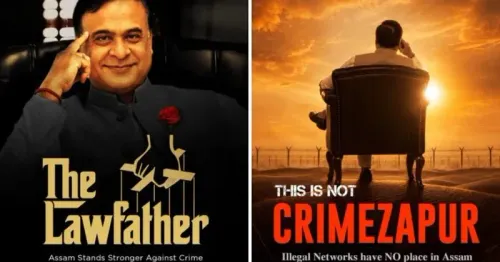
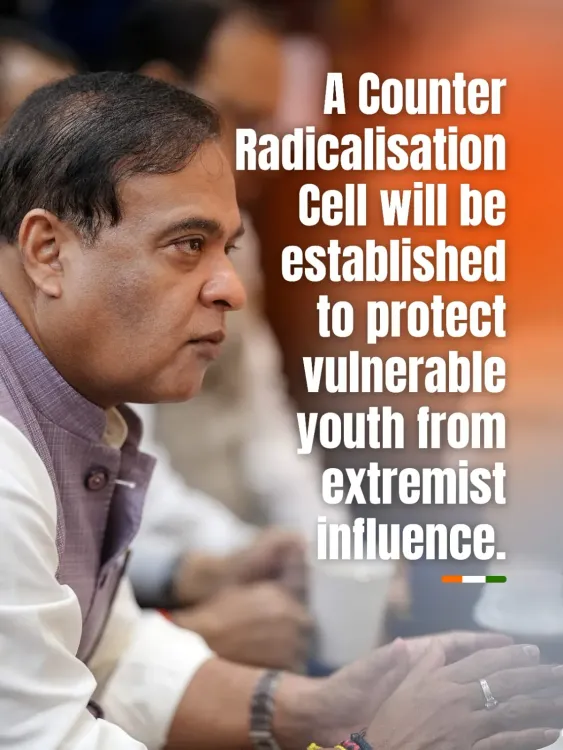
Posting on X, CM Sarma stated: 'We will not allow any group or individual to mislead our youth and ruin their future by radicalising them. Assam will give it back firmly.' The post, accompanied by an image, signals the state government's continued zero-tolerance posture on ideological subversion targeting young Assamese.
While the immediate trigger for the statement has not been officially specified, the warning aligns with a pattern of periodic alerts that the Sarma administration has issued against both separatist and religious radical networks operating in the state.
Policy Backdrop
Assam has a decades-long history of grappling with insurgency and ethnic militancy. Since the BJP assumed power in 2016, the state government has pursued a twin-track approach: sustained security operations against radical networks alongside public deradicalisation messaging aimed at insulating youth from extremist influence.
This policy posture builds on the foundational Assam Accord of 1985 and successive anti-insurgency drives. State police have repeatedly monitored social media activity and made arrests linked to groups such as ULFA and suspected Islamist modules over the past decade, establishing a robust institutional framework for counter-radicalisation.
CM Sarma, who also serves as convenor of the North-East Democratic Alliance (NEDA), has consistently used public communication to reinforce the message that external ideological influences will not be permitted to take root among the region's young population.
Stakeholders and Impact
The primary stakeholders are Assam's youth and the local communities that have historically borne the brunt of insurgency-linked violence and economic disruption. A credible state deterrent against radicalisation directly affects employment prospects, social stability, and educational continuity for young people across the state.
Civil society groups, religious organisations, and educational institutions operating in Assam are also implicated, as the government's stance shapes the broader environment in which community outreach and youth engagement programmes function. The statement also carries weight for the wider Northeast India region, where demographic pressures and cross-border ideological flows remain live concerns.
What's Next
Observers will watch for concrete follow-up measures — including police action, legislative proposals, or the announcement of new state-level deradicalisation schemes — in the weeks ahead. CM Sarma's strong public language has historically preceded administrative action, and the coming months may see fresh initiatives to counter radical networks and strengthen youth-focused outreach programmes across Assam.
Point of View
Long-running communication strategy that pairs strong public rhetoric with administrative action — a pattern that has defined Assam's security governance since 2016. The warning reflects the state's sensitivity to external ideological currents, particularly in a demographically complex border region where youth unemployment can make radical narratives more appealing. By framing the issue as a threat to the 'future' of young people rather than solely a law-and-order matter, the Sarma administration is also making a developmental argument — positioning the state as a protector of youth aspiration. The timing and tone suggest that intelligence inputs or ground-level developments may have prompted the public signal, even if specifics remain undisclosed.
NationPress
9 Oct 2026
Frequently Asked Questions
What did Assam CM Himanta Biswa Sarma say about radicalisation?
On May 24, 2026, CM Himanta Biswa Sarma stated that no group or individual would be allowed to mislead Assam's youth and ruin their future through radicalisation, and that Assam would respond firmly.
What is Assam's policy on countering radicalisation?
Since 2016 , the Assam government has combined security operations — including arrests linked to groups such as ULFA and suspected Islamist modules — with public deradicalisation messaging to deter extremist influence among young people.
Why is Assam particularly vulnerable to youth radicalisation?
Assam has a decades-long history of insurgency and ethnic militancy, and its position as a border state in Northeast India exposes it to cross-border ideological flows and demographic pressures that can make youth susceptible to radical narratives.
What is NEDA and what is Himanta Biswa Sarma's role in it?
NEDA , the North-East Democratic Alliance, is a political alliance of BJP -aligned parties in Northeast India. Himanta Biswa Sarma serves as its convenor, giving him a regional platform that extends his influence beyond Assam .
What follow-up actions could come after CM Sarma's radicalisation warning?
Observers expect possible police operations, new legislative measures, or the announcement of state-level deradicalisation schemes targeting radical networks in Assam in the months following the statement.