CM Himanta to Reply to Motion of Thanks on Assam's Growth
Synopsis
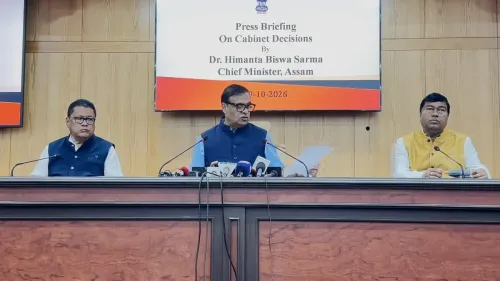
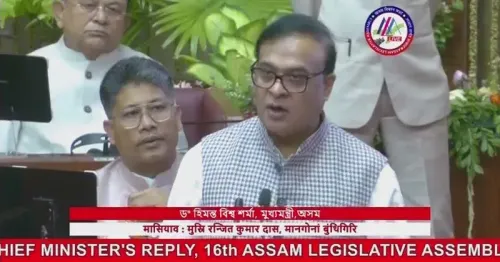
Assam Chief Minister Himanta Biswa Sarma announced on 26 May 2026 that he was set to deliver his reply to the Motion of Thanks on the Governor's Address in the Assam Legislative Assembly, framing the address as a showcase of the state's growth trajectory.
Key Takeaways
Assam Chief Minister Himanta Biswa Sarma announced his imminent reply to the Motion of Thanks on the Governor's Address on 26 May 2026 .
Sarma described the Governor's Address as having 'highlighted strong points on Assam's growth trajectory.' The Motion of Thanks is a standard legislative procedure in which the Chief Minister's reply serves as the government's formal response to the assembly debate on the Governor's address.
The BJP-led Assam government has consistently used such sessions since 2021 to present its governance and development record.
Sarma also serves as convenor of the North-East Democratic Alliance (NEDA) , giving his assembly addresses a regional political dimension.
Specific growth figures and new policy announcements from the reply were awaited at the time of publication.
Assam Chief Minister Himanta Biswa Sarma announced on Tuesday, 26 May 2026, that he was about to deliver his reply to the Motion of Thanks on the Governor's Address in the Assam Legislative Assembly, describing the address as having highlighted strong points on the state's growth trajectory.
Context
The Motion of Thanks is a standard constitutional procedure in Indian state legislatures. After the Governor of Assam delivers the annual address outlining the government's agenda and achievements, members of the assembly debate its contents before a formal vote of thanks is passed. The Chief Minister's reply is the government's definitive response to that debate.
Sarma stated he would reply 'in a short while,' indicating the announcement was made from within or immediately ahead of an ongoing assembly session. His framing — that the Governor's address 'highlighted strong points on Assam's growth trajectory' — signals the reply was expected to reinforce the ruling dispensation's governance record.
Policy Backdrop
Since the BJP-led government assumed office in Assam following the 2021 assembly elections, annual sessions of the Assam Legislative Assembly have been used consistently to present narratives of economic progress and infrastructure development. The North East has been a focus of central connectivity and industrial-growth schemes since 2014, and state-level addresses have frequently drawn on this broader regional momentum.
Sarma, who also serves as convenor of the North-East Democratic Alliance (NEDA), has positioned Assam as a model for development in the region. The Chief Minister's reply to the Motion of Thanks typically serves a dual purpose: countering opposition critiques raised during the debate and reinforcing the ruling party's policy achievements before the assembly record.
Stakeholders and Impact
The primary audience for the Chief Minister's reply is the Assam Legislative Assembly itself — both the treasury benches and the opposition. Beyond the chamber, the address carries weight for Assam's residents, who look to such sessions for signals on the government's priorities across sectors including agriculture, connectivity, and social welfare.
Legislators from across party lines use the Motion of Thanks debate to place concerns and demands on record. The Chief Minister's reply, therefore, also functions as a public accounting of the government's response to those concerns.
What's Next
The full text of Sarma's reply — including any specific growth figures, scheme announcements, or policy commitments — will constitute the substantive record of the session. Observers of Assam politics and North East governance will watch closely for any new data on economic indicators or infrastructure milestones cited during the address. The outcome of the formal vote on the Motion of Thanks is also expected to follow the Chief Minister's reply in the assembly's proceedings.
Point of View
Giving the Chief Minister a platform to consolidate his government's record in the public domain beyond the chamber walls. For Sarma, who has made Assam's economic transformation a central plank of his political identity, this occasion fits a consistent pattern of using legislative milestones as communications opportunities. The broader significance lies in how the reply may signal the government's priorities heading into the next phase of the assembly session.
NationPress
10 Oct 2026
Frequently Asked Questions
What is the Motion of Thanks in the Assam assembly?
The Motion of Thanks is a standard legislative procedure in which members of the Assam Legislative Assembly debate the Governor's annual address, after which the Chief Minister replies and a formal vote of thanks is passed.
Why did Himanta Biswa Sarma post about his assembly speech on X?
Sarma announced on X that he was about to reply to the Motion of Thanks, framing the Governor's Address as having highlighted Assam's growth trajectory — a common practice of using social media to set the political narrative ahead of a major legislative address.
What does the Governor's Address in Assam cover?
The Governor of Assam's annual address to the assembly outlines the state government's agenda, policy achievements, and development priorities, and forms the basis of the subsequent Motion of Thanks debate.
What is NEDA and what is Himanta Biswa Sarma's role in it?
The North-East Democratic Alliance (NEDA) is a BJP-led political alliance of parties across India's north-eastern states. Himanta Biswa Sarma serves as its convenor, giving him a significant political role beyond Assam.
What were the key points expected in CM Himanta's reply to the Motion of Thanks?
At the time of the announcement, specific content was not disclosed. Sarma indicated the reply would address Assam's growth trajectory as outlined in the Governor's Address; detailed figures and policy announcements were awaited from the full text of the speech.