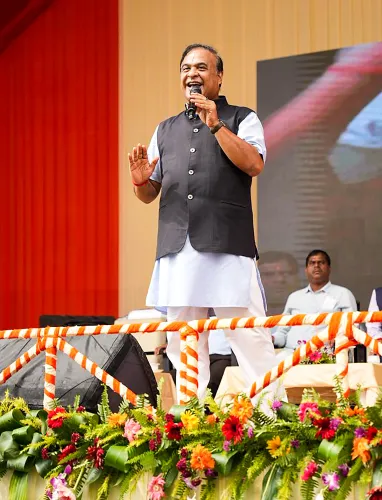
CM Himanta's Assam Cabinet Clears ₹796cr Fisheries Plan, Food Subsidy

Synopsis
The Assam Cabinet on September 24, 2026 approved a ₹796 crore SWIFT wetland and fisheries plan, subsidised dal and sugar at ₹100, AIF support for agripreneurs, and land for a new Agriculture College at Patharkandi in Karimganj district.
Key Takeaways
₹796 crore approved for the SWIFT wetland and fisheries transformation plan in Assam.
Subsidised dal and sugar at ₹100 to be provided to consumers under the new cabinet decision.
Financial support for agripreneurs approved through the central Agriculture Infrastructure Fund (AIF) , launched in 2020 .
Land allocated in Patharkandi, Karimganj district for a new Agriculture College serving southern Assam.
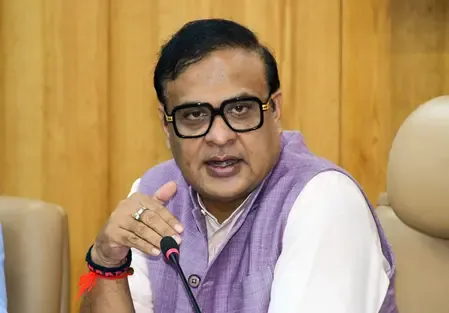
The cabinet is chaired by Chief Minister Himanta Biswa Sarma and continues Assam's pattern of integrating central schemes with state-level welfare initiatives.
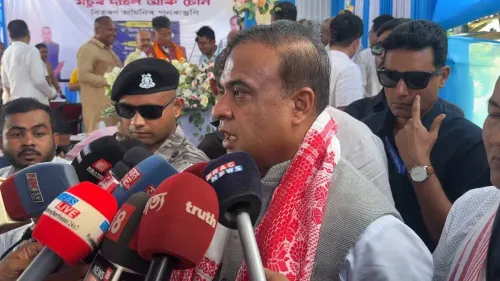
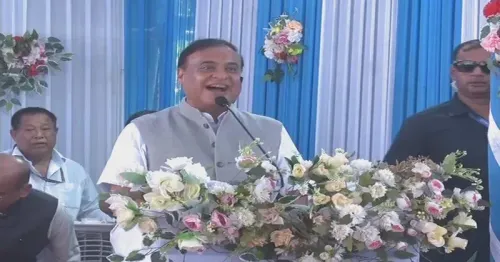
A ₹796 crore wetland and fisheries overhaul, subsidised pulses and sugar at ₹100, and a new agriculture college for southern Assam — the Assam Cabinet, chaired by Chief Minister Himanta Biswa Sarma, delivered a dense slate of welfare and infrastructure decisions on Thursday, September 24, 2026.
The ₹796 crore SWIFT bet on Assam's wetlands
The centrepiece of the cabinet session is the approval of a transformation plan under SWIFT — Assam's state initiative targeting wetland conservation and fisheries development — with an outlay of ₹796 crore. Assam's vast network of beels (wetlands) has long been an underutilised economic resource for fishing communities. A dedicated sector plan of this scale signals a structural shift: from treating wetlands as ecological footnotes to positioning them as productive economic zones. Implementation timelines will be the first real test of whether the ambition holds.
Dal and sugar at ₹100 — direct relief for household budgets
The cabinet also greenlit a scheme to provide subsidised dal and sugar at ₹100, a direct welfare measure aimed at rural and low-income households across the state. With food inflation remaining a persistent pressure point for ordinary families, the flat-rate pricing carries immediate political and practical weight. The specifics of eligibility and distribution mechanics are yet to be publicly detailed.
Agripreneurs get a financial leg-up through AIF
The cabinet approved financial support for agripreneurs under the Agriculture Infrastructure Fund (AIF), the Government of India scheme launched in 2020 to provide credit and support for agricultural infrastructure projects. Assam's decision to channel AIF benefits at the cabinet level reflects a broader pattern under the current BJP-led administration: locking central scheme allocations into state-level approvals to accelerate on-ground uptake and maintain accountability.
Patharkandi gets an agriculture college
Patharkandi, a town in Karimganj district in the Barak Valley region of southern Assam, will receive a land allocation for a new Agriculture College — a move that extends higher agricultural education to a region that has historically been distant from the state's institutional hubs. For students in the Barak Valley, this is not a small announcement.
Together, the decisions weave fisheries, food security, agri-finance, and educational access into a single governance moment. The real measure arrives when ground-level implementation begins.
Point of View
The administration retains credit for delivery while minimising implementation friction. The Patharkandi college allocation continues a southward push in Assam's institutional investments, addressing a long-standing perceived imbalance between the Brahmaputra and Barak valleys. Whether the ₹796 crore SWIFT plan translates into sustainable livelihoods for fishing communities will define its legacy.
NationPress
24 Sept 2026
Frequently Asked Questions
What is the SWIFT scheme approved by the Assam Cabinet?
SWIFT is an Assam state initiative for wetland conservation and fisheries development. The cabinet approved a ₹796 crore transformation plan under SWIFT on September 24, 2026, aimed at developing the state's wetland and fisheries sector.
What is the ₹100 dal and sugar subsidy approved by the Assam Cabinet?
The Assam Cabinet approved a scheme to provide subsidised dal (pulses) and sugar at ₹100 to consumers, intended as direct relief for low-income and rural households. Detailed eligibility and distribution mechanics are yet to be publicly announced.
What is the Agriculture Infrastructure Fund (AIF) and how does it help Assam agripreneurs?
The Agriculture Infrastructure Fund (AIF) is a Government of India scheme launched in 2020 to provide financial support and credit for agricultural infrastructure projects. The Assam Cabinet approved channelling AIF benefits to agripreneurs in the state.
Where is the new Agriculture College being set up in Assam?
The Assam Cabinet approved land allocation for a new Agriculture College at Patharkandi in Karimganj district, located in the Barak Valley region of southern Assam.
What were the key decisions of the Assam Cabinet meeting on September 24, 2026?
The Assam Cabinet on September 24, 2026 approved a ₹796 crore SWIFT wetland and fisheries plan, subsidised dal and sugar at ₹100, AIF-based financial support for agripreneurs, and land for an Agriculture College at Patharkandi, among other decisions.