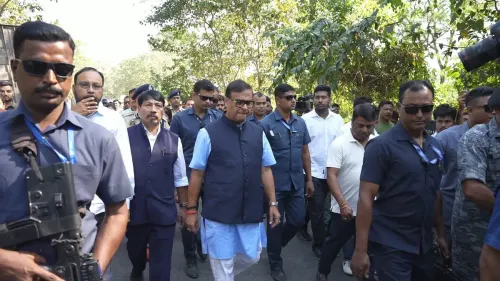
CM Himanta's Assam Tightens Traffic Enforcement After Kaziranga Crash
Synopsis
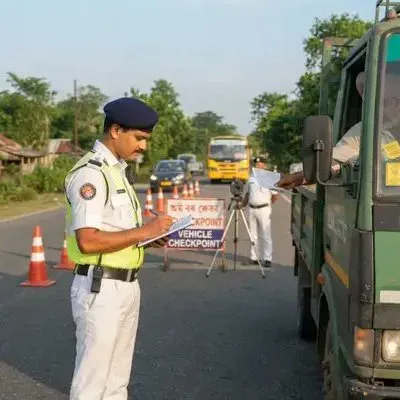
Guwahati has recorded the highest traffic challans in Assam as CM Himanta Biswa Sarma's government steps up road safety enforcement following a crash near Kaziranga National Park, using challan data as a public metric of administrative accountability.
Key Takeaways
Guwahati leads all Assam districts in traffic challans issued under the ongoing enforcement drive.
The crackdown was intensified following a road crash near Kaziranga National Park , one of Assam's most accident-prone highway corridors.
Himanta Biswa Sarma has linked the drive to both traffic violations and road encroachment removal.
The Assam government is publishing challan data publicly as an accountability and governance-performance metric.
Stakeholders directly affected include vehicle owners, Guwahati commuters, and the state traffic police force.
A road safety crackdown is producing measurable results across Assam — and Guwahati is leading the charge. The Chief Minister's Office of Assam announced on Friday, November 20, 2026, that Guwahati has recorded the highest number of traffic challans in the state as the government escalates enforcement following a crash near Kaziranga National Park.
Guwahati at the Top of the Challan Count
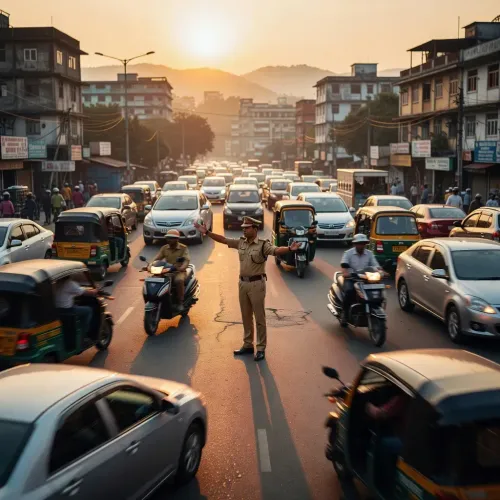
The state capital's position at the top of Assam's challan tally is both a signal and a scorecard. Traffic challans — the formal penalty notices issued for road violations — have become the Himanta Biswa Sarma administration's chosen public metric for demonstrating that enforcement is real, sustained, and data-backed.
Chief Minister Dr. Himanta Biswa Sarma has consistently framed visible urban enforcement as a core governance commitment. Guwahati, Assam's largest city and its busiest road network, was always going to generate the highest volume; the question the government is now answering is whether that volume is rising — and the answer, by this count, is yes.
The Kaziranga Crash That Sharpened the Focus
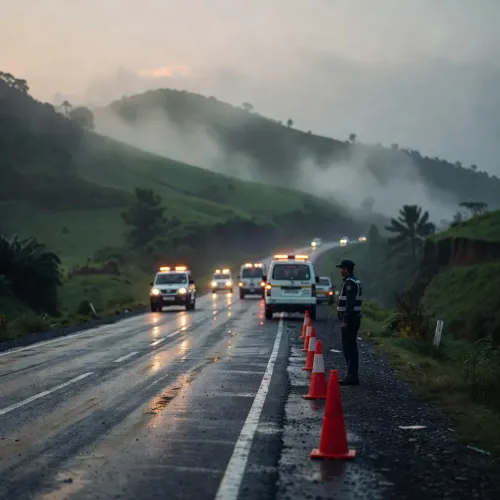
The trigger for the latest enforcement push traces back to a road crash near Kaziranga, the UNESCO-listed national park whose highway corridor is among the most dangerous stretches in northeast India. High-speed vehicles, narrow carriageways, and wildlife crossings make Kaziranga's flanking roads a perennial accident zone.
Road safety drives in Assam have historically followed high-profile incidents, but the current administration has attempted to convert reactive moments into sustained institutional behaviour — using challan data as a public accountability tool rather than letting enforcement fade after the news cycle moves on.
Road Encroachment and the Broader Crackdown
The CMO's framing explicitly links traffic challans to encroachment on road space — a wider urban problem in Guwahati where footpaths, service lanes, and road margins are routinely occupied by vendors, parked vehicles, and illegal structures. By bundling encroachment removal with traffic enforcement, the state is signalling that road safety policy extends beyond speeding fines into the shape of the city itself.
Vehicle owners, Guwahati's daily commuters, and traffic police are the immediate stakeholders in this drive. The release of monthly challan statistics — previously an internal administrative figure — as a public communication tool reflects a governance style that leans heavily on visible, quantifiable action.
The numbers are now on the board. Whether enforcement holds its intensity beyond the post-crash news cycle will be the real test of whether Assam's road safety push is policy or performance.
Point of View
Not just catch speeders. Whether monthly data releases translate into durable institutional enforcement, or fade once public attention shifts, will determine if this is a governance pivot or a well-managed communications moment.
NationPress
20 Nov 2026
Frequently Asked Questions
Why does Guwahati have the most traffic challans in Assam?
Guwahati is Assam's largest and most densely trafficked city, making it the natural epicentre of any state-wide enforcement drive. The current crackdown, intensified after a crash near Kaziranga, has pushed challan numbers in Guwahati to the top of the state tally.
What triggered Assam's latest road safety crackdown?
A road crash near Kaziranga National Park prompted the Assam government under CM Himanta Biswa Sarma to sharpen traffic enforcement across the state, particularly in Guwahati.
What is a traffic challan in India?
A traffic challan is an official penalty notice issued by police to a vehicle owner or driver for violating road traffic rules — covering offences such as speeding, wrong-side driving, parking violations, and encroachment of road space.
What is road encroachment and why is Assam targeting it?
Road encroachment refers to the illegal occupation of footpaths, service lanes, and road margins by vendors, parked vehicles, or structures. Assam is targeting it alongside traffic violations because encroached roads reduce carriageway width, increasing accident risk.
How is the Assam government measuring road safety enforcement progress?
The Chief Minister's Office is publishing traffic challan data publicly, district-wise, as a transparent metric of enforcement activity — with Guwahati topping the latest count.