Puri Hosts Fuel Dealers, Flags India's Energy Resilience
Synopsis
Union Petroleum Minister Hardeep Singh Puri hosted Petroleum Dealers' Association representatives to modernise India's 92,000-strong PSU fuel retail network, while crediting PM Modi's energy diplomacy and diversified imports for keeping every Indian pump running through global supply disruptions.
Key Takeaways
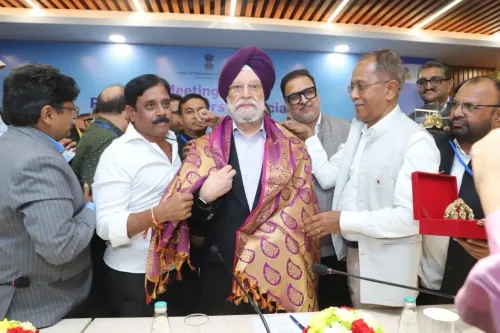
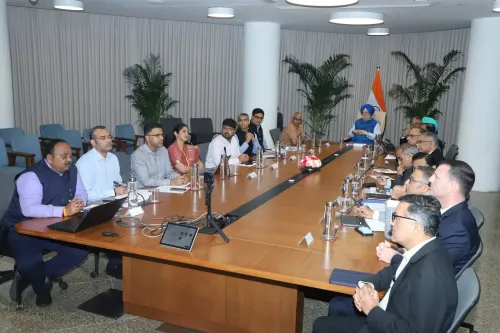
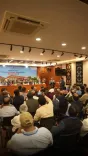
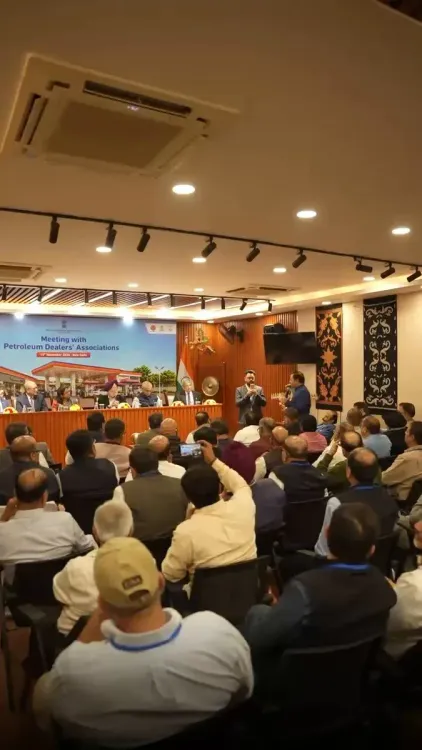
Petroleum Minister Hardeep Singh Puri hosted representatives of Petroleum Dealers' Associations across India at his residence on 20 November 2026 .
India's 92,000 PSU OMC petroleum dealers (across IOCL, BPCL, and HPCL) are cited as the backbone of the country's fuel supply chain.
Puri stated that not a single fuel outlet in India ran dry despite recent global geopolitical crises and energy disruptions.
India's supply resilience is attributed to PM Modi's energy diplomacy , alternative crude import routes — including increased purchases from Russia after 2022 — and domestic production growth via the Open Acreage Licensing Policy (OALP) .
The meeting aimed to generate 'fresh, innovative ideas' to improve the fuel retail experience, signalling a focus on retail modernisation and dealer welfare.
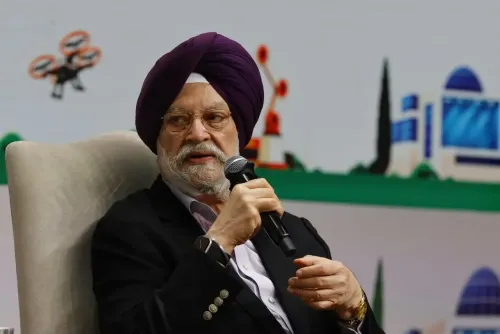
Even as global energy markets buckled under geopolitical shocks, not a single fuel pump in India ran dry — and Union Petroleum Minister Hardeep Singh Puri wants the world to know exactly how that happened. On Friday, 20 November 2026, Puri took to X to highlight a brainstorming meeting he hosted at his residence with representatives of Petroleum Dealers' Associations from across the country, calling India's network of 92,000 PSU OMC petroleum dealers the 'true backbone of India's energy family.'
A meeting at the minister's residence — and what was on the table
Puri described gathering dealer representatives to 'brainstorm fresh, innovative ideas to elevate the fuel retail experience.' The meeting signals a deliberate push to bring ground-level voices into policy discussions on retail modernisation — a space that spans everything from digital payment infrastructure at pumps to dealer margin structures. The three public-sector oil marketing companies — Indian Oil Corporation Limited (IOCL), Bharat Petroleum Corporation Limited (BPCL), and Hindustan Petroleum Corporation Limited (HPCL) — collectively anchor this dealer network and were tagged in the post.
How India kept every pump running through global chaos
Puri credited three interlocking factors for India's uninterrupted fuel supply during recent global disruptions: the energy diplomacy of Prime Minister Narendra Modi, the opening of alternative crude import routes, and ramped-up domestic production. The reference to global geopolitical crises tracks directly to the volatility unleashed since the 2022 Russia-Ukraine conflict, after which India notably diversified its crude import basket — including sharply increasing volumes sourced from Russia — to shield consumers from supply squeezes and price spikes.
On the production side, successive rounds of the Open Acreage Licensing Policy (OALP), launched in 2016, have been designed to draw investment into domestic exploration and gradually reduce import dependence. Together, these measures form the government's layered approach to downstream energy security.
92,000 dealers and the last-mile bet
The figure of 92,000 PSU OMC petroleum dealers is more than a talking point — it represents the capillary network through which policy intentions actually reach the Indian motorist, the farmer running an irrigation pump, and the trucker keeping supply chains alive. Keeping that network modernised, motivated, and financially viable is the unglamorous operational challenge that sits behind every headline about energy diplomacy. Puri's decision to personally host dealer representatives suggests the ministry is treating retail-network health as a strategic, not merely administrative, priority.
India's consistent emphasis on a large, state-backed retail infrastructure — rather than leaving last-mile distribution entirely to market forces — has proven its value precisely in moments of global disruption. The question now is whether the 'innovative ideas' floated at this meeting translate into concrete policy: on dealer margins, digital upgrades, or the next wave of OALP bidding that could further shore up domestic supply. The wheels, as the minister puts it, are not stopping.
Point of View
Or remain at the level of ministerial goodwill.
NationPress
20 Nov 2026
Frequently Asked Questions
How many PSU petrol pump dealers are there in India?
Union Petroleum Minister Hardeep Singh Puri cited a network of 92,000 PSU OMC petroleum dealers operating under the three major public-sector oil marketing companies — IOCL, BPCL, and HPCL.
Why did no petrol pump run out of fuel in India despite global energy crises?
The government attributes the uninterrupted supply to PM Modi's energy diplomacy, the opening of alternative crude import routes (including increased Russian crude purchases after 2022), and growth in domestic production supported by the Open Acreage Licensing Policy.
What is India's Open Acreage Licensing Policy (OALP)?
OALP, launched in 2016 , allows exploration companies to identify and bid for oil and gas blocks across India at any time of the year, aiming to boost domestic hydrocarbon production and reduce import dependence.
What did Hardeep Singh Puri discuss with petroleum dealers on 20 November 2026?
Puri hosted representatives of Petroleum Dealers' Associations at his residence to brainstorm 'fresh, innovative ideas' to improve the fuel retail experience across India's PSU dealer network.
Which companies run India's public sector petrol pump network?
India's PSU fuel retail network is operated by three companies: Indian Oil Corporation Limited (IOCL) , Bharat Petroleum Corporation Limited (BPCL) , and Hindustan Petroleum Corporation Limited (HPCL) .