CM Pema Khandu marks 79th National Flag adoption day
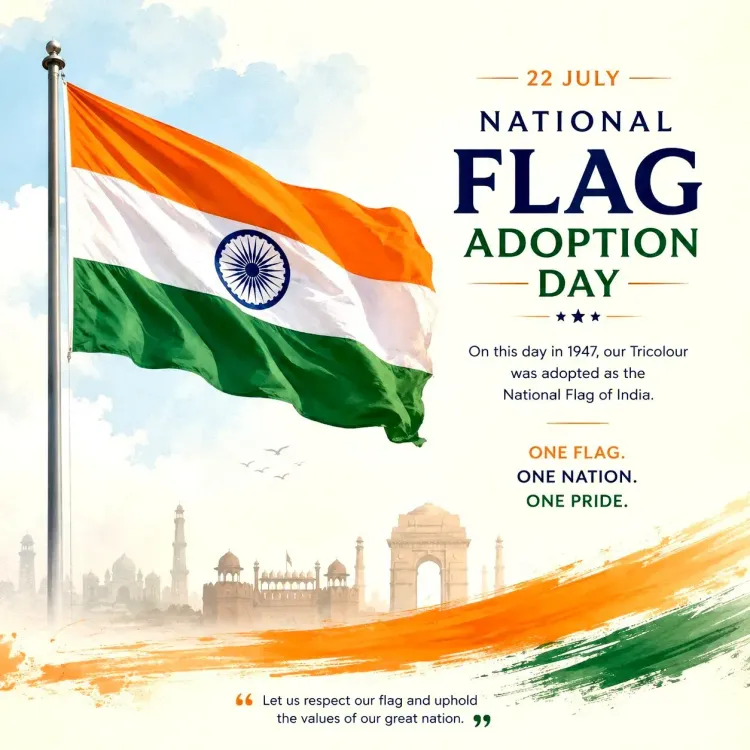
Synopsis
Arunachal Pradesh Chief Minister Pema Khandu marked the 79th anniversary of the Constituent Assembly's adoption of the Tricolour on 22 July 1947, calling on citizens to honour the National Flag by upholding constitutional ideals and working toward a united, prosperous India.
Key Takeaways
The Constituent Assembly adopted India's Tricolour as the National Flag on 22 July 1947 , weeks before independence.
Arunachal Pradesh CM Pema Khandu marked the 79th anniversary of the adoption on 22 July 2026 .
Khandu described saffron as representing courage and sacrifice, white as peace and truth, and green as growth and prosperity.
The Ashoka Chakra was cited as a symbol of the eternal values of righteousness and progress.
The message called on citizens to uphold constitutional ideals ahead of Independence Day on 15 August 2026 .
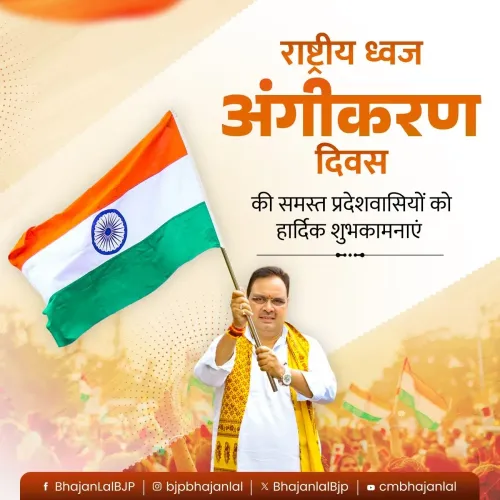
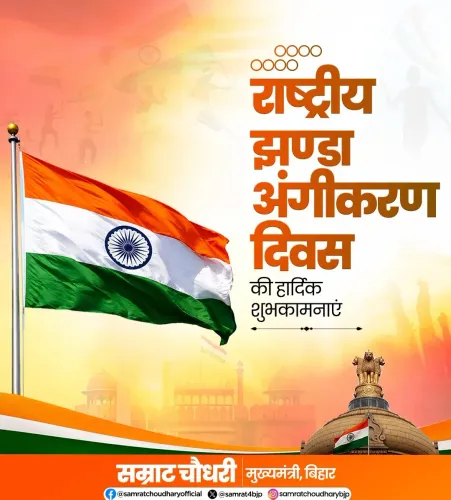
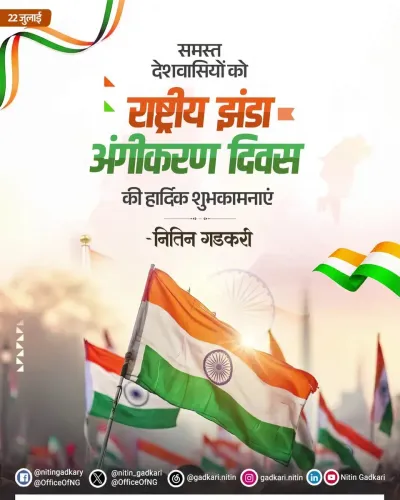
Arunachal Pradesh Chief Minister Pema Khandu on Wednesday, 22 July 2026, marked the 79th anniversary of the adoption of India's National Flag, recalling the historic Constituent Assembly resolution of 22 July 1947 that enshrined the Tricolour as the nation's symbol. Khandu used the occasion to call on citizens to uphold constitutional ideals and work toward a stronger, united India.
Context
On 22 July 1947 — weeks before India formally became independent — the Constituent Assembly met and adopted the Tricolour as the National Flag of India, a decision that predated the midnight transfer of power on 15 August 1947. The flag's design, with its three horizontal bands and the Ashoka Chakra at its centre, was the result of deliberations that drew on both nationalist symbolism and the inclusive vision of the independence movement.
Khandu, in his post, described the significance of each element: 'The saffron represents courage and sacrifice, white signifies peace and truth, green reflects growth and prosperity, while the Ashoka Chakra reminds us of the eternal values of righteousness and progress.' The statement reflects the standard constitutional interpretation of the flag's colours as codified in national civic education.
Policy Backdrop
Indian political leaders across parties routinely mark constitutional milestones through public statements, but the practice carries added resonance for BJP leaders in border states such as Arunachal Pradesh, where emphasis on national symbols and integration is woven into both governance messaging and security strategy. The state shares a sensitive frontier with China, making assertions of national identity a recurring theme in official communication from Itanagar.
The Flag Code of India and related constitutional-education initiatives have seen renewed attention in recent years, with programmes encouraging citizens to display and respect the Tricolour as part of broader civic campaigns. CM Khandu's message aligns with this wider pattern of using pre-independence anniversaries to reinforce constitutional values.
Stakeholders and Impact
The primary audience for such messaging is the general citizenry of Arunachal Pradesh and, by extension, the national public that follows senior state leaders on social media. For a state with a young demographic and strategic geographic importance, reminders of constitutional heritage serve both an educational and a unifying function.
Civil-society groups, educators, and local government bodies in the state are the secondary stakeholders, as anniversary messaging of this kind typically precedes or accompanies state-level flag-hoisting ceremonies, school programmes, and community events in the run-up to Independence Day on 15 August.
What's Next
With Independence Day less than four weeks away, state governments across India are expected to ramp up civic-engagement activities centred on national symbols. In Arunachal Pradesh, this is likely to include flag-hoisting events, constitutional-literacy drives, and community outreach in border districts. CM Khandu's post sets an early tone for that period, reinforcing the state administration's commitment to constitutional values as a pillar of public communication ahead of 15 August 2026.
Point of View
The statement projects cross-partisan appeal while subtly underlining Arunachal Pradesh's place within the Indian constitutional order — a point that carries geopolitical weight given the state's disputed frontier. The timing, less than four weeks before Independence Day, positions the administration as an early standard-bearer for civic fervour, a posture that typically translates into state-level ceremonial programming. It is part of a broader, sustained pattern of using social media to convert constitutional milestones into soft-power moments for the ruling dispensation in the Northeast.
NationPress
21 Oct 2026
Frequently Asked Questions
When did India adopt the National Flag?
India's National Flag, the Tricolour, was formally adopted by the Constituent Assembly on 22 July 1947 , several weeks before independence on 15 August 1947.
What do the colours of the Indian flag represent?
Saffron represents courage and sacrifice, white signifies peace and truth, and green reflects growth and prosperity. The Ashoka Chakra at the centre symbolises righteousness and progress.
Why do Indian leaders mark 22 July every year?
22 July is observed as National Flag Adoption Day because the Constituent Assembly passed the resolution adopting the Tricolour on that date in 1947, making it a key pre-independence constitutional milestone.
What is the Ashoka Chakra on the Indian flag?
The Ashoka Chakra is a 24-spoked navy-blue wheel at the centre of the white band of the Tricolour, derived from the Lion Capital of Ashoka. It represents the eternal wheel of law, righteousness, and progress.