CM Pema Khandu Reviews Flood Crisis in Lower Siang, Lepa Rada
Synopsis
Chief Minister Pema Khandu on 6 July 2026 reviewed flood conditions in Lower Siang, Lepa Rada, and central Arunachal Pradesh districts with the Galo Welfare Society and local legislators, directing that relief reach affected families faster and restoration work begin without delay.
Key Takeaways
CM Pema Khandu chaired a flood review on 6 July 2026 covering Lower Siang , Lepa Rada , and central Arunachal Pradesh districts.
The review included a delegation from the Galo Welfare Society , a tribal welfare body representing the Galo community in the flood-affected belt.
Deputy Speaker Kardo Nyigyor , MLA Nyabi Jini Dirchi , and MLA Tojir Kadu were present, representing affected constituencies.
Khandu directed that relief disbursement must accelerate and restoration work must begin immediately for all affected families.
The Siang valley is a recurrently flood-prone zone; the state coordinates with the NDMA and draws on the NDRF for large-scale response.
With the monsoon running through September , timelines for relief and any central assessment requests are the key near-term indicators.
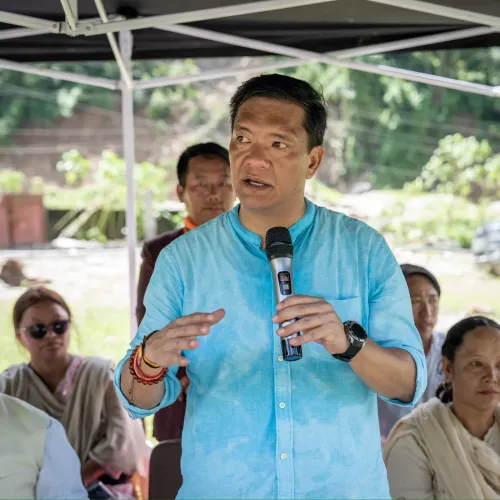
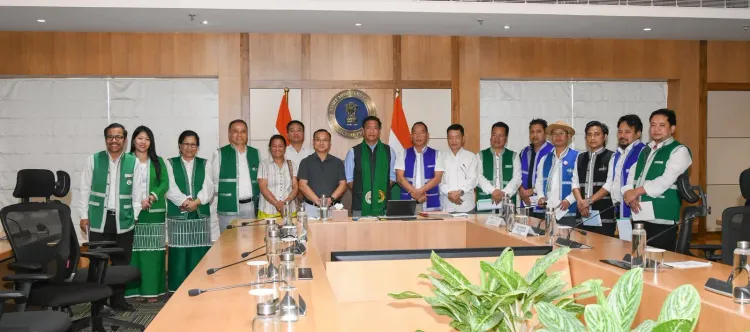
Arunachal Pradesh Chief Minister Pema Khandu on Monday, 6 July 2026, chaired a review of the ongoing flood situation across Lower Siang, Lepa Rada, and central districts of the state, meeting with a delegation from the Galo Welfare Society alongside senior legislators. The Chief Minister underscored that relief operations must accelerate and restoration work begin in earnest to ensure every affected family receives the support it deserves.
Context
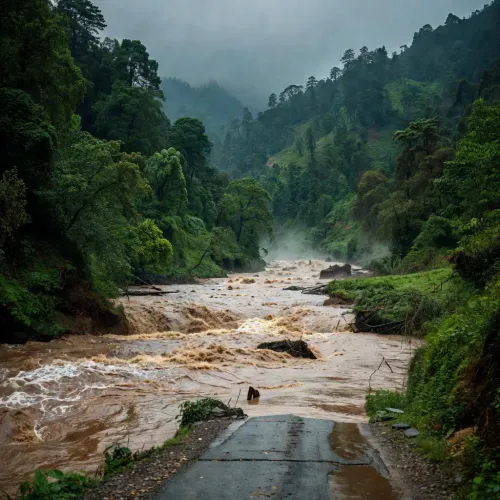
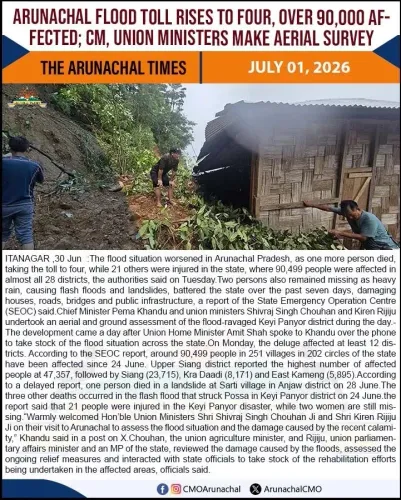
Arunachal Pradesh is in the grip of its annual monsoon flood cycle, with the Siang river valley districts among the worst-hit zones. Lower Siang and the relatively newer district of Lepa Rada — carved out for administrative efficiency — sit along Himalayan river channels that swell sharply during the June-September monsoon season, displacing communities and damaging infrastructure each year. The Galo Welfare Society, which represents the Galo tribe spread across these districts, joined the review to channel ground-level concerns directly to the Chief Minister.
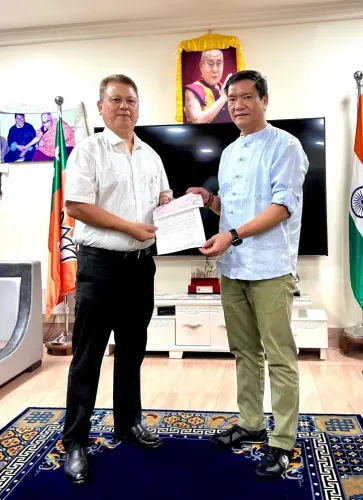
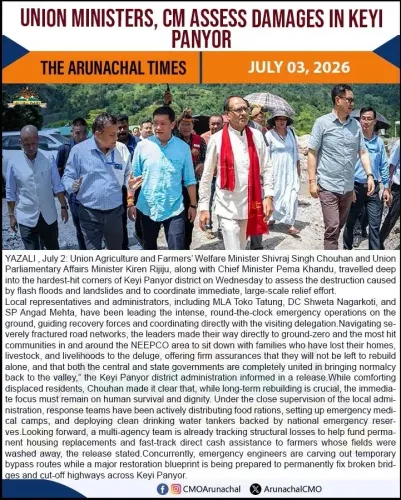
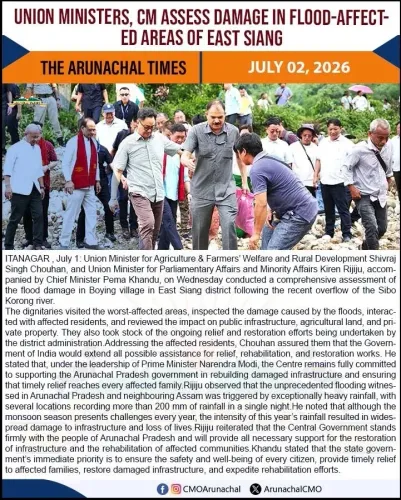
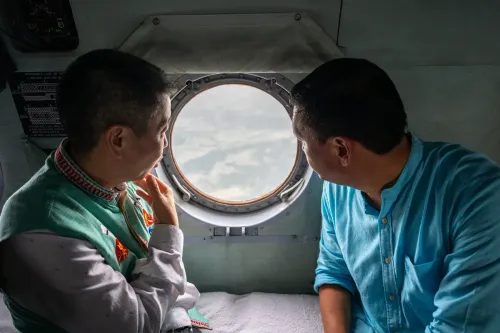
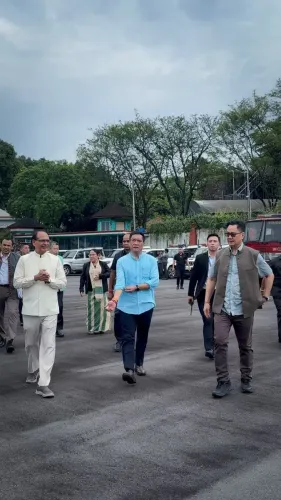
The meeting was attended by Deputy Speaker Kardo Nyigyor, MLA Nyabi Jini Dirchi, and MLA Tojir Kadu — elected representatives from the affected constituencies who brought firsthand accounts of the damage to the table. Khandu posted four images from the review session on X, signalling the administration's intent to maintain public visibility on the relief effort.
Policy Backdrop
The Arunachal Pradesh government has a standing framework for monsoon disaster response that involves coordination with the National Disaster Management Authority (NDMA) and draws on the National Disaster Response Fund (NDRF) for large-scale relief and reconstruction. Successive state administrations have emphasised faster disbursement of relief funds and early commencement of restoration works as the two critical metrics of effective flood response. Integrating tribal welfare organisations such as the Galo Welfare Society into official review processes is an established practice across Northeast India, helping the state machinery reach remote and difficult terrain more efficiently.
Chief Minister Pema Khandu, in office since 2016, has repeatedly overseen monsoon emergency reviews in the Siang valley belt, a region that faces recurrent inundation from tributaries of the Brahmaputra. His administration has in past seasons sought both central teams for damage assessment and supplementary budget provisions for district-level restoration projects.
Stakeholders and Impact
The most immediate stakeholders are the flood-affected families across Lower Siang, Lepa Rada, and the central districts, whose livelihoods, homes, and agricultural land are at risk during every monsoon season. The Galo community, one of the larger tribal groups in this belt, is particularly exposed given the geographic concentration of its population along river corridors. Community organisations like the Galo Welfare Society play a critical bridging role, translating administrative commitments into last-mile outreach and holding the state accountable for timely delivery.
Local legislators — Deputy Speaker Nyigyor, MLA Dirchi, and MLA Kadu — serve as the political accountability layer, ensuring that constituency-level grievances surface in high-level reviews rather than getting filtered out through bureaucratic channels. Their presence at the meeting signals cross-institutional coordination at a time when speed of response is paramount.
What's Next
The immediate watch-points are the timelines for relief disbursement to affected households and the launch of restoration works for damaged roads, bridges, and embankments across the three district clusters. Any request for a central assessment team or a supplementary budget allocation would indicate the scale of damage exceeds routine state reserves. The Chief Minister's public directive — 'relief must move faster, restoration must begin stronger' — sets a visible benchmark against which the administration's follow-through will be measured in the coming weeks.
With the monsoon season running through September, Arunachal Pradesh faces the likelihood of further precipitation events in the Siang valley, making the speed and quality of the current response a template for how the state manages the remainder of the season.
Point of View
Raising the political cost of a slow follow-through. This pattern of integrating tribal civil society into official disaster reviews is increasingly standard across Northeast India and serves both accountability and outreach functions simultaneously.
NationPress
5 Oct 2026
Frequently Asked Questions
Which districts in Arunachal Pradesh are affected by floods in July 2026?
Chief Minister Pema Khandu's review on 6 July 2026 identified Lower Siang, Lepa Rada, and central Arunachal Pradesh districts as the flood-affected areas under immediate focus.
Who is the Galo Welfare Society and why were they in the flood review?
The Galo Welfare Society is a community organisation representing the Galo tribe across Arunachal Pradesh. It was included in the review because the Galo community is concentrated in the flood-prone Siang valley belt and the organisation provides ground-level outreach that complements official relief machinery.
What did CM Pema Khandu say about flood relief in Arunachal Pradesh?
Khandu stated that relief must move faster, restoration must begin stronger, and every affected family must receive the support they deserve — setting a clear public directive for the state administration.
What is the National Disaster Response Fund and does Arunachal Pradesh use it?
The National Disaster Response Fund (NDRF) is a central government mechanism for financing large-scale disaster relief and restoration. Arunachal Pradesh has in past monsoon seasons sought NDRF assistance and central assessment teams for flood damage in the Siang valley districts.
Why does Lower Siang flood every monsoon?
Lower Siang sits along the Siang river, a major Himalayan tributary of the Brahmaputra. The river swells sharply during the June-September monsoon due to heavy Himalayan rainfall and glacial melt, making the district one of Arunachal Pradesh's most recurrently flood-prone zones.