CM Pema Khandu Hosts Holy Relics of Buddha in Arunachal
Synopsis
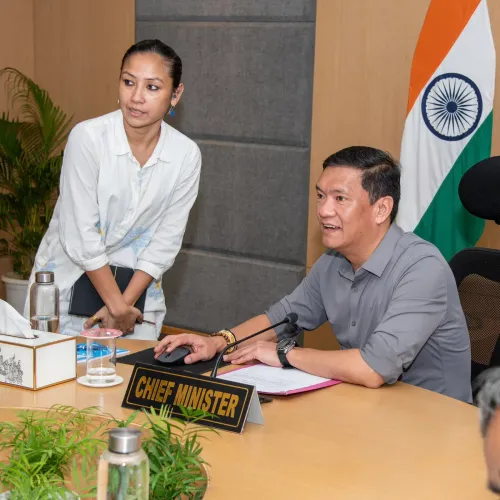
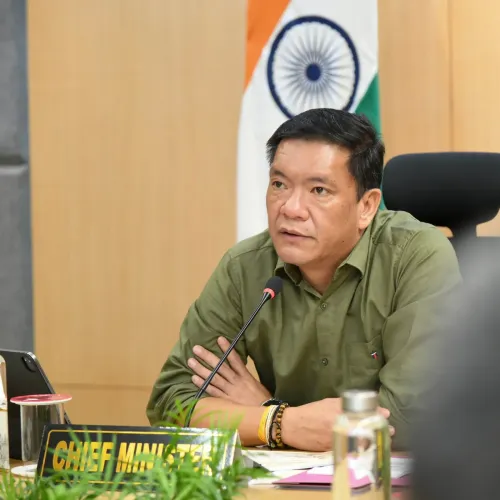
Arunachal Pradesh Chief Minister Pema Khandu has shared a message from the 14th Dalai Lama blessing the exposition of Holy Relics of Buddha Shakyamuni in the state, calling on residents to deepen their Buddhist practice alongside seeking blessings.
Key Takeaways
The Holy Relics of Buddha Shakyamuni have arrived in Arunachal Pradesh for a sacred public exposition.
The 14th Dalai Lama sent a personal message of prayers and good wishes, citing his own visits to the state as evidence of growing Buddhist study there.
CM Pema Khandu described the state government as committed to preserving Buddhist heritage and promoting peace, compassion, and harmony.
India has organised multi-state relic expositions since the 1950s as exercises in cultural stewardship and soft diplomacy.
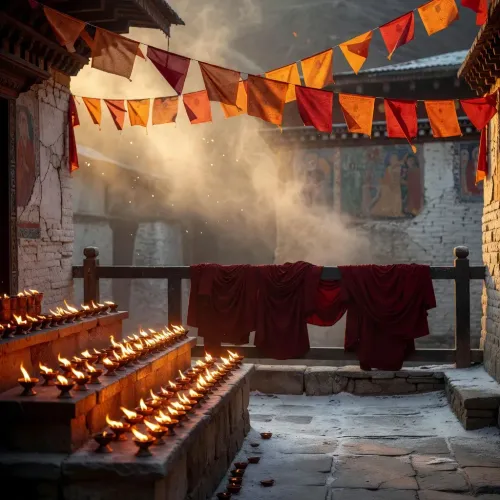
Arunachal Pradesh's Tawang and border districts carry deep Mahayana and Vajrayana Buddhist traditions linked to Tibetan lineages.
Further state announcements on monastery support and Buddhist tourism infrastructure are anticipated following the exposition.
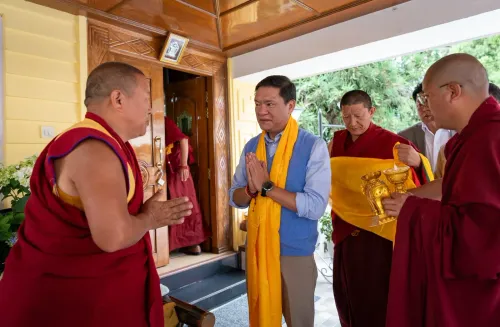
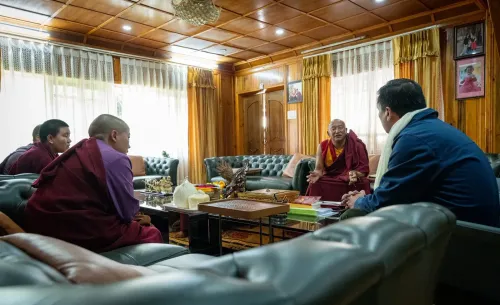
Sacred relics of Buddha Shakyamuni have arrived in Arunachal Pradesh, and Arunachal Pradesh Chief Minister Pema Khandu is marking the occasion with a message of deep reverence — anchored by a personal blessing from the 14th Dalai Lama himself.
Sharing the Dalai Lama's message on Saturday, 31 October 2026, CM Khandu wrote that His Holiness had reminded devotees that the chance to see the sacred relics 'is not merely a spiritual occasion to receive blessings, but also an opportunity to deepen our understanding of Buddhism through study, reflection and practice.' That framing — blessings paired with rigorous personal practice — sets the tone for the state government's entire approach to this exposition.
Dalai Lama's Personal Testimony on Arunachal's Buddhist Growth
What made the Dalai Lama's message stand out, Khandu noted, was its personal quality. His Holiness drew on his own visits to Arunachal Pradesh to observe 'a steady growth in the study of Buddhism and appreciation of its benefits among devotees' — a firsthand endorsement that carries enormous weight in a state where Mahayana and Vajrayana Buddhist traditions run centuries deep, especially in Tawang and the border districts.
The Dalai Lama has visited Arunachal Pradesh on multiple occasions, and his continued engagement with the state carries both spiritual and geopolitical resonance, given the state's strategic location along the India-China border. China has historically contested Arunachal Pradesh's status; high-profile Buddhist events anchored by the Dalai Lama's blessing quietly but firmly reinforce the state's deep cultural and civilisational ties to the Indian republic.
A Heritage Strand That Goes Back to the 1950s
The exposition of Buddha Shakyamuni's relics is not a new tradition in India. Since the 1950s, the Indian government has periodically arranged multi-state tours of the relics, allowing Buddhist communities across the subcontinent to pay homage. Each tour is an exercise in both cultural stewardship and soft-power, drawing pilgrims, scholars and tourists alike.
Arunachal Pradesh's inclusion in the current tour reflects the state government's active push to position the region as a living centre of Buddhist heritage — not merely a border zone on a security map, but a place where the dharma breathes and evolves. Khandu emphasised the government's commitment to 'preserving our rich Buddhist heritage and promoting the values of peace, compassion and harmony.'
What the State Government Is Signalling
Khandu's post closes with a direct call to action for residents: to 'not only seek blessings but also practise the timeless teachings of Bhagwan Buddha in their daily lives.' That phrase is deliberate. It positions the state government not as a passive facilitator of religious tourism, but as an active steward of a living philosophical tradition.
Watchers of Arunachal Pradesh's cultural policy will now look for follow-up announcements — monastery conservation grants, Buddhist study-centre support, or new infrastructure for religious tourism in Tawang and neighbouring districts. The relics' arrival is a moment. What the state builds around it is the story.
Point of View
Delivered to a border state that China claims, subtly underscores Arunachal's civilisational belonging to India's Buddhist heritage map. CM Khandu's framing — encouraging active practice over passive pilgrimage — signals a maturing state cultural policy that wants Buddhism to be a living identity, not just a tourism asset. For the BJP-led state government, facilitating events with this level of international Buddhist endorsement also reinforces a broader national narrative of India as the global home of dharma. Expect monastery conservation and Buddhist study-centre funding to follow as tangible policy sequels.
NationPress
31 Oct 2026
Frequently Asked Questions
What are the Holy Relics of Buddha Shakyamuni being exhibited in Arunachal Pradesh?
These are sacred relics of the historical Buddha, Shakyamuni, which are periodically displayed across Indian states so that Buddhist devotees can pay homage. India has organised such multi-state exposition tours since the 1950s.
What did the Dalai Lama say about the exposition in Arunachal Pradesh?
The 14th Dalai Lama sent a message of prayers and good wishes, reminding devotees that seeing the relics is an opportunity to deepen Buddhist understanding through study, reflection and practice — not merely to receive blessings.
Why is Arunachal Pradesh significant for Buddhism?
Arunachal Pradesh, particularly the Tawang district and border regions, has deep Mahayana and Vajrayana Buddhist traditions linked to Tibetan lineages, with centuries-old monasteries and a substantial Buddhist devotee population.
Has the Dalai Lama visited Arunachal Pradesh before?
Yes, the 14th Dalai Lama has visited Arunachal Pradesh on multiple occasions and has personally observed what he describes as steady growth in Buddhist study and practice among the state's devotees.
What is the Arunachal Pradesh government doing to promote Buddhist heritage?
Under CM Pema Khandu, the state government has been facilitating sacred events such as the Holy Relics exposition and is committed to preserving Buddhist heritage and supporting values of peace, compassion, and harmony, with observers watching for follow-up announcements on monastery support and religious tourism infrastructure.