CM Majhi backs exam integrity bill with 10-yr jail, ₹10 cr fine
Synopsis
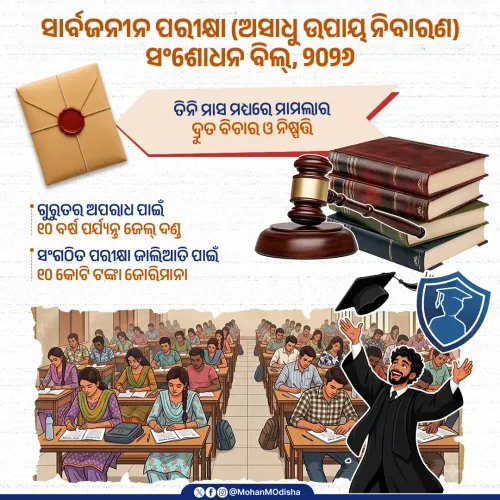
Odisha CM Mohan Charan Majhi has endorsed the Public Examinations (Prevention of Unfair Means) Amendment Bill, 2026, which proposes fines up to ₹10 crore, up to 10 years in prison, and fast-track trials within three months to combat paper leaks and organised cheating in India's public examinations.
Key Takeaways
Odisha CM Mohan Charan Majhi publicly backed the Public Examinations (Prevention of Unfair Means) Amendment Bill, 2026 on 27 July 2026 .
The bill proposes fines of up to ₹10 crore for examination malpractice offences.
Accused persons could face imprisonment of up to 10 years under the proposed provisions.
Fast-track trials must dispose of cases within three months , a major procedural shift.
The amendment builds on the foundational Public Examinations (Prevention of Unfair Means) Act, 2024 .
The bill targets organised paper leak networks and cheating syndicates affecting national and state-level competitive exams.
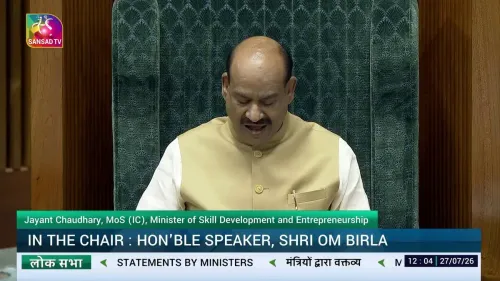
Odisha Chief Minister Mohan Charan Majhi on Monday, 27 July 2026, voiced strong support for the Public Examinations (Prevention of Unfair Means) Amendment Bill, 2026, calling it a historic and decisive step towards safeguarding the future of India's youth. The bill, introduced in Parliament, proposes stringent penalties including fines of up to ₹10 crore, imprisonment of up to 10 years, and fast-track trials mandating disposal of cases within three months.
Context
CM Majhi credited Prime Minister Narendra Modi with an 'unwavering resolve to protect merit and uphold the highest standards of integrity in India's examination system.' His post frames the amendment as a direct response to the organised networks that have repeatedly compromised high-stakes public examinations across the country. The statement positions the bill as a landmark shift from reactive damage control to proactive deterrence.
Policy Backdrop
The amendment builds on the Public Examinations (Prevention of Unfair Means) Act, 2024, which Parliament enacted to address a surge in paper leak scandals and organised cheating in competitive examinations, including the high-profile controversies surrounding NEET and several state-level recruitment tests. That original law established the foundational legal architecture; the 2026 amendment is designed to sharpen penalties and accelerate judicial proceedings. The introduction of fast-track trials — with a three-month disposal mandate — marks a significant procedural departure from the prolonged litigation that has historically allowed accused networks to evade swift accountability.
The broader legislative effort reflects a central government push to restore public confidence in merit-based selection for education seats and government jobs, both of which are intensely competitive in India's aspirant economy. Paper leak syndicates have been documented operating across multiple states, making a uniform national legal framework a key demand from student groups and civil society.
Stakeholders and Impact
The primary beneficiaries of the amendment, if enacted and enforced, are the millions of students and competitive examination aspirants who invest years of preparation in tests such as UPSC, SSC, NEET, and state public service commission examinations. For this demographic, paper leaks do not merely represent procedural failure — they represent the erasure of merit and the distortion of life outcomes. The proposed ₹10 crore fine and 10-year imprisonment provisions are calibrated to deter well-funded organised networks, not just individual bad actors.
State governments, including Odisha, will play a critical role in enforcement once the amendment is passed, since many affected examinations are conducted at the state level. CM Majhi's public endorsement signals that Odisha is aligned with the Centre's approach and may be expected to strengthen its own examination oversight mechanisms in parallel.
What's Next
The Public Examinations (Prevention of Unfair Means) Amendment Bill, 2026 will now face parliamentary debate and scrutiny before it can be enacted into law. Opposition parties are likely to weigh in on the adequacy of the provisions and the implementation machinery. Equally important will be the question of state-level adoption — whether state governments will align their own examination laws and enforcement agencies with the amended central framework. The effectiveness of the fast-track trial mechanism will ultimately depend on the capacity of designated courts and investigative agencies to handle the anticipated caseload within the stipulated three-month window.
Point of View
Youth aspiration, and zero tolerance for corruption in public systems. The original 2024 Act was widely seen as a response to electoral pressure following the NEET controversy; the 2026 amendment suggests the Centre is doubling down rather than treating the issue as resolved. For state-level BJP leaders like Majhi, vocal support serves a dual purpose: it aligns them with the Prime Minister's agenda and positions them as champions of the crore-strong aspirant class. The real test, however, will be enforcement — stringent laws on paper have historically coexisted with weak prosecution rates in examination fraud cases across India.
NationPress
26 Oct 2026
Frequently Asked Questions
What is the Public Examinations Amendment Bill 2026?
The Public Examinations (Prevention of Unfair Means) Amendment Bill, 2026 is a proposed law that strengthens India's existing 2024 exam integrity legislation by introducing fines of up to ₹10 crore, imprisonment of up to 10 years, and fast-track trials with a three-month case disposal mandate to combat paper leaks and organised cheating.
Why did Odisha CM Mohan Majhi comment on the exam bill?
CM Mohan Charan Majhi posted on X on 27 July 2026 to publicly endorse the bill, calling it a historic step and crediting Prime Minister Modi's resolve to protect merit in India's examination system.
What penalties does the 2026 exam amendment bill propose?
The bill proposes fines of up to ₹10 crore and imprisonment of up to 10 years for offences related to paper leaks, organised cheating networks, and examination malpractice, along with fast-track trials to resolve cases within three months.
What was the Public Examinations Act 2024?
The Public Examinations (Prevention of Unfair Means) Act, 2024 was legislation passed by Parliament to address rising incidents of paper leaks and organised cheating in competitive exams such as NEET and state-level recruitments; the 2026 amendment seeks to strengthen its provisions.
How will the fast-track trial provision in the exam bill work?
Under the proposed amendment, cases related to examination malpractice would be referred to fast-track courts with a mandate to dispose of each case within three months, significantly reducing the prolonged litigation that has allowed accused networks to delay accountability.