CM Majhi Hails 'URMI' Selection at IFFK and KIFF

Synopsis
Odisha CM Mohan Charan Majhi celebrated the selection of Odia film 'URMI' at the 31st IFFK and 32nd KIFF, calling it a milestone for Odia cinema and urging the industry to reach global audiences.
Key Takeaways
Odia film 'URMI' has been officially selected at both the 31st International Film Festival of Kerala (IFFK) and the 32nd Kolkata International Film Festival (KIFF) .
Odisha Chief Minister Mohan Charan Majhi posted congratulations on November 22, 2026 , calling the selection a 'significant milestone.' IFFK is organised by the Kerala State Chalachitra Academy in Thiruvananthapuram ; KIFF is a long-running festival hosted by the West Bengal government .
Dual selection at both festivals in a single cycle is considered a strong marker of artistic merit in India's parallel cinema circuit.
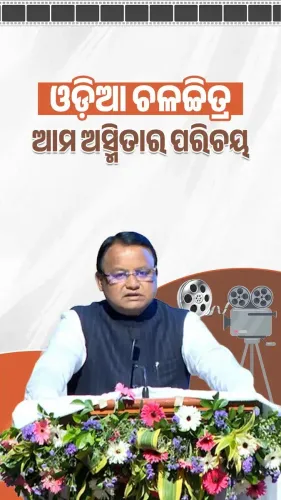
CM Majhi expressed hope that Odia cinema will 'transcend boundaries and earn acclaim on the global stage.'
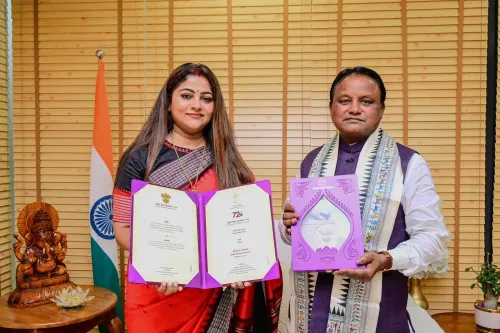
Odia cinema is crossing state lines and earning its place on marquee screens — and Odisha Chief Minister Mohan Charan Majhi wants the country to take notice. The official selection of Odia film 'URMI' at both the 31st International Film Festival of Kerala (IFFK) and the 32nd Kolkata International Film Festival (KIFF) has drawn warm congratulations from the CM, who called it 'another significant milestone' in Odisha's growing cultural footprint.
'URMI' lands at two of India's most prestigious regional festival circuits
Being selected at both IFFK — organised by the Kerala State Chalachitra Academy in Thiruvananthapuram — and KIFF, the West Bengal government's flagship festival now in its 32nd edition, is no small feat. These are not promotional showcases; they are competitive, curatorially rigorous platforms where regional-language cinema competes on artistic merit. For an Odia film to earn a berth at both simultaneously signals a step-change in the ambition and reach of the state's film industry.
CM Majhi, posting on Sunday, November 22, extended his 'heartiest congratulations to the entire team on this remarkable achievement,' adding that such recognition 'strengthens the presence of Odia cinema and inspires a new generation of storytellers.'
Odisha's quiet push to put regional storytelling on the national map
Across India, state governments have increasingly used festival selections as cultural diplomacy — a signal that their linguistic and creative traditions deserve space beyond the Hindi mainstream. Odisha is no exception. Chief ministers highlighting regional cinema wins at national festivals is a pattern that reflects a broader political calculation: cultural pride is a unifying, apolitical dividend that speaks directly to local identity.
What makes this moment worth watching is the dual selection. Kerala and Kolkata have long been the twin poles of serious Indian parallel cinema — getting into one is a credential; getting into both in the same cycle is a statement. It suggests Odia filmmakers are not just seeking regional validation but actively competing in a national conversation about what Indian cinema looks like beyond Bollywood.
What it means for the next generation of Odia filmmakers
CM Majhi's post closed with a pointed aspiration: 'May Odia cinema continue to transcend boundaries and earn acclaim on the global stage.' That language — global, not just national — sets an expectation. Whether the state follows sentiment with structural support, through cinema infrastructure funding or subsidy frameworks, will determine whether this milestone is a turning point or a highlight reel moment. The story of Odia cinema's ambitions is still being written — and 'URMI' just added a compelling chapter.
Point of View
High-visibility act of cultural statecraft — amplifying an artistic win into a signal about Odisha's identity and creative ambition. State leaders across India have used regional cinema's festival traction as a surrogate for broader cultural policy, often without the budgetary follow-through that would sustain it. The dual IFFK-KIFF selection for 'URMI' hands Majhi a genuine, apolitical dividend at a time when Odia cultural pride is increasingly central to the BJP's state-level narrative. The question the milestone quietly raises is whether celebratory posts will translate into tangible infrastructure or subsidy policy for the Odia film industry.
NationPress
22 Nov 2026
Frequently Asked Questions
What is the film URMI selected for IFFK and KIFF?
'URMI' is an Odia-language film that has earned official selection at the 31st International Film Festival of Kerala and the 32nd Kolkata International Film Festival, marking a notable achievement for regional cinema from Odisha.
What is the International Film Festival of Kerala (IFFK)?
IFFK is an annual film festival organised by the Kerala State Chalachitra Academy in Thiruvananthapuram. Now in its 31st edition, it is one of India's most respected platforms for parallel and world cinema.
What is the Kolkata International Film Festival (KIFF)?
KIFF is a long-running film festival hosted by the West Bengal government, now in its 32nd edition. It is considered a premier showcase for Indian and international art-house cinema.
Why did Odisha CM Mohan Charan Majhi congratulate the URMI team?
CM Majhi congratulated the team because the official selection of an Odia film at two of India's most prestigious regional film festivals is a significant cultural milestone that elevates the profile of Odia cinema nationally.
How does Odia cinema compare to other regional film industries in India?
Odia cinema is a smaller regional industry compared to Telugu, Tamil, or Malayalam cinema, but selections at competitive national festivals like IFFK and KIFF signal a growing ambition among Odia filmmakers to compete on artistic merit beyond their home state.