CM Majhi conducts aerial survey of Odisha flood zones

Synopsis
Odisha CM Mohan Charan Majhi surveyed flood-hit districts of Jajpur, Bhadrak, Balasore, Mayurbhanj and Kendujhar by air on 1 August 2026. Over 2.69 lakh people have been evacuated to 700 relief camps, with Rs 26 crore released from SDRF and 153 rescue teams deployed round the clock.
Key Takeaways
CM Mohan Charan Majhi conducted an aerial survey on 1 August 2026 covering 12-plus flood-affected blocks across five northern Odisha districts.
2.69 lakh people have been evacuated and housed across 700 relief shelters providing food, water and medical care.
17 ODRAF , 7 NDRF and 129 fire service teams are engaged in round-the-clock rescue operations.
Rs 26 crore sanctioned from the State Disaster Response Fund (SDRF) for emergency relief.
Damage assessment and compensation for farmers and affected families to be completed within 3 days of floodwaters receding.
Administration directed to prepare for post-flood road repairs and health risks including waterborne disease outbreaks.
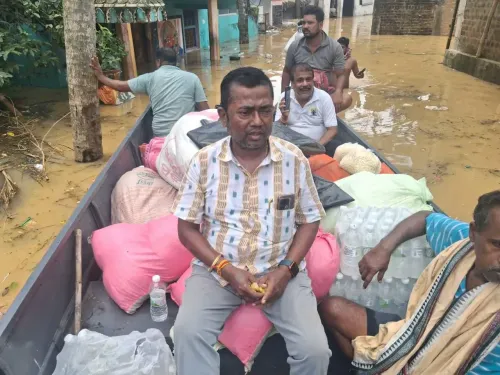
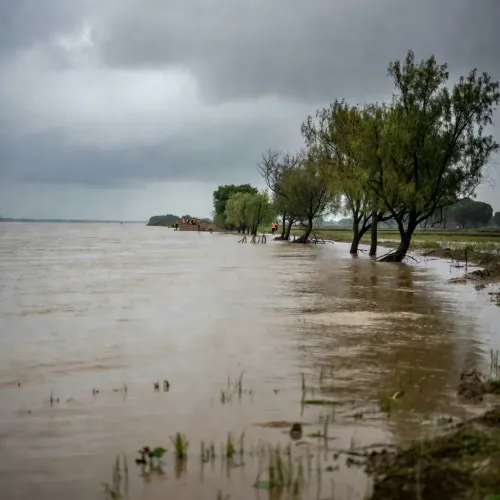
Five northern districts of Odisha are underwater, and Chief Minister Mohan Charan Majhi took to the skies on Saturday, 1 August 2026 to see the devastation firsthand — a signal that the state's top office is treating this flood not as routine monsoon business, but as a full-scale emergency.
Posting in Odia, the Chief Minister said: 'ବନ୍ୟାର ଏହି ବିପତ୍ତି ସମୟରେ ରାଜ୍ୟବାସୀଙ୍କ ଜୀବନ ଓ ସମ୍ପତ୍ତିର ସୁରକ୍ଷା କେବଳ ସରକାରୀ ଦାୟିତ୍ୱ ନୁହେଁ, ଏହା ମୋର ସର୍ବୋଚ୍ଚ ପ୍ରାଥମିକତା।' ('Protecting the lives and property of the people of the state during this flood crisis is not merely a government duty — it is my highest priority.')
Aerial survey covers 12-plus flood-hit blocks across five districts
Majhi conducted the aerial survey alongside Revenue and Disaster Management Minister Suresh Pujari and the Special Relief Commissioner, flying over more than 12 affected blocks across Jajpur, Bhadrak, Balasore, Mayurbhanj and Kendujhar districts. These five districts sit in Odisha's northern and coastal belt, where rivers including the Baitarani and Brahmani routinely swell during the monsoon — but this year's inundation has triggered a coordinated multi-agency response at a scale that underscores the severity.2.69 lakh people evacuated; 700 relief camps operational
According to the Chief Minister's post, 2.69 lakh people have been moved to safety so far. The rescue machinery on the ground is substantial: 17 ODRAF teams, 7 NDRF teams and 129 fire service units are working round the clock. The Odisha Disaster Rapid Action Force (ODRAF), built up after the devastating 1999 super cyclone, and the National Disaster Response Force (NDRF) form the twin pillars of Odisha's flood response architecture. Across 700 relief shelters, the state says it is providing cooked and dry food, safe drinking water and medical services to displaced residents. That is not a small logistical operation.Rs 26 crore released from SDRF for immediate relief
The government has sanctioned Rs 26 crore from the State Disaster Response Fund (SDRF) for emergency relief and rescue. The SDRF is the standard financing mechanism states draw on during declared disasters, and a release of this size signals that formal disaster protocols are fully activated. Majhi also announced a clear post-flood commitment: within three days of floodwaters receding, damage assessments will be completed and immediate assistance packages will be dispatched to affected farmers and families whose homes have been damaged. Administrators have been directed to stay on alert for road repairs and post-flood health risks — waterborne disease outbreaks being the most predictable next threat. The Chief Minister closed with a direct appeal to residents: follow instructions from local administration and rescue teams, stay in safe locations, and extend a hand of cooperation to one another. 'Your government,' he said, 'stands firmly with you at every moment.' With floodwaters yet to peak in some areas, the real test of that promise arrives when the waters pull back — and the compensation clock starts ticking.Point of View
Personal accountability rather than delegating the crisis to bureaucrats. The pre-announced three-day damage-assessment deadline is a measurable commitment that will be easy to hold the government to, raising the political stakes of delivery. Odisha's disaster management infrastructure, built painstakingly since 1999, is again being tested as a model; how quickly the SDRF funds translate into household-level compensation will determine whether that reputation holds. For a BJP government that came to power in Odisha in 2024, a well-managed flood response is also a trust-building exercise in a state where the opposition will be watching the relief rollout closely.
NationPress
1 Aug 2026
Frequently Asked Questions
Which districts in Odisha are affected by floods in August 2026?
Jajpur, Bhadrak, Balasore, Mayurbhanj and Kendujhar districts in northern Odisha are among the worst-hit, with more than 12 blocks surveyed by CM Majhi during his aerial inspection on 1 August 2026.
How many people have been evacuated in the Odisha floods?
According to CM Mohan Charan Majhi's post, 2.69 lakh people have been evacuated to safety and are being accommodated across 700 relief shelters.
How much money has the Odisha government released for flood relief?
The state government has sanctioned Rs 26 crore from the State Disaster Response Fund (SDRF) for immediate relief and rescue operations.
How many NDRF and ODRAF teams are deployed in Odisha floods?
7 NDRF teams, 17 ODRAF teams and 129 fire service units are deployed and working round the clock on rescue operations across the affected districts.
When will flood-affected farmers and families receive compensation in Odisha?
CM Majhi announced that damage assessments will be completed within three days of floodwaters receding, after which immediate assistance packages will be provided to affected farmers and families with damaged homes.