CM Majhi hails Swami Laxmanananda as guardian of Hindutva
Synopsis
Odisha Chief Minister Mohan Charan Majhi honoured Swami Laxmanananda Saraswati as a 'true guardian of Hindutva,' framing the ideology as India's soul and sovereignty — a statement that echoes BJP's post-2024 cultural consolidation drive in eastern India.
Key Takeaways
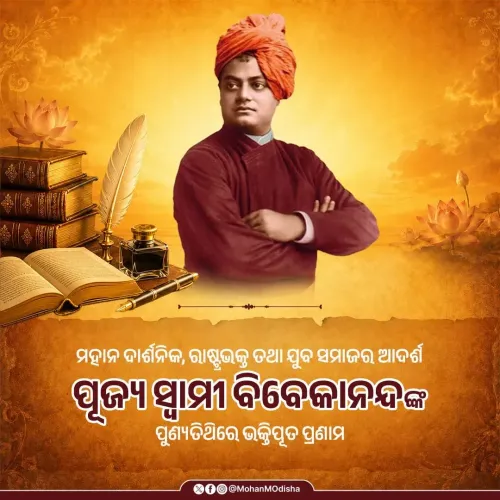
CM Mohan Charan Majhi posted a tribute to Swami Laxmanananda Saraswati on 29 July 2026 , calling him a 'true guardian of Hindutva.' Majhi defined Hindutva as 'India's soul, culture, humanity, patriotism, and sovereignty' — explicitly rejecting the label of narrow fanaticism.
Swami Laxmanananda Saraswati was assassinated in Kandhamal district, Odisha , in August 2008 , triggering major communal violence.
The tribute fits a broader BJP pattern of framing Hindutva as civilisational identity rather than sectarian belief, particularly in eastern India after 2024 election gains.
With the August anniversary of the Kandhamal events approaching, the statement is likely the first in a series of commemorative political communications.
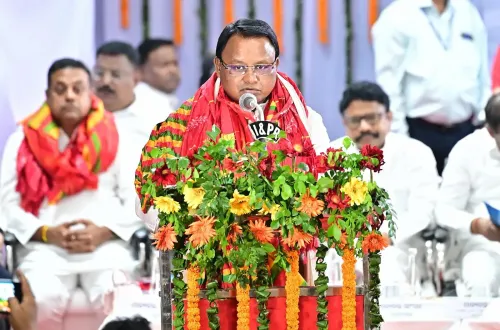
On Wednesday, 29 July 2026, Odisha Chief Minister Mohan Charan Majhi paid tribute to Swami Laxmanananda Saraswati, calling the slain Hindu ascetic a true sentinel of Hindutva — and in doing so, planted a sharp ideological marker in the state's political landscape.
Posting in Odia, CM Majhi wrote: 'ହିନ୍ଦୁତ୍ୱ କୌଣସି ସଂକୀର୍ଣ୍ଣ ଧର୍ମାନ୍ଧତା ନୁହେଁ' — 'Hindutva is not narrow fanaticism; Hindutva is the living symbol of India's soul, culture, humanity, patriotism, and sovereignty. Swami Laxmanananda Saraswati was the true guardian of this Hindutva.'
The man behind the tribute: Swami Laxmanananda's legacy in Kandhamal
Swami Laxmanananda Saraswati was a Hindu ascetic and anti-conversion activist who worked for decades among tribal communities in Kandhamal district, Odisha. His assassination in August 2008 triggered some of the most severe communal violence the state had seen in decades, leaving deep scars on Kandhamal's Hindu and Christian communities alike. The events have since become a recurring reference point in BJP discourse on religious conversion and cultural preservation in eastern India.
Hindutva as identity, not ideology — the BJP's eastern India frame
BJP leaders across states have increasingly framed Hindutva not as a political position but as a civilisational identity — synonymous with Indian culture itself. CM Majhi's post follows that playbook precisely, presenting Hindutva as the nation's 'soul' and 'sovereignty.' This messaging has intensified following the party's strong showing in eastern India in 2024, where it is working to consolidate support among both upper-caste and tribal voters in states like Odisha.
By invoking Swami Laxmanananda — a figure who commands deep reverence among Odisha's Hindu communities — Majhi signals continuity with a cultural-nationalist strand that predates the current government but now carries the weight of state power behind it.
With August anniversaries of the Kandhamal events approaching, such tributes are unlikely to remain isolated gestures. Watch for further statements around cultural policy and the state's approach to tribal welfare and religious affairs in the weeks ahead.
Point of View
An event that remains politically charged in Odisha. By defining Hindutva as India's 'soul and sovereignty' rather than a religious position, Majhi deploys the same discursive strategy the BJP has used nationally to broaden Hindutva's appeal beyond its traditional base. In a state where tribal communities are both electorally significant and the focal point of conversion debates, invoking Laxmanananda specifically targets that demographic's cultural anxieties. The post suggests the Odisha government intends to keep the Kandhamal narrative active as a mobilising frame through the anniversary season.
NationPress
29 Jul 2026
Frequently Asked Questions
Who was Swami Laxmanananda Saraswati?
Swami Laxmanananda Saraswati was a Hindu ascetic and anti-conversion activist who worked among tribal communities in Kandhamal district, Odisha. He was assassinated in August 2008, an event that triggered widespread communal violence in the region.
What did Odisha CM Mohan Majhi say about Hindutva?
CM Majhi stated that 'Hindutva is not narrow fanaticism' but rather 'the living symbol of India's soul, culture, humanity, patriotism, and sovereignty,' and called Swami Laxmanananda Saraswati its true guardian.
Why is Kandhamal significant in Odisha politics?
Kandhamal district became a flashpoint after the 2008 assassination of Swami Laxmanananda Saraswati triggered some of the worst communal violence in Odisha's history. The events are frequently referenced in debates around religious conversion and tribal cultural identity.
When did Mohan Charan Majhi become Chief Minister of Odisha?
Mohan Charan Majhi became Chief Minister of Odisha after the BJP won the 2024 state assembly elections, ending the long reign of the Biju Janata Dal in the state.
What is the BJP's Hindutva messaging strategy in eastern India?
Following its 2024 gains in eastern India, the BJP has increasingly framed Hindutva as a civilisational and cultural identity rather than a sectarian belief, seeking to consolidate support among both upper-caste and tribal voters in states like Odisha.