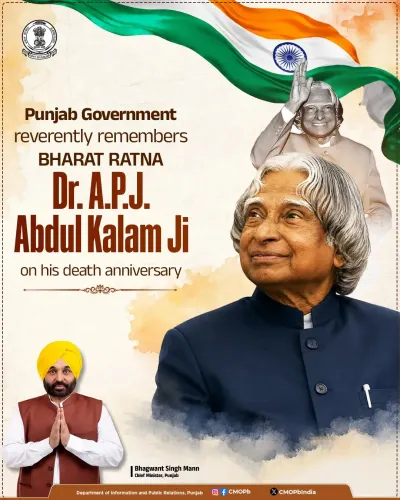
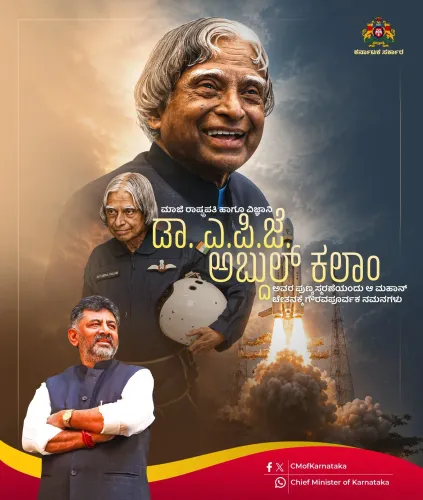
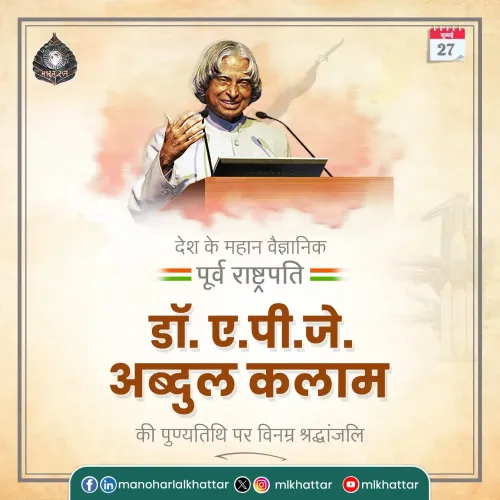
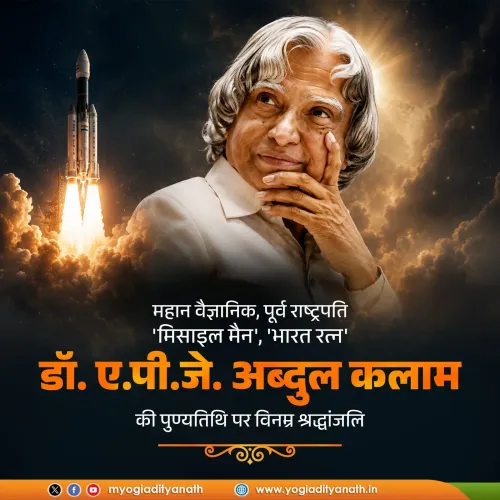
CM Majhi pays tribute to APJ Abdul Kalam on death anniversary
Synopsis
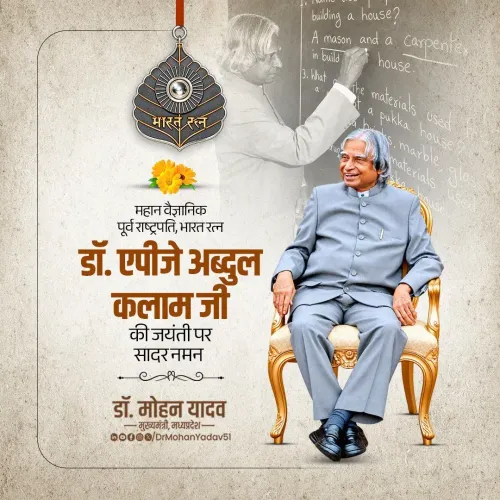
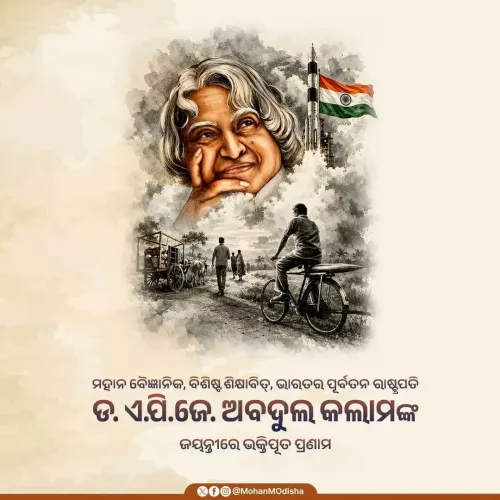
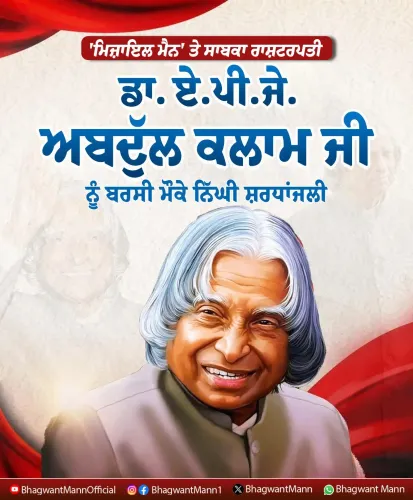
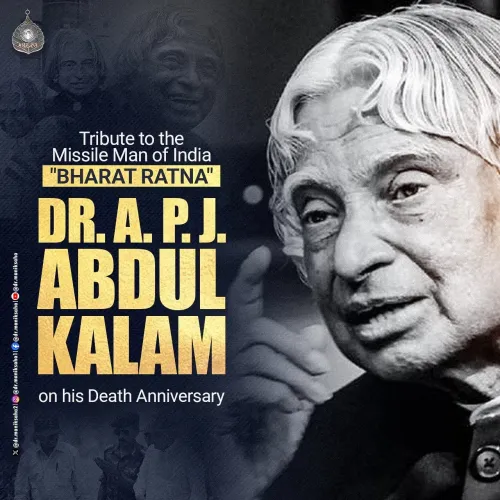
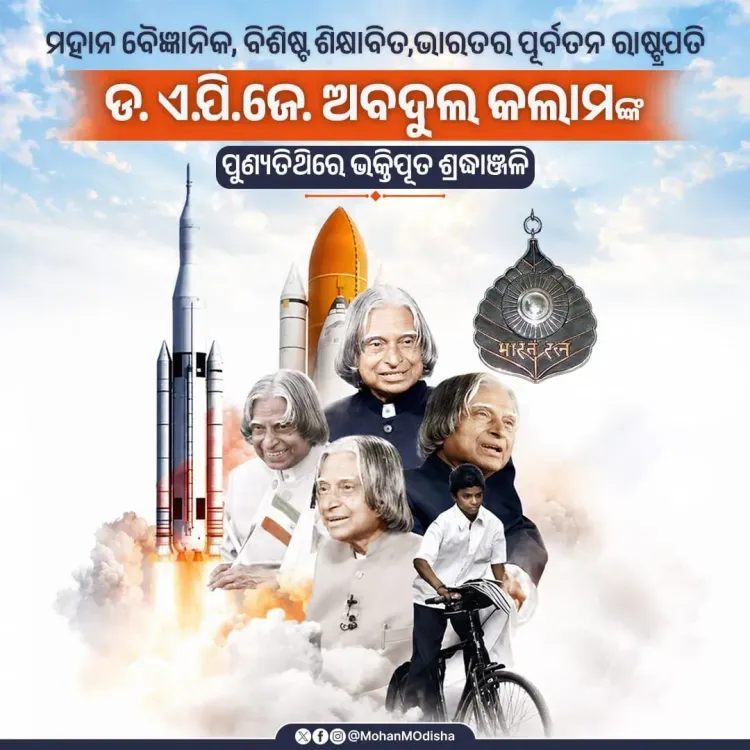
Odisha Chief Minister Mohan Charan Majhi on 27 July 2026 paid homage to Dr. A.P.J. Abdul Kalam on his death anniversary, calling his contributions to India's defence and space science 'a matter of eternal pride' and his vision 'a source of endless inspiration.'
Key Takeaways
CM Mohan Charan Majhi posted a tribute in Odia on 27 July 2026 , marking the death anniversary of Dr.
Kalam served as India's 11th President (2002–2007) and was awarded the Bharat Ratna in 1997 .
Known as the 'Missile Man of India,' Kalam led the Integrated Guided Missile Development Programme (IGMDP) from 1983 , producing the Agni, Prithvi and Akash systems.
He provided technical oversight during the Pokhran-II nuclear tests of 1998 , cementing India's strategic deterrence capability.
Kalam's birth anniversary, 15 October , is observed globally as World Students' Day , reflecting his lifelong focus on youth and education.
Leaders across parties mark 27 July annually, with tributes increasingly linked to India's expanding defence and space self-reliance agenda.
Odisha Chief Minister Mohan Charan Majhi on Monday, 27 July 2026 paid homage to former President and scientist Dr. A.P.J. Abdul Kalam on his death anniversary, honouring the legacy of a leader widely regarded as the architect of India's indigenous missile and space programmes.
Posting in Odia on X, CM Majhi described Kalam as a 'mahaana baigyaanika, missile man' — 'great scientist and Missile Man' — and extended humble tributes on the occasion. He wrote that Kalam's 'unparalleled contribution to the country's defence and space science is a matter of eternal pride for us,' adding that 'his principles, ideals and visionary thinking will continue to inspire us endlessly.'
Context
Dr. A.P.J. Abdul Kalam passed away on 27 July 2015 while delivering a lecture at the Indian Institute of Management, Shillong. Every year, the date is observed as a remembrance day by leaders, institutions, and citizens across India. Kalam served as India's 11th President from 2002 to 2007 and was awarded the Bharat Ratna in 1997, India's highest civilian honour.
His popular title, 'Missile Man of India,' stems from his central role in developing the country's first generation of ballistic and surface-to-air missiles. Before his presidency, Kalam was a senior scientist at the Defence Research and Development Organisation (DRDO) and later served as Principal Scientific Adviser to the Government of India.
Policy Backdrop
Kalam was the driving force behind the Integrated Guided Missile Development Programme (IGMDP), launched in 1983, which produced the Agni, Prithvi, Akash, Trishul and Nag missile systems — transforming India into a credible indigenous defence manufacturer. He also provided key technical oversight during the Pokhran-II nuclear tests of 1998, which established India as a declared nuclear-weapons state.
His tenure and vision have since been invoked by successive governments as a touchstone for India's push toward strategic self-reliance, most recently under the Atmanirbhar Bharat framework, which has accelerated domestic production in defence and space sectors. DRDO and ISRO continue to cite Kalam's foundational work as inspiration for ongoing missile and satellite programmes.
Stakeholders and Impact
Kalam's legacy resonates across a broad spectrum — from defence scientists and aerospace engineers to students and educators whom he actively championed during and after his presidency. His books and public lectures, aimed particularly at young Indians, have made him an enduring figure in school curricula and motivational discourse nationwide.
Indian political leaders across party lines routinely mark 27 July with tributes, reflecting a rare cross-partisan consensus on Kalam's national stature. CM Majhi's post aligns Odisha's state voice with this national remembrance, reinforcing the state government's messaging on science, defence self-reliance, and youth inspiration.
What's Next
The second major date on the Kalam remembrance calendar is his birth anniversary, 15 October, observed nationally as World Students' Day — a designation proposed by the United Nations in recognition of his lifelong commitment to education. State governments, universities, and scientific institutions typically organise lectures, science fairs, and student outreach events on that date.
With India's missile and space programmes continuing to expand, Kalam's anniversary tributes are increasingly paired with announcements or progress updates from DRDO and ISRO, keeping his legacy tethered to live policy rather than ceremonial memory alone.
Point of View
While ceremonial in form, is part of a deliberate pattern in which state-level BJP leaders align themselves with national icons of scientific achievement to reinforce the party's Atmanirbhar Bharat narrative. Kalam occupies rare cross-partisan terrain, making such tributes politically safe yet symbolically potent. By specifically invoking Kalam's contributions to defence and space science, Majhi signals Odisha's alignment with the central government's push for indigenous strategic capability. As DRDO and ISRO deepen their footprint in eastern India, such messaging also carries a quiet sub-text about Odisha's aspirations as a participant in India's defence-industrial expansion.
NationPress
26 Oct 2026
Frequently Asked Questions
When did APJ Abdul Kalam die and why is 27 July observed?
Dr. A.P.J. Abdul Kalam passed away on 27 July 2015 while delivering a lecture at IIM Shillong. The date is observed annually across India as his death anniversary, with tributes from leaders, institutions and citizens.
Why is APJ Abdul Kalam called the Missile Man of India?
Kalam earned the title 'Missile Man of India' for leading the Integrated Guided Missile Development Programme (IGMDP) from 1983 , which developed the Agni, Prithvi, Akash, Trishul and Nag missile systems, giving India an indigenous strategic deterrent.
What Bharat Ratna award did Kalam receive and when?
Dr. A.P.J. Abdul Kalam was awarded the Bharat Ratna , India's highest civilian honour, in 1997 , recognising his decades of service to India's defence and space science.
Who is Mohan Charan Majhi and why did he pay tribute to Kalam?
Mohan Charan Majhi is the BJP Chief Minister of Odisha, in office since 2024 . He posted the tribute on X in Odia to mark Kalam's death anniversary, in line with the national tradition of leaders across parties honouring Kalam's legacy.
When is APJ Abdul Kalam's birth anniversary and what is it called?
Kalam's birth anniversary falls on 15 October and is observed globally as World Students' Day , a designation reflecting his deep commitment to youth education and scientific temper.