CM Majhi Performs Gomata Puja at National Bandana Parva 2026
Synopsis
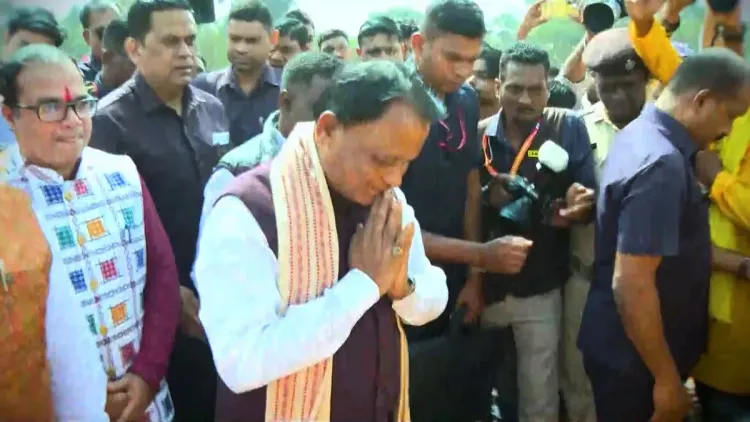
Odisha Chief Minister Mohan Charan Majhi participated in National Bandana Parva 2026 on 14 November, performing Gomata worship and invoking blessings of prosperity for every family in the state, reaffirming the festival's place in Odisha's agricultural heritage.
Key Takeaways
Odisha CM Mohan Charan Majhi performed Gomata puja and service at National Bandana Parva 2026 on 14 November 2026 .
The Chief Minister described participation as a 'supreme good fortune' and prayed for happiness, peace, and prosperity across the state.
Bandana Parva is an agrarian festival rooted in gratitude toward nature, soil, and livestock in Odisha's rural communities.
The BJP -led central government has backed livestock conservation through the Rashtriya Gokul Mission since 2014 .
Majhi's public participation follows a wider pattern of BJP -governed states visibly aligning governance with cow veneration and rural cultural traditions.
On a morning steeped in agrarian reverence, Odisha Chief Minister Mohan Charan Majhi marked National Bandana Parva 2026 on Saturday, 14 November 2026 by personally performing the worship and service of the cow — a ritual he described as a moment of rare spiritual fortune.
Posting in Odia, the Chief Minister wrote: 'Jatiya Bandana Parba – 2026' abasarrare Gomataanka pujana o seba kariba para parama saubhagya labha kali — 'At the occasion of the National Bandana Parva 2026, I had the supreme good fortune of performing the worship and service of Gomata (the sacred cow).' He prayed that the blessings of Gomata bring happiness, peace, and prosperity to every family across the state.A Festival Woven Into Odisha's Rural Soul
Bandana Parva is one of the most deeply rooted agrarian festivals of Odisha, observed in rural communities as an expression of gratitude toward nature, the earth, and livestock. For farming families whose livelihoods turn on the cycle of soil, rain, and cattle, the festival is not ceremony — it is calendar. Chief Minister Majhi called it an 'inseparable part of our agriculture-based culture and rural way of life.'
The cow holds a central symbolic role in this tradition. Its veneration on Bandana Parva is simultaneously a religious act and an affirmation of the pastoral economy that sustains Odisha's predominantly rural population.
BJP's Visible Embrace of Agrarian Cultural Traditions
Majhi's public participation in the festival reflects a broader pattern across BJP-governed states, where chief ministers regularly anchor themselves to cow veneration and rural cultural festivals as a form of governance-as-cultural-outreach. The central government has since 2014 run the Rashtriya Gokul Mission, a flagship programme to conserve and develop indigenous cattle breeds — lending institutional weight to what might otherwise appear as purely ceremonial gestures.
Majhi, who took office in June 2024 after the BJP's breakthrough victory in the Odisha Assembly elections, has consistently used cultural and religious occasions to reinforce his administration's connect with the state's rural majority.
What the Prayer Signals
The closing benediction in Majhi's post — wishing happiness, peace, and prosperity for 'every family in the state' — is a standard invocation on such occasions, but its framing is worth noting. It places livestock welfare and agrarian tradition not as heritage preservation alone, but as an active source of communal well-being. Watch this space: the coming months could bring state-level announcements on livestock welfare schemes or government-sponsored cultural events that give this sentiment policy form.
Point of View
The CM reinforces the BJP's rural-Hindu voter base in a state where agriculture and livestock are economic realities, not just symbols. The gesture maps neatly onto the central government's Rashtriya Gokul Mission, lending his participation an implicit policy coherence beyond the ceremonial. For a chief minister who came to power in June 2024 partly on the strength of rural constituencies, being seen inside these traditions — not above them — is a deliberate signal. Whether it translates into concrete livestock-welfare policy announcements will be the real test of intent.
NationPress
14 Nov 2026
Frequently Asked Questions
What is National Bandana Parva?
National Bandana Parva is a festival rooted in Odisha's agrarian traditions, celebrated as an act of gratitude toward nature, the earth, and livestock — particularly the cow. It is an important part of rural cultural life in the state.
What did CM Mohan Majhi do at Bandana Parva 2026?
Chief Minister Mohan Charan Majhi personally performed Gomata puja (cow worship) and seva (service) at National Bandana Parva 2026 on 14 November, calling it a moment of supreme good fortune and praying for the state's well-being.
What is the Rashtriya Gokul Mission?
The Rashtriya Gokul Mission is a central government programme launched in 2014 to conserve and develop indigenous cattle breeds and promote livestock development across India.
When did Mohan Charan Majhi become Chief Minister of Odisha?
Mohan Charan Majhi became Chief Minister of Odisha in June 2024 after the BJP's victory in the state assembly elections.
Why do BJP chief ministers participate in cow worship festivals?
BJP-led state governments frequently participate in cow veneration festivals as part of a broader cultural outreach that connects governance with Hindu agrarian traditions and rural communities, which form a core part of their electorate.