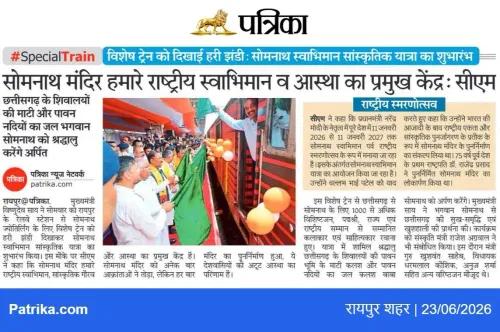
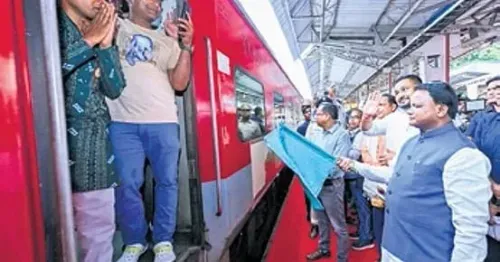
CM Majhi launches Somnath yatra from Lingaraj Temple
Synopsis
Odisha Chief Minister Mohan Charan Majhi has announced a pilgrimage from Bhubaneswar's Lingaraj Temple to Somnath in Gujarat, calling the east-west spiritual corridor a symbol of India's cultural unity and the Ek Bharat Shreshtha Bharat vision.
Key Takeaways
Odisha CM Mohan Charan Majhi announced the launch of a Somnath pilgrimage starting from Lingaraj Temple , Bhubaneswar, on 15 June 2026 .
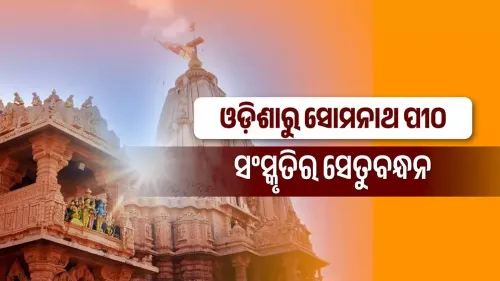
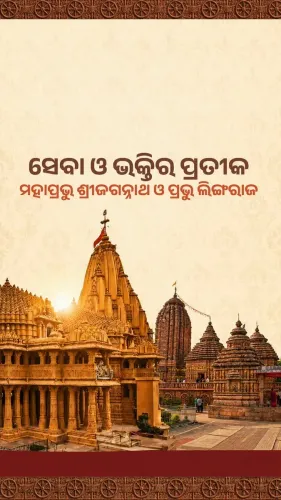
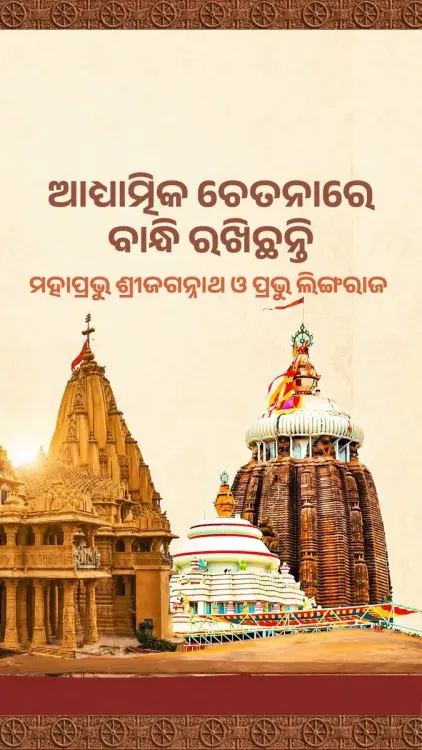
The initiative links Jagannath Temple (Puri, east) and Somnath Temple (Gujarat, west) as twin symbols of India's spiritual unity.
Majhi invoked the Union government's Ek Bharat Shreshtha Bharat programme, launched in 2015 , to frame the pilgrimage as a national integration effort.
The yatra bridges Shaiva and Vaishnava traditions, reflecting Odisha's historical syncretism between the two streams.
Details including participant numbers, itinerary, and inter-state logistics have not yet been made public.
The corridor could be considered for inclusion in central schemes such as PRASAD or Swadesh Darshan in future phases.
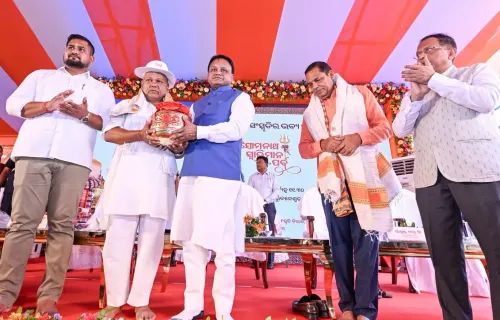
Odisha Chief Minister Mohan Charan Majhi on Monday, 15 June 2026 announced the commencement of a pilgrimage from the sacred precincts of Lingaraj Temple in Bhubaneswar to Somnath in Gujarat, framing the journey as a symbol of India's spiritual and cultural unity.
Context
Writing in Odia, Chief Minister Majhi described Mahaprabhu Shri Jagannath in the east and Prabhu Somnath in the west as 'dui divya shakti' — two divine forces — and called them immortal symbols of India's spiritual oneness. He said the commencement of the Somnath pilgrimage from the holy abode of Lingaraj, the presiding deity of Ekamra Kshetra, would further strengthen the bonds of cultural harmony, faith, and national unity.
The post also invoked the convergence of Shaiva and Vaishnava traditions, describing it as a great confluence that would reinforce India's 'Sanatana chetana' — the eternal civilisational consciousness — and the spirit of 'Ek Bharat, Shreshtha Bharat' (One India, Great India).
Policy Backdrop
Ek Bharat Shreshtha Bharat is a Union government programme launched in 2015 to foster cultural linkages among states and regions, encouraging cross-state exchanges in language, heritage, cuisine, and tourism. Chief Minister Majhi's invocation of the phrase directly aligns the pilgrimage initiative with this national integration framework.
Lingaraj Temple, the principal Shiva shrine in Bhubaneswar, anchors the Ekamra Kshetra heritage zone — one of Odisha's most significant religious clusters. Somnath Temple in Gujarat is among the twelve Jyotirlinga shrines and stands as a defining symbol of western India's Shaiva heritage, having been reconstructed multiple times through history. Together, the two temples span the eastern and western spiritual frontiers of the subcontinent.
The initiative mirrors the post-2014 emphasis on developing religious tourism circuits and deploying heritage sites as articulations of national unity. Central schemes such as PRASAD (Pilgrimage Rejuvenation and Spiritual Augmentation Drive) and Swadesh Darshan have channelled funds into temple town infrastructure across states, and a pilgrimage corridor of this nature could attract future inclusion in such programmes.
Stakeholders and Impact
Pilgrims from Odisha travelling to Somnath stand to benefit most directly, with state government coordination potentially easing travel logistics and reducing costs for devotees. The heritage tourism sector in both Odisha and Gujarat could see increased footfall if the pilgrimage is institutionalised as a recurring programme.
The symbolic pairing of Jagannath — a Vaishnava deity — with Somnath — a Shaiva shrine — carries a deliberate message of sectarian inclusivity. By launching the yatra from Lingaraj Temple, a Shaiva site in Bhubaneswar, the initiative also bridges the two streams within Odisha itself, reflecting the state's long tradition of Shaiva-Vaishnava syncretism.
What's Next
The official itinerary, participant numbers, and inter-state coordination details for the Somnath yatra are yet to be made public. Observers will watch whether the route is formalised into a state-sponsored annual pilgrimage and whether it draws support from the Gujarat government or central tourism ministries.
If institutionalised, the corridor connecting Bhubaneswar and Somnath could become a template for east-west religious tourism linkages, reinforcing both the Ek Bharat Shreshtha Bharat framework and Odisha's positioning as a premier spiritual destination on the national map.
Point of View
Since assuming office in mid-2024, to position the state's temple heritage as a vehicle for both cultural nationalism and tourism growth. By anchoring the pilgrimage at Lingaraj — a Shaiva site — rather than the more internationally prominent Jagannath Temple in Puri, Majhi signals an inclusive outreach across sectarian lines within Hinduism. The explicit invocation of 'Ek Bharat, Shreshtha Bharat' ties a state-level religious initiative to a central government branding framework, reflecting the broader BJP pattern of using pilgrimage circuits to articulate national unity. Whether the yatra is institutionalised or remains a one-off gesture will determine its long-term policy significance.
NationPress
19 Sept 2026
Frequently Asked Questions
What is the Somnath yatra announced by Odisha CM Majhi?
It is a pilgrimage initiated by Odisha Chief Minister Mohan Charan Majhi starting from Lingaraj Temple in Bhubaneswar and travelling to Somnath Temple in Gujarat, framed as a symbol of India's east-west spiritual unity.
What is Lingaraj Temple and why was it chosen as the starting point?
Lingaraj Temple is the principal Shiva shrine in Bhubaneswar and the presiding deity of the Ekamra Kshetra heritage zone. It was chosen to represent the Shaiva tradition, complementing the Vaishnava tradition embodied by Jagannath Temple in Puri.
What is Ek Bharat Shreshtha Bharat and how does it relate to this pilgrimage?
Ek Bharat Shreshtha Bharat is a Union government programme launched in 2015 to promote inter-state cultural exchange and national integration. CM Majhi explicitly invoked this vision to frame the Somnath pilgrimage as a cultural unity initiative.
What is the significance of connecting Jagannath and Somnath temples?
Jagannath Temple in Puri represents eastern India's Vaishnava tradition while Somnath Temple in Gujarat represents western India's Shaiva heritage. Linking the two is presented as a symbol of India's civilisational and spiritual continuity across regions and sects.
Will the Somnath yatra from Odisha become an annual event?
That has not been confirmed. The official itinerary, participant count, and inter-state logistics are yet to be announced. Observers are watching whether the route will be formalised and potentially included in central schemes like PRASAD or Swadesh Darshan.