CM Majhi pays tribute to Bagmi Biswanath Kar at Odisha Assembly
Synopsis
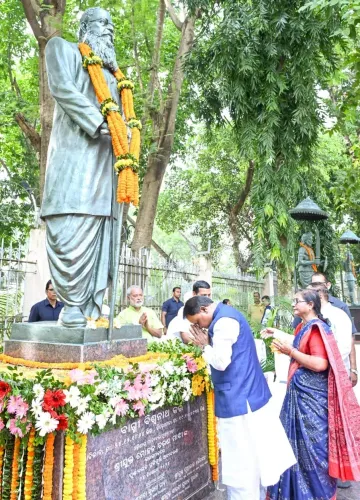
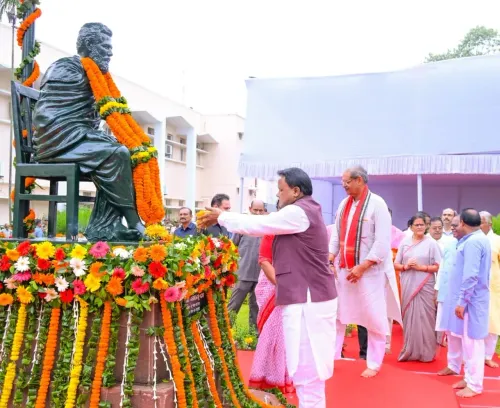
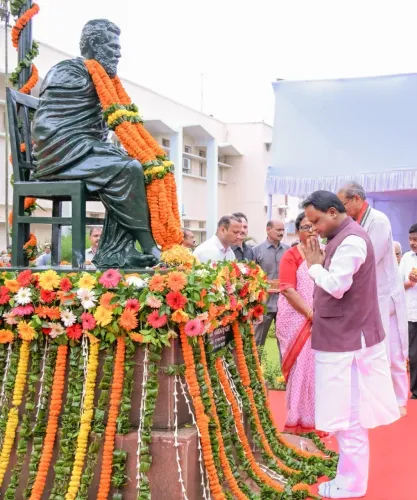
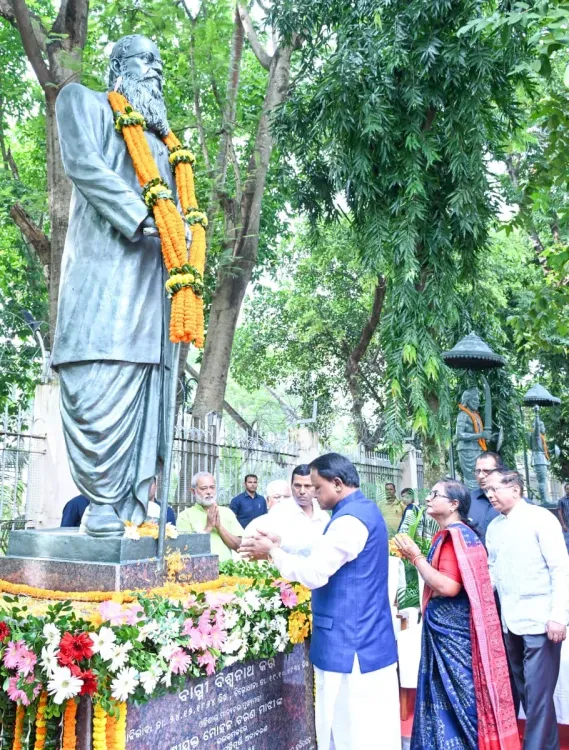
Odisha Chief Minister Mohan Charan Majhi offered floral tributes at the statue of Bagmi Biswanath Kar inside the Odisha Legislative Assembly on his death anniversary, honouring the journalist and writer's contributions to Odia language, literature, and national consciousness.
Key Takeaways
CM Mohan Charan Majhi paid tributes to Bagmi Biswanath Kar at the Odisha Legislative Assembly on 19 October 2026 , his death anniversary.
Bagmi Biswanath Kar was an Odia journalist, writer, and public figure known for contributions to Odia language, literature, and early twentieth-century national consciousness.
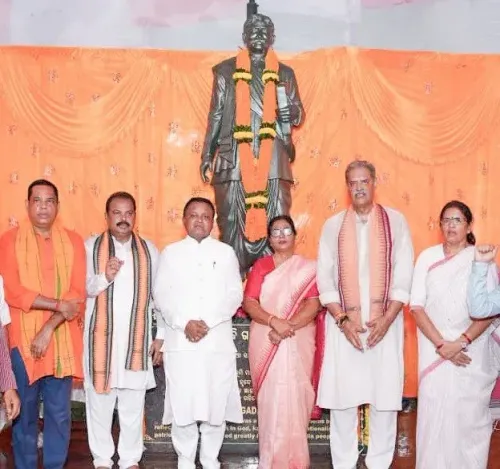
The tribute included a floral wreath at Kar's statue housed within the Legislative Assembly complex.
CM Majhi described Kar's contributions to Odia language, literature, and journalism as 'unforgettable' and a source of enduring inspiration.
The commemoration reflects a broader Odisha tradition of marking literary and journalistic anniversaries inside legislative premises to affirm cultural heritage.
A garland placed at a statue inside the Odisha Legislative Assembly on Monday, 19 October 2026 quietly marked the death anniversary of one of Odisha's most celebrated voices — Bagmi Biswanath Kar, journalist, writer, and champion of the Odia language. Odisha Chief Minister Mohan Charan Majhi offered floral tributes at the statue and called Kar's legacy an 'enduring inspiration for generations.'
Who was Bagmi Biswanath Kar — and why the Assembly holds him in stone
Bagmi Biswanath Kar was a towering figure in Odia public life, associated with the growth of Odia language, literature, and journalism during a formative period in the state's cultural history. The honorific 'Bagmi' — meaning 'the eloquent one' — signals the esteem in which contemporaries held his oratory and prose. His work intersected the literary and the political: at a time when regional language movements were inseparable from the broader national awakening, Kar used journalism and literature as tools of civic mobilisation.
The presence of his statue inside the Odisha Legislative Assembly complex itself speaks to that legacy — a recognition that his contributions to Odia identity belong in the same space as the state's lawmaking history.
Majhi's tribute and the politics of cultural memory
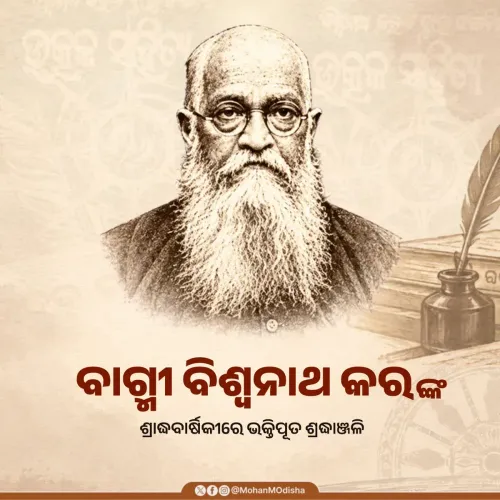
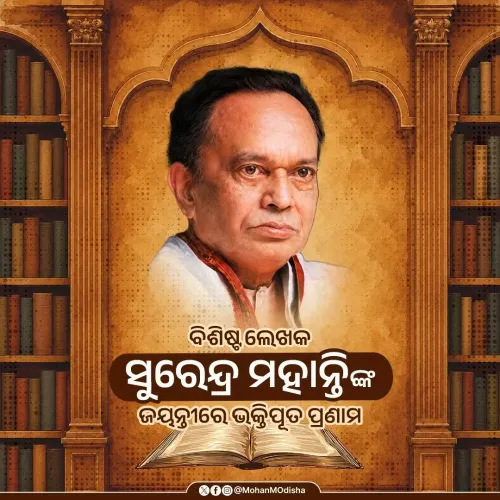
CM Majhi, posting in both Odia and English on X, said Kar's contributions to Odia language, literature, journalism, and the 'awakening of national consciousness' were 'unforgettable.' The bilingual framing — 'ଅବଦାନ ଅବିସ୍ମରଣୀୟ' ('contributions are unforgettable') in Odia, followed by the English formulation — was deliberate, speaking to both a local Odia readership and a wider audience.
Indian state leaders have long used death anniversaries of regional literary and journalistic icons as moments to affirm cultural continuity. In Odisha, this practice spans party lines and connects contemporary governance with the Odia language movement — a movement that predates independence and remains a live point of pride in the state's identity politics.
The Assembly as a stage for cultural commemoration
The choice of the Odisha Legislative Assembly premises as the venue is not incidental. The complex houses statues and portraits of figures who shaped Odisha's intellectual and political formation, making it a regular site for official commemorations. Marking Kar's anniversary there reinforces the message that his journalism and literary output are part of the state's civic, not merely cultural, inheritance.
As Odisha observes various heritage and language milestones across the calendar, watchers of state cultural policy will note whether today's tribute is followed by any fresh announcements on Odia language promotion or journalistic legacy programmes — the kind of follow-through that converts ceremony into policy.
For now, a garland and a few verses in Odia carry the weight of the day — a reminder that in Indian public life, the space between a statue and a legislature is often smaller than it looks.
Point of View
Where the Odia language movement carries deep historical and electoral resonance. For the BJP government in Bhubaneswar, commemorating a figure who straddles journalism, literature, and pre-independence national awakening allows it to project cultural stewardship beyond purely administrative governance. The bilingual Odia-English post also signals an effort to reach both vernacular and English-language audiences simultaneously. Whether the tribute catalyses concrete Odia language or journalism policy will determine if it registers as more than ceremonial statecraft.
NationPress
19 Oct 2026
Frequently Asked Questions
Who was Bagmi Biswanath Kar?
Bagmi Biswanath Kar was a noted Odia journalist, writer, and public figure who contributed significantly to Odia language, literature, and journalism, with his work also linked to the national consciousness movement during the early twentieth century. The honorific 'Bagmi' denotes his celebrated oratory and eloquence.
Why did CM Majhi pay tribute to Bagmi Biswanath Kar?
Odisha Chief Minister Mohan Charan Majhi paid tribute on Bagmi Biswanath Kar's death anniversary, offering floral tributes at his statue inside the Odisha Legislative Assembly as part of the state's tradition of commemorating regional literary and journalistic icons.
Where is the statue of Bagmi Biswanath Kar located?
The statue of Bagmi Biswanath Kar is located within the premises of the Odisha Legislative Assembly in Bhubaneswar, which houses memorials to several figures who shaped Odisha's intellectual and political history.
What did CM Majhi say about Bagmi Biswanath Kar's legacy?
CM Majhi described Kar's contributions to Odia language, literature, journalism, and the awakening of national consciousness as 'unforgettable,' adding that his life's ideals and unparalleled contributions to the Odia community would 'always be a source of inspiration.'
What is the significance of marking death anniversaries at the Odisha Legislative Assembly?
The Odisha Legislative Assembly serves as a civic space for commemorating figures who shaped the state's cultural and intellectual heritage. Holding such tributes there affirms that literary and journalistic contributions are part of Odisha's political and institutional history, not just its cultural memory.