CM Majhi pays tribute to Bal Gangadhar Tilak on death anniversary
Synopsis
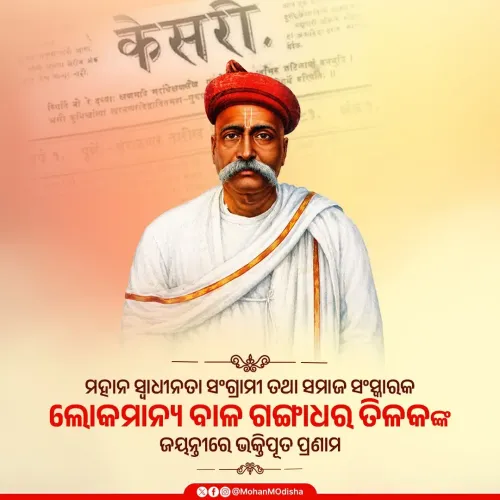
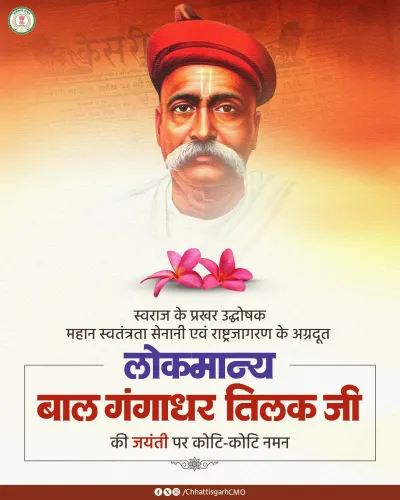
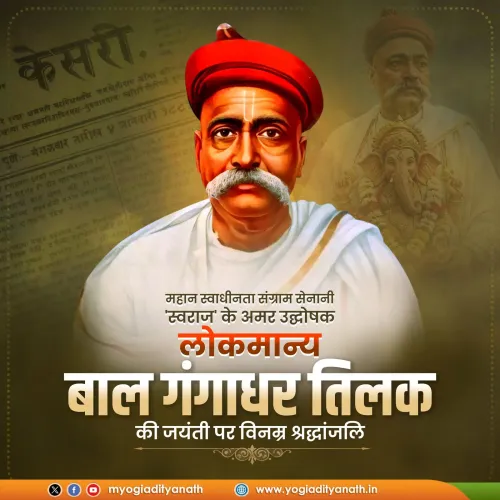
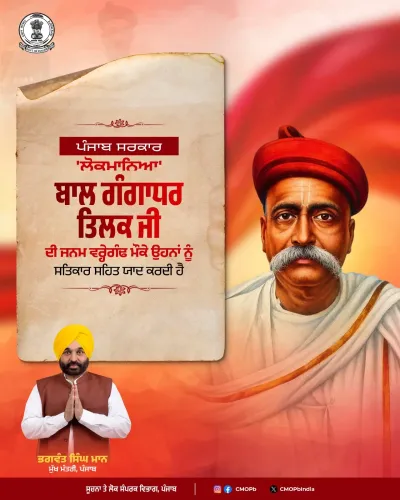
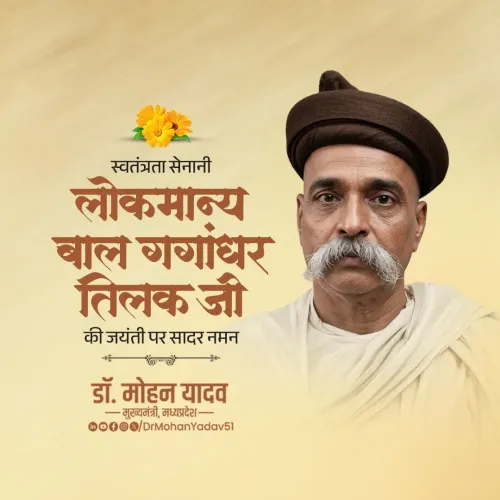
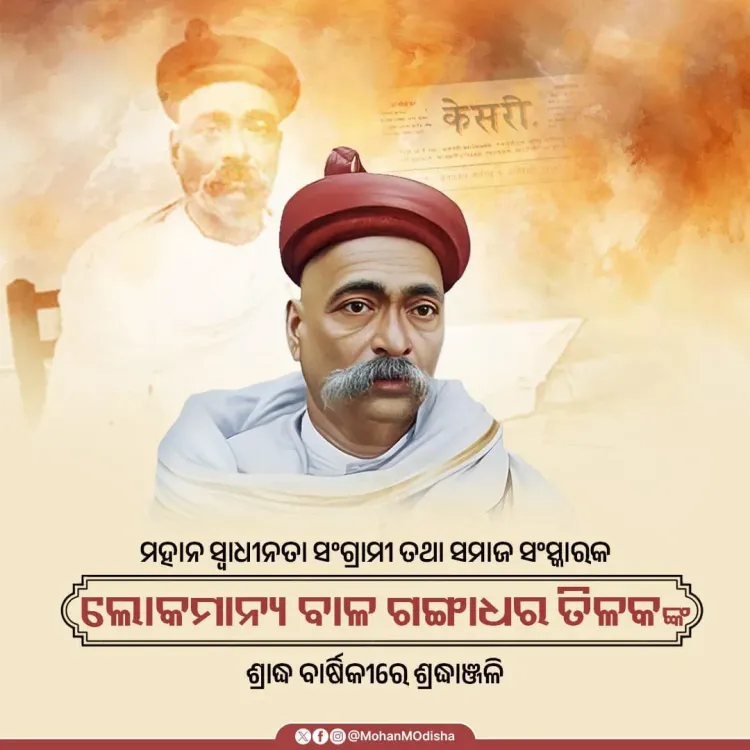
Odisha Chief Minister Mohan Charan Majhi paid tribute to Lokmanya Bal Gangadhar Tilak on his death anniversary on 1 August 2026, honouring the freedom fighter's legacy of patriotism, national unity, and social reform.
Key Takeaways
Odisha CM Mohan Charan Majhi posted a tribute to Bal Gangadhar Tilak on his death anniversary, 1 August 2026 .
The post was written in Odia and praised Tilak as a great freedom fighter and social reformer.
Majhi invoked Tilak's ideals of patriotism and national unity as a continuing source of inspiration.
Bal Gangadhar Tilak (1856–1920) is remembered for the slogan 'Swaraj is my birthright' and leadership of the Swadeshi movement.
CM Majhi has led Odisha since June 2024 , following the BJP's victory in the state assembly elections.
A century after Bal Gangadhar Tilak breathed his last, his legacy still draws salutes from India's political class — and on 1 August 2026, Odisha Chief Minister Mohan Charan Majhi was among the first to offer homage, marking the independence leader's death anniversary with a heartfelt message in Odia.
Posting in Odia, CM Majhi wrote: 'Mahanaa swaadhinataa sanghrami tathaa samaaja sanskaaraka Lokamaanya Bala Gangaadhara Tilakanka shraaddha baarshikire bhaktiputa shraddhanjali' — 'Devout tribute on the death anniversary of the great freedom fighter and social reformer, Lokmanya Bal Gangadhar Tilak.' He added that Tilak's ideals of patriotism and national unity 'will always inspire us.'
Who was Lokmanya Tilak — and why does the title still resonate?
Bal Gangadhar Tilak (1856–1920) was one of the foremost architects of India's early independence movement. He popularised the rallying cry 'Swaraj is my birthright, and I shall have it' — a phrase that electrified a generation under colonial rule. A mathematician, journalist, and mass organiser, he led the Swadeshi movement and transformed the Ganesh Chaturthi festival into a vehicle for nationalist consciousness. The honorific Lokmanya — 'accepted by the people as their leader' — was conferred on him by a grateful public, not by any government.
Tilak died on 1 August 1920, and his death anniversary has been observed across India ever since as a moment to reflect on the sacrifices of the pre-Gandhi era of the freedom struggle.
BJP-ruled states and the politics of patriotic memory
Chief ministers from BJP-governed states routinely mark such anniversaries with public tributes — a practice that serves both cultural and political purposes. By invoking figures like Tilak, who combined fierce nationalism with social reform, the party signals continuity with India's deepest independence-era roots. For CM Majhi, who took office in June 2024 following the BJP's victory in Odisha's state assembly elections, such tributes also help establish his government's voice on the national stage.
Tilak's ideals of unity and self-reliance remain touchstones in Indian political discourse — invoked across party lines, but with particular frequency by the ruling dispensation at the Centre and in the states.
On the anniversary of a man who once told a colonised nation it had the right to govern itself, the message from Bhubaneswar is simple: the debt is remembered, and the inspiration endures.
Point of View
Linking the party's governance to India's deepest nationalist roots. For CM Majhi, still consolidating his profile as Odisha's chief minister, marking such anniversaries publicly in Odia reinforces both cultural identity and ideological positioning. Tilak's specific legacy — combining mass mobilisation with social reform — offers a template that resonates with the BJP's own self-image. The gesture is routine in form but deliberate in signal.
NationPress
15 Sept 2026
Frequently Asked Questions
When did Bal Gangadhar Tilak die?
Bal Gangadhar Tilak died on 1 August 1920. His death anniversary is observed annually across India as a tribute to one of the country's foremost early independence leaders.
What is Lokmanya Tilak famous for?
Lokmanya Bal Gangadhar Tilak is famous for the rallying cry 'Swaraj is my birthright, and I shall have it,' his leadership of the Swadeshi movement, and his role in transforming Ganesh Chaturthi into a platform for nationalist consciousness.
Who is Odisha Chief Minister Mohan Charan Majhi?
Mohan Charan Majhi is the Chief Minister of Odisha and a BJP leader who took office in June 2024 after the party won the state assembly elections.
What does 'Lokmanya' mean?
'Lokmanya' is an honorific in Sanskrit meaning 'accepted by the people as their leader.' It was conferred on Bal Gangadhar Tilak by the public in recognition of his mass appeal and leadership during the independence movement.
Why do BJP chief ministers pay tribute to freedom fighters on anniversaries?
BJP-governed states routinely mark the anniversaries of independence-era figures to signal continuity with India's nationalist heritage. Such tributes serve both cultural and political purposes, reinforcing the party's patriotic identity.