CM Majhi Vows Safe, Orderly Rath Yatra in Puri
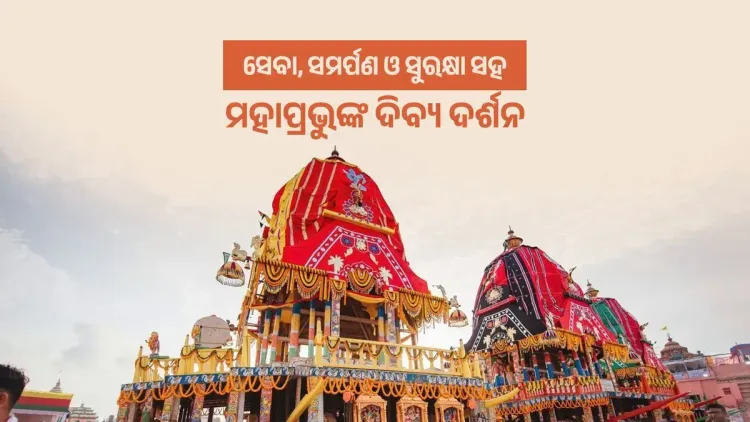
Synopsis
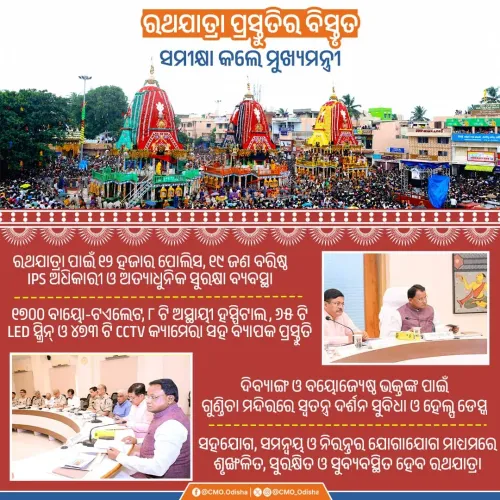
Odisha Chief Minister Mohan Charan Majhi has announced that his government is making comprehensive arrangements for the world-famous Jagannath Rath Yatra in Puri, prioritising drinking water, healthcare, sanitation, traffic management, crowd control, and security for millions of devotees.
Key Takeaways
Odisha CM Mohan Charan Majhi announced government-wide preparations for the Jagannath Rath Yatra in Puri on 13 July 2026 .
Six priority areas identified: drinking water, healthcare, sanitation, traffic management, crowd control, and security .
The government aims to provide a safe, smooth, and spiritually conducive environment for millions of pilgrims visiting Puri .
The Shree Jagannath Temple Administration coordinates with the state on annual Rath Yatra logistics and security planning.
Odisha administrations have maintained standard operating procedures for the Rath Yatra since the early 2000s following past crowd-safety incidents.
CM Majhi's government is Odisha's first BJP administration, in office since the 2024 assembly elections .
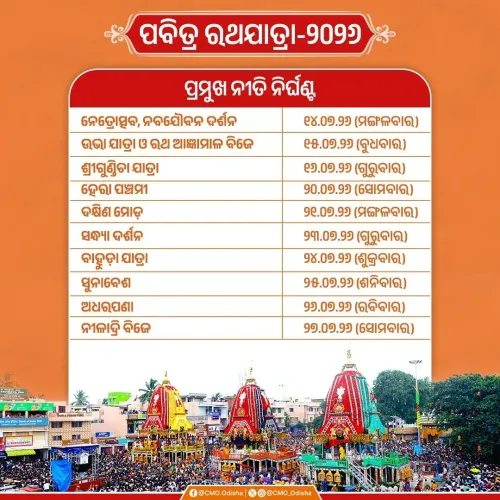
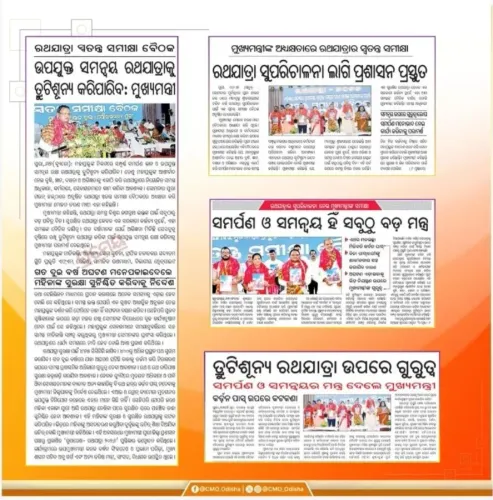
Odisha Chief Minister Mohan Charan Majhi on Monday, 13 July 2026 announced that his government is deploying comprehensive arrangements to ensure the world-famous Ghosh Yatra — the sacred chariot procession of Lord Jagannath in Puri — is conducted safely, peacefully, and in a spiritually conducive atmosphere.
Posting in Odia on X, the Chief Minister stated: 'Bishwaprasiddha Ghosh Yatrakku adhika surakshita, sushrinkhal o subbyabasthita bhabe sampanna karibapain lokanka sarkar samasta byabastha grahana karuhhanti' — ('The people's government is making all arrangements to conduct the world-famous Ghosh Yatra in a safer, more disciplined, and better-organised manner'). He concluded with the invocation 'Jai Jagannath' — 'Victory to Lord Jagannath.'
Context
The Jagannath Rath Yatra at Puri is one of India's largest and most venerated religious processions, drawing millions of devotees from across the country and the world each year. The festival centres on the 12th-century Jagannath Temple, a revered seat of the Vaishnava tradition on Odisha's eastern coast. Managing the sheer scale of pilgrim inflows has historically been a major administrative undertaking for successive state governments.
Chief Minister Majhi, who leads Odisha's first BJP government after the party's victory in the 2024 assembly elections, has framed the Rath Yatra as both a spiritual occasion and a governance test — emphasising what he called 'seva and discipline' in his post.
Policy Backdrop
Odisha administrations have issued annual standard operating procedures for crowd control, sanitation, and medical facilities at the Rath Yatra since at least the early 2000s, following past stampede incidents that underscored the risks of managing massive gatherings. The Shree Jagannath Temple Administration, a statutory body, coordinates closely with the state government on security and logistics planning ahead of each year's procession.
CM Majhi's post specifically lists drinking water, healthcare, sanitation, traffic management, crowd control, and security as the six priority areas for this year's arrangements — reflecting the standard multi-agency framework that Indian states deploy for large-scale religious events.
Stakeholders and Impact
The primary beneficiaries of the arrangements are the millions of devotees who converge on Puri for the chariot procession, many of whom travel long distances and require access to basic amenities and medical support. Puri residents and the city's infrastructure also bear the direct impact of the festival's logistical demands.
Temple servitors (sevayats), who perform hereditary ritual duties during the Yatra, are key institutional stakeholders in coordination with the state and the temple administration. The government's emphasis on an 'unhindered and spiritual environment' signals a commitment to balancing crowd safety with the sanctity of the religious proceedings.
What's Next
Attention will now turn to the release of the final security and logistics blueprint by the Odisha government and any joint review meetings between state officials and the Shree Jagannath Temple Administration ahead of the chariot procession. The administration's ability to execute on its stated priorities — particularly crowd management and public health infrastructure — will be closely watched given the scale of expected footfall at Puri this year.
Point of View
The Rath Yatra is a recurring, high-visibility test of state capacity. The explicit enumeration of six priority verticals suggests a structured, multi-department approach rather than a ceremonial declaration. How effectively the administration translates this messaging into on-ground execution will shape public perception heading into the post-festival political cycle.
NationPress
13 Jul 2026
Frequently Asked Questions
What is the Jagannath Rath Yatra?
The Jagannath Rath Yatra is an annual chariot festival held in Puri, Odisha, centred on the 12th-century Jagannath Temple. It is one of India's largest religious processions, drawing millions of devotees each year.
What arrangements has the Odisha government made for Rath Yatra 2026?
The Odisha government under CM Mohan Charan Majhi has prioritised drinking water, healthcare, sanitation, traffic management, crowd control, and security to ensure the Rath Yatra is conducted safely and smoothly for all devotees.
Who is Mohan Charan Majhi?
Mohan Charan Majhi is the Chief Minister of Odisha and a BJP leader. He has been in office since June 2024, heading Odisha's first BJP government after the party's victory in the 2024 assembly elections.
Where is the Rath Yatra held?
The Rath Yatra is held in Puri, a coastal city in Odisha and home to the 12th-century Jagannath Temple, which is one of India's most important pilgrimage centres.
What is the Shree Jagannath Temple Administration?
The Shree Jagannath Temple Administration is a statutory body responsible for overseeing temple rituals and coordinating with the Odisha state government on the annual Rath Yatra's logistics and security planning.