CM Majhi Welcomes VP Radhakrishnan to Bhubaneswar for MLA Training Launch
Synopsis
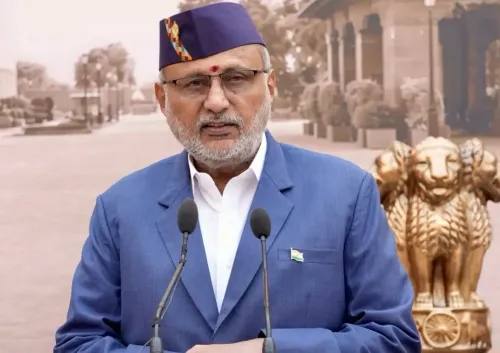
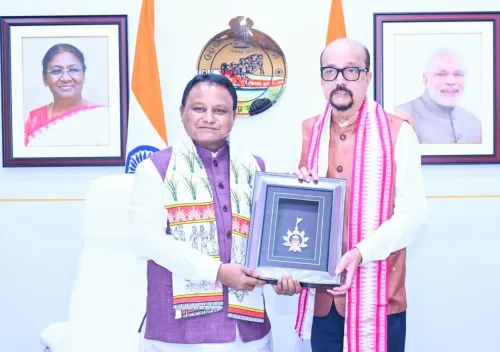
Vice President C. P. Radhakrishnan arrived in Bhubaneswar on November 16, 2026, welcomed by CM Mohan Charan Majhi. He will inaugurate a training programme for MLAs of the 17th Odisha Legislative Assembly, constituted after the BJP's 2024 election victory.
Key Takeaways
Radhakrishnan arrived at Bhubaneswar Airport on November 16, 2026 for an official visit to Odisha.
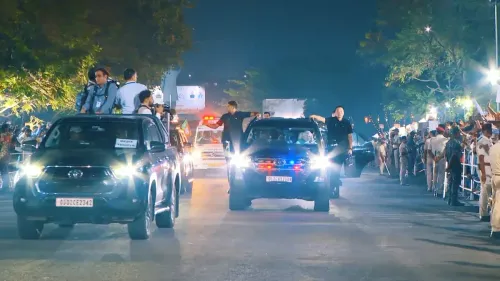
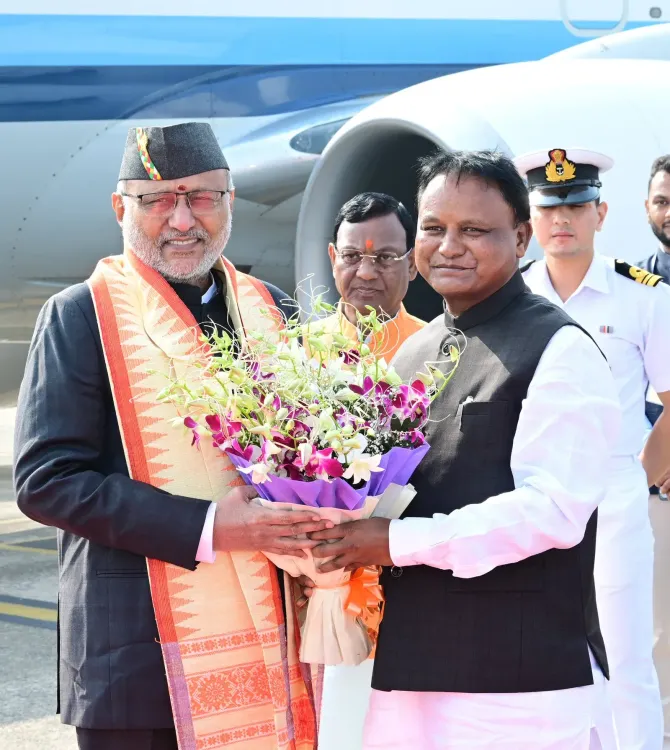
CM Mohan Charan Majhi personally accorded a formal state welcome at the airport.
The VP will inaugurate the training programme for members of the 17th Odisha Legislative Assembly .
The 17th Assembly was constituted after the June 2024 elections, in which the BJP secured a majority.
CM Majhi linked the visit to the government's ' Samruddha Odisha ' — a prosperous Odisha — development vision.
India's Vice President C. P. Radhakrishnan touched down at Bhubaneswar Airport on Monday, November 16, 2026, greeted by Odisha Chief Minister Mohan Charan Majhi in a formal state welcome that sets the stage for a landmark capacity-building milestone — the inauguration of the training programme for members of the 17th Odisha Legislative Assembly.
A New Assembly Earns Its Orientation
The 17th Odisha Legislative Assembly was constituted after the June 2024 state elections, in which the BJP secured a decisive majority — ending decades of Biju Janata Dal rule and bringing Mohan Charan Majhi to the Chief Minister's chair. More than two years on, the legislature is now formalising the institutional training of its elected members, with the Vice President himself inaugurating the programme. That choice of inaugurating authority is deliberate: it signals that this is not a routine orientation briefing, but a constitutionally weighted investment in legislative competence.
Central constitutional functionaries regularly lend their presence to such capacity-building exercises — the message being that the quality of democracy depends as much on the preparation of elected representatives as on the act of electing them. For Odisha, a state with a freshly installed government and an ambitious developmental agenda, the symbolism lands with added weight.
Majhi's 'Samruddha Odisha' Vision Gets a Boost
In his post, CM Majhi wrote that the Vice President's 'valuable guidance will further inspire our resolve to build a Samruddha Odisha' — a prosperous Odisha. The phrase is shorthand for the state government's broad developmental promise: improved infrastructure, economic growth, and effective governance delivery across Odisha's 30 districts. Having a senior constitutional figure anchor a legislative training programme publicly reinforces that framing — governance capability as a foundation, not an afterthought.
The Vice President is also scheduled to attend other engagements during the visit, though specific details have not been confirmed. What is clear is that the Bhubaneswar visit represents a moment of centre-state convergence on institutional priorities — the kind of coordination that newly formed state governments often need to anchor their early governance commitments.
Point of View
Whose BJP administration is still consolidating its hold over a state it won for the first time in over two decades, the optics of a Vice Presidential visit anchoring legislative capacity-building serve a dual purpose: demonstrating seriousness about governance quality while reinforcing centre-state alignment. It also reflects a broader national pattern of using constitutional office-holders to lend weight to state-level institutional reforms, particularly in newly elected legislatures where capacity gaps are most visible.
NationPress
16 Nov 2026
Frequently Asked Questions
Why did Vice President C. P. Radhakrishnan visit Bhubaneswar?
Vice President C. P. Radhakrishnan visited Bhubaneswar on November 16, 2026, primarily to inaugurate the training programme for members of the 17th Odisha Legislative Assembly, along with other official engagements in the state.
What is the 17th Odisha Legislative Assembly?
The 17th Odisha Legislative Assembly was constituted after the June 2024 state elections, in which the BJP won a majority, ending the long run of the Biju Janata Dal and bringing Mohan Charan Majhi to power as Chief Minister.
What is the MLA training programme in Odisha?
The MLA training programme is a capacity-building initiative for the newly elected members of the 17th Odisha Legislative Assembly, inaugurated by the Vice President to strengthen legislators' understanding of parliamentary procedures and governance.
What is 'Samruddha Odisha'?
'Samruddha Odisha' — meaning 'prosperous Odisha' — is the Mohan Charan Majhi-led BJP government's development vision for the state, focused on improved infrastructure, economic growth, and better governance delivery.
Who welcomed the Vice President at Bhubaneswar Airport?
Odisha Chief Minister Mohan Charan Majhi personally welcomed Vice President C. P. Radhakrishnan at Bhubaneswar Airport on November 16, 2026.