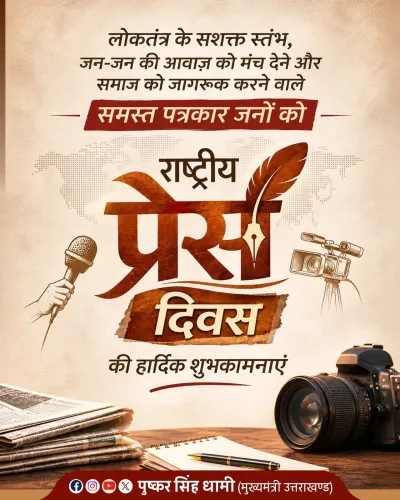
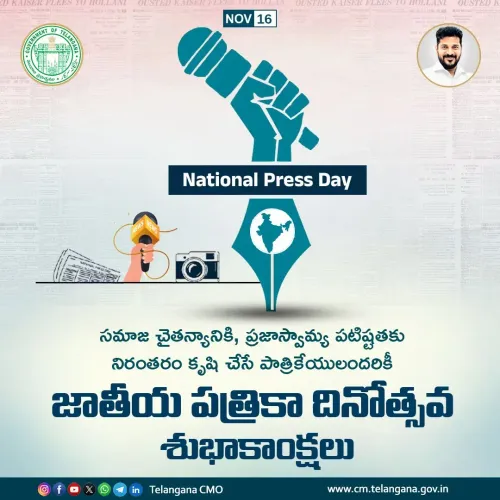
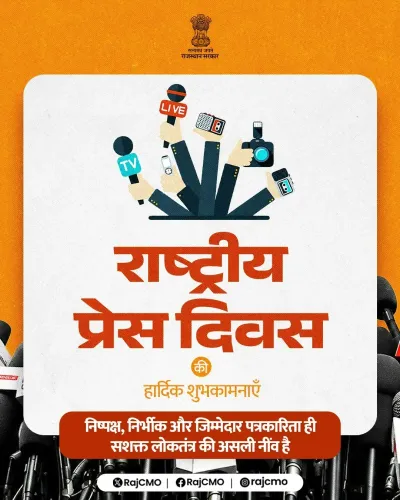
HP CM Office Marks National Press Day, Salutes Press
Synopsis
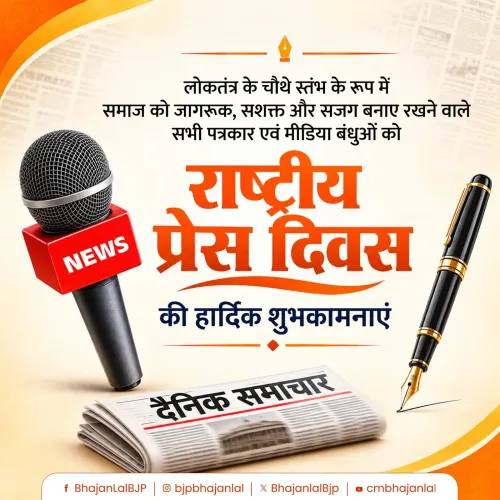
On National Press Day, 16 November 2026, the Chief Minister's Office of Himachal Pradesh paid tribute to Indian journalism, calling it a witness to the nation's struggles and a champion of public interest — marking sixty years since the Press Council of India's founding.
Key Takeaways
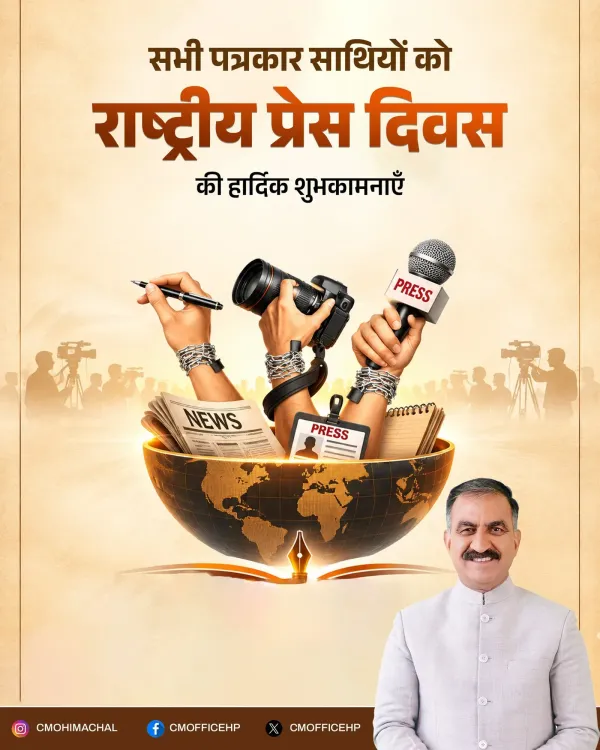
The Chief Minister's Office of Himachal Pradesh posted a National Press Day tribute on 16 November 2026 .
National Press Day marks the founding of the Press Council of India on 16 November 1966 .
The Press Council was established following recommendations of the First Press Commission of 1954 to protect press freedom and uphold standards.
The CMO described Indian journalism as a witness to the country's struggles, transformations, and public movements.
Government offices across India observe the day, recognising the press as a pillar of democracy.
Annual events include Press Council awards and seminars on media ethics.
Sixty years after India gave its press a statutory guardian, the Chief Minister's Office of Himachal Pradesh marked National Press Day on 16 November 2026 with a tribute to journalism's enduring role as the nation's conscience-keeper.
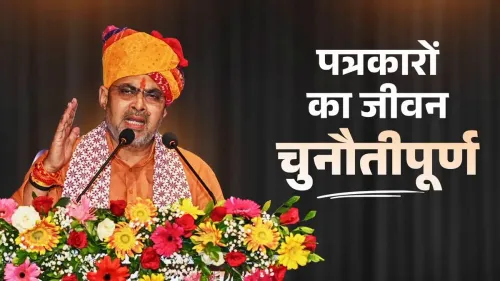
The post, shared in Hindi, reads: 'Bharatiya patrakarita ka itihas desh ke sangharshon, badlawon aur jan aandolnon ka sakshi raha hai' — 'The history of Indian journalism has been witness to the country's struggles, transformations and public movements. Journalism has always played a vital role in becoming the voice of society, bringing truth to light and raising issues of public interest.'
A Day Rooted in a Sixty-Year-Old Mandate
National Press Day falls every year on 16 November — the anniversary of the Press Council of India's founding in 1966. The Council was born out of the recommendations of the First Press Commission of 1954, charged with two tasks that have never gone out of fashion: preserving the freedom of the press, and holding that press accountable to its own standards.
The CMO's framing — journalism as witness to sangharsh (struggle), badlaav (change) and jan aandolan (public movement) — consciously echoes the press's role in India's independence movement, when newspapers were often the only channel through which colonial-era dissent reached a mass audience.
Why State Governments Speak Up on This Day
It is no accident that government offices across India issue statements on National Press Day. The gesture is partly ceremonial, but it also signals an official acknowledgement of the press as a democratic pillar — not merely a commercial industry. For Himachal Pradesh, a state with active political competition and a strong tradition of local-language journalism, the tribute carries particular resonance.
Annual observances typically include Press Council of India awards for outstanding journalism, seminars on media ethics, and state-level felicitations of working journalists — events that remind newsrooms and governments alike that the relationship between power and press is a two-way accountability.
The reminder lands at a moment when questions of media independence, digital misinformation, and journalists' safety remain live concerns across the country. India's press has never needed a free hand more — and has rarely had to fight harder to keep it.
Point of View
Even when that function scrutinises the government itself. Coming exactly sixty years after the Press Council of India's founding, the 2026 observance arrives amid sustained national debate over media independence and digital-era accountability. The language chosen — 'voice of society,' 'bringing truth to light' — sets a standard the press can hold officials to by their own stated words. It is a reminder that tributes to journalism are only as meaningful as the space governments actually give journalists to work.
NationPress
16 Nov 2026
Frequently Asked Questions
Why is National Press Day celebrated on 16 November?
National Press Day is observed on 16 November every year because the Press Council of India was formally constituted on that date in 1966 , following the First Press Commission's recommendations of 1954.
What is the Press Council of India?
The Press Council of India is a statutory body established in 1966 to preserve freedom of the press and maintain journalistic standards for newspapers and news agencies across the country.
What did the HP CM Office post on National Press Day 2026?
The Chief Minister's Office of Himachal Pradesh posted a Hindi tribute describing Indian journalism as a witness to the country's struggles and transformations, and praising its role in voicing public interest.
How does India observe National Press Day?
India marks National Press Day with Press Council of India award ceremonies for outstanding journalism, seminars on media ethics, and state-level felicitations of working journalists.
What is the history of Indian journalism's role in democracy?
Indian journalism has been recognised for its active role in the independence movement and in post-1947 democratic accountability, serving as a channel for public dissent and government scrutiny.