CM Majhi's 49th Cabinet Meet Targets Education, Jobs, Farming
Synopsis
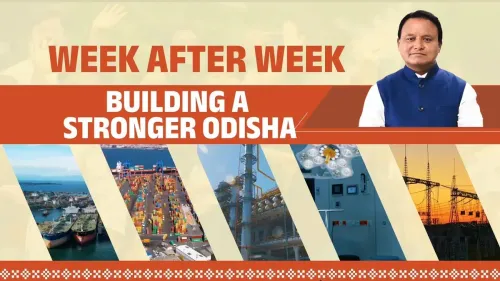
Odisha CM Mohan Charan Majhi says the 49th State Cabinet meeting deepened the government's commitment to public welfare, approving decisions across education, employment, agriculture, irrigation, energy infrastructure, and transparent governance — building on BJP's 2024 election mandate.
Key Takeaways
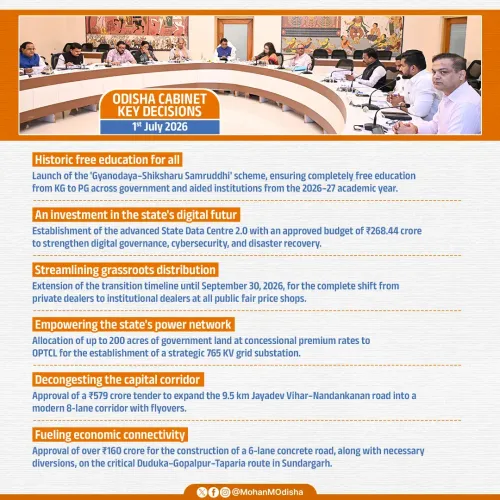
The 49th Odisha State Cabinet meeting approved decisions across six sectors : education, employment, agriculture, irrigation, energy infrastructure, and clean governance.
CM Mohan Charan Majhi framed the outcomes as reinforcing his administration's commitment to 'all-round development' and 'inclusive growth' for Odisha residents.
The sectors named directly mirror BJP's 2024 Odisha election manifesto priorities that ended BJD's 24-year rule .
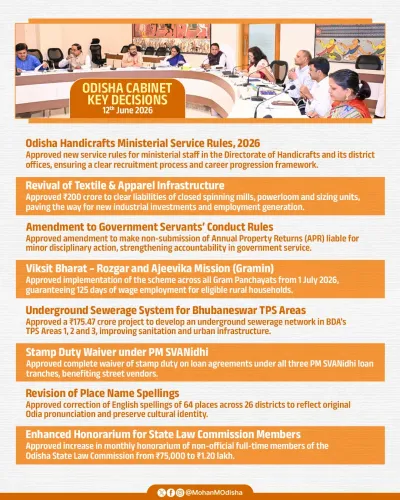
Specific scheme details, budget allocations, and policy texts from the cabinet meeting are yet to be formally released.
Follow-up in the Odisha Legislative Assembly and departmental orders will be the key measure of on-ground implementation.
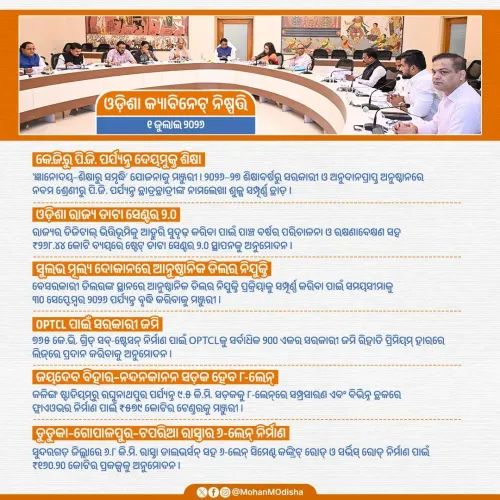
Six sectors, one cabinet meeting, and a government signalling it means business. Odisha Chief Minister Mohan Charan Majhi on Thursday, 12 November 2026, declared that the 49th State Cabinet meeting had reinforced his administration's commitment to inclusive development — with decisions spanning education, employment, agriculture, irrigation, energy infrastructure, and clean governance.
What the 49th Cabinet resolved — and why the breadth matters
Writing in Odia on X, CM Majhi said the decisions taken at the 49th State Cabinet meeting had 'further strengthened our government's commitment to public welfare and the all-round development of Odisha.' The post listed six distinct policy domains, a deliberate signal that the BJP-led government is working on a broad front rather than cherry-picking headline schemes.
The sectors named — education, employment, agriculture, irrigation, energy infrastructure, and transparent governance — closely mirror the priorities outlined in BJP's 2024 Odisha election manifesto, the document that helped end the Biju Janata Dal's near-unbroken 24-year dominance in the state. Each domain maps directly to a voter constituency: students, job seekers, farmers, rural communities, and citizens demanding cleaner administration.
Majhi's BJP government and the pressure of post-BJD expectations
Mohan Charan Majhi became Chief Minister in June 2024, inheriting an administration that the BJD had shaped for over two decades. Newly elected state governments in India routinely use early cabinet cycles to stamp their policy identity, and the 49th meeting — a relatively high sequence number reflecting an active cabinet calendar — suggests the administration has maintained consistent legislative momentum.
The emphasis on 'inclusive development' and 'creation of new opportunities for residents' is pointed: Odisha remains one of India's lower-income states, with large agrarian and tribal populations whose expectations are high after a change of guard. Irrigation and energy infrastructure, specifically, address long-standing rural gaps that the previous government was often criticised for leaving unresolved.
Specific scheme details still to follow
The post, characteristically for cabinet-outcome communications, announces direction without publishing the fine print. The specific decisions approved — policy texts, beneficiary numbers, budget allocations — are yet to be formally released. That follow-through, in the Odisha Legislative Assembly and through departmental orders, will be the real test of whether Thursday's cabinet round translates into ground-level delivery.
Watchers will also track whether any of these decisions require supplementary budget provisions or new legislation, which would put the commitments to a formal vote and open them to opposition scrutiny.
A cabinet meeting that covers six sectors in a single session is easy to announce. The harder story — for Odisha's farmers, students, and job seekers — begins the moment the orders hit the district offices.
Point of View
Now past the two-year mark as CM, the pressure is shifting from signalling intent to demonstrating delivery — particularly in agriculture and employment, where rural Odisha's expectations remain high. The absence of specific scheme details in the announcement is standard practice but also a vulnerability: opposition parties can credibly ask what exactly was decided. The administration's ability to convert these six stated priorities into measurable outcomes before the next electoral cycle will define the BJP's consolidation story in Odisha.
NationPress
12 Nov 2026
Frequently Asked Questions
What was decided in Odisha's 49th cabinet meeting?
CM Mohan Charan Majhi stated that the 49th State Cabinet meeting approved important steps in education, employment, agriculture, irrigation, energy infrastructure, and clean governance, though specific scheme details have not yet been publicly released.
Who is Mohan Charan Majhi?
Mohan Charan Majhi is the BJP Chief Minister of Odisha, in office since June 2024 after the BJP won the state assembly elections, ending the Biju Janata Dal's roughly 24-year rule.
What are the main priorities of the Odisha BJP government?
The BJP's 2024 Odisha election manifesto and subsequent cabinet decisions have consistently highlighted education, employment generation, agriculture support, irrigation expansion, energy infrastructure, and transparent governance as the administration's core pillars.
How often does the Odisha state cabinet meet?
The Odisha State Cabinet meets regularly; reaching the 49th meeting since the current government took office in June 2024 reflects an active legislative and policy calendar across the administration's tenure.
What sectors did Odisha's 49th cabinet meeting focus on?
The meeting covered six sectors: education, employment, agriculture, irrigation, energy infrastructure, and clean governance — areas that directly affect students, farmers, rural communities, and job seekers across the state.