CM Manik Saha Shares PM Modi's Case for India as Democracy's Mother
Synopsis
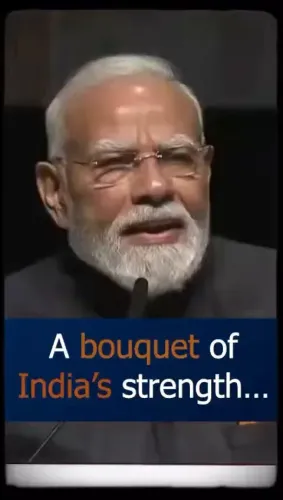
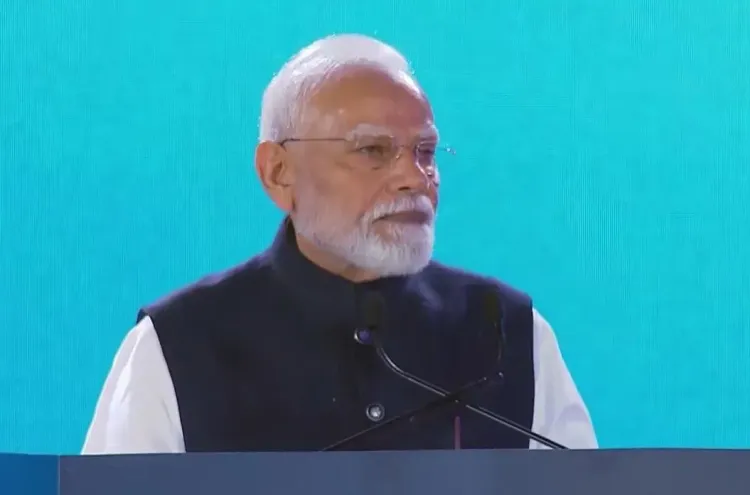
Tripura Chief Minister Dr. Manik Saha shared Prime Minister Narendra Modi's statement calling India the 'Mother of Democracy', citing over 100 languages, 80,000 publications, 1,000 satellite channels, and 500 million each of YouTube and Instagram users as proof of the country's plural, digitally-powered public debate.
Key Takeaways
PM Narendra Modi described India as the 'Mother of Democracy', a framing repeated across domestic and international addresses by the BJP-led government.
India hosts over 100 languages , approximately 80,000 registered newspapers and publications , and more than 1,000 satellite television channels .
In the digital sphere, India reportedly has more than 500 million YouTube users and over 500 million Instagram users .
The statement frames 'digital power' as a key enabler of open public debate in contemporary India.
Manik Saha amplified the message on October 13, 2026 , extending the BJP's democratic-narrative messaging to state-level platforms.
The Digital India programme (2015) and constitutional free-speech guarantees (1950) form the policy foundation behind these media and digital scale claims.
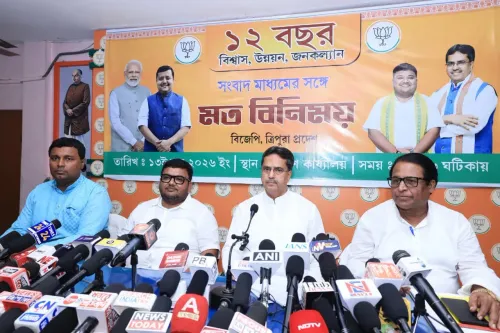
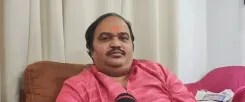
When Tripura Chief Minister Dr. Manik Saha shared a message from Prime Minister Narendra Modi on Tuesday, October 13, 2026, the argument was sweeping: India is not just a democracy — it is democracy's original home, and its numbers prove it.
500 Million Users and 80,000 Publications: The Scale of India's Media Universe
The Prime Minister's statement, amplified by Dr. Saha, opens with a bold civilisational claim before backing it with a data blitz. Over 100 languages, approximately 80,000 registered newspapers and publications, and more than 1,000 satellite television channels — the sheer density of India's media landscape is offered as living proof of a plural, debating republic. Then comes the digital dimension: more than 500 million YouTube users and over 500 million Instagram users in a single country.
Those figures, if accurate, would place India among the world's most significant digital markets on both platforms. They also carry a specific political argument: open debate is not suppressed here — it is algorithmically supercharged.
Modi's 'Mother of Democracy' Frame and Its Policy Roots
'India is the Mother of Democracy' has become one of the Modi government's most consistently deployed international framings — invoked at G20 summits, multilateral forums, and domestic addresses alike. The phrase draws a line from ancient Indian traditions of republican governance, through the Constitution of 1950 and its guarantee of freedom of speech and expression, to today's hyperconnected media ecosystem.
The Digital India programme, launched in 2015, sits quietly behind these numbers as infrastructure. Expanding broadband access, pushing smartphone penetration into tier-2 and tier-3 towns, and incentivising digital literacy — those efforts built the user base that the Prime Minister now cites as a democratic credential.
Why Tripura's CM Is Carrying This Message
Dr. Manik Saha, who has led Tripura since 2022, is a vocal amplifier of central government messaging on social media. Tripura itself is a linguistically and culturally diverse border state — a fitting relay point for a message about India's multi-lingual media plurality. By sharing the Prime Minister's words verbatim, Saha signals state-level alignment with a narrative that the BJP is clearly building across platforms: India's democracy is not merely procedural, it is vibrant, loud, and digitally alive.
The kicker in the PM's statement — that 'digital power' is one of the major forces enabling open debate in the present era — is also a quiet rebuttal to critics who argue that social media in India has complicated rather than enriched public discourse. The government's framing chooses volume and access as the story; the quality and regulation of that space remain a separate, ongoing conversation.
Point of View
Designed to position India's civilisational history as evidence of democratic authenticity rather than just procedural compliance. Citing media plurality and digital scale in the same breath is a sophisticated move: it shifts the democratic conversation from institutional health metrics — judicial independence, press freedom indices, electoral transparency — toward participatory volume and reach. For the BJP, those numbers are a defence as much as a boast. The fact that a state-level leader like Dr. Saha routinely amplifies such statements reflects a disciplined, top-down communications architecture that keeps central messaging alive across India's 28 states.
NationPress
13 Oct 2026
Frequently Asked Questions
Why does PM Modi call India the 'Mother of Democracy'?
Prime Minister Modi uses the phrase to argue that India's democratic traditions predate modern Western institutions, drawing on ancient republican traditions, the 1950 Constitution's guarantees of free speech, and the country's vast, multilingual public sphere.
How many YouTube users does India have?
According to PM Modi's statement shared by Tripura CM Dr. Manik Saha, India has more than 500 million YouTube users, reflecting the country's massive digital expansion.
What is the Digital India programme?
Digital India is a government programme launched in 2015 aimed at expanding broadband infrastructure, improving digital literacy, and increasing citizen participation in the online economy — the foundation for India's growing social media user base.
Why did Tripura CM Manik Saha share PM Modi's statement?
Dr. Manik Saha, Tripura's Chief Minister since 2022, regularly amplifies Prime Minister Modi's statements on social media as part of BJP's coordinated national communications strategy.
How many newspapers and TV channels does India have?
PM Modi's statement cites around 80,000 registered newspapers and publications and more than 1,000 satellite television channels operating across India's linguistically diverse media landscape.