CM Bhagwant Mann Pays Tribute to Sikh Martyr Bhai Taru Singh
Synopsis
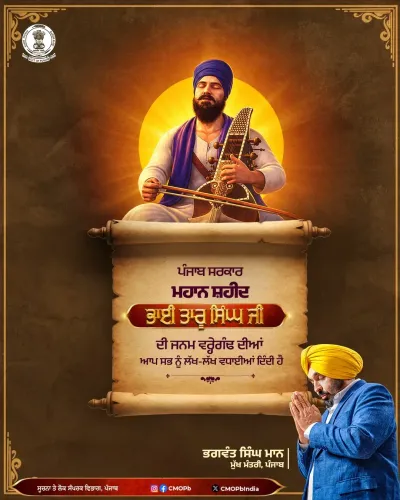
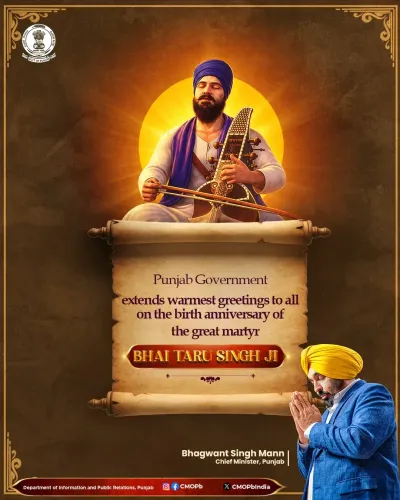
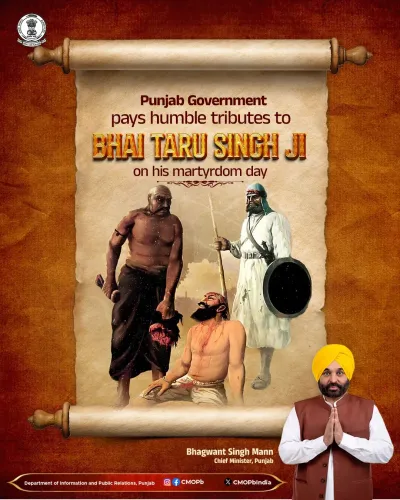
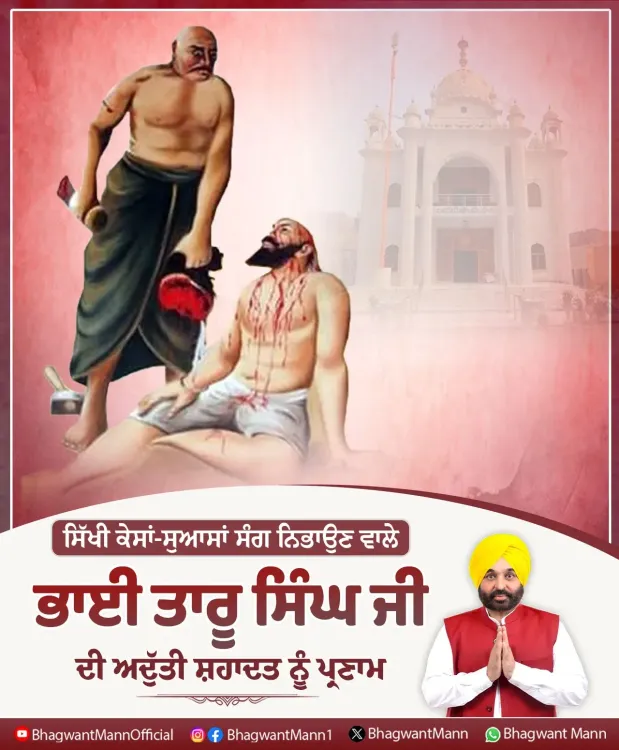
Punjab Chief Minister Bhagwant Mann paid tribute on 16 July 2026 to Bhai Taru Singh, the 18th-century Sikh martyr who chose death over renouncing his faith, bowing to what he called an 'unparalleled martyrdom' in a post on X.
Key Takeaways
Punjab Chief Minister Bhagwant Mann posted a tribute to Bhai Taru Singh on 16 July 2026 .
Bhai Taru Singh was an 18th-century Sikh martyr who refused to cut his hair under Mughal pressure and died for his faith.
Mann described the martyrdom as addutti shahadat — 'unparalleled martyrdom' — in Punjabi.
The tribute reflects the Aam Aadmi Party government's sustained cultural messaging rooted in Sikh religious history.
Public commemorations of Sikh martyrs are a longstanding tradition among Punjab political leaders across party lines.
Punjab Chief Minister Bhagwant Mann on Thursday, 16 July 2026, paid tribute to Bhai Taru Singh, the revered 18th-century Sikh martyr who sacrificed his life upholding the Sikh article of faith rather than renounce his identity under Mughal coercion.
In a post on X, Mann wrote in Punjabi: 'ਸਿੱਖੀ ਕੇਸਾਂ-ਸੁਆਸਾਂ ਸੰਗ ਨਿਭਾਉਣ ਵਾਲੇ ਸਿੱਖ ਕੌਮ ਦੇ ਮਹਾਨ ਸ਼ਹੀਦ ਭਾਈ ਤਾਰੂ ਸਿੰਘ ਜੀ ਦੀ ਅਦੁੱਤੀ ਸ਼ਹਾਦਤ ਨੂੰ ਪ੍ਰਣਾਮ।' — translated: 'I bow to the unparalleled martyrdom of the great Sikh martyr Bhai Taru Singh Ji, who upheld the Sikh faith with his hair and his every breath.'
Context
Bhai Taru Singh is one of the most venerated martyrs in Sikh history. An 18th-century Sikh from Punjab, he was arrested by Mughal authorities for aiding fellow Sikhs and refusing to abandon his faith. He chose to have his scalp removed rather than allow his kesh (unshorn hair) — a sacred article of Sikh identity — to be cut, and died shortly after as a result of his injuries.
His martyrdom is remembered as an ultimate act of devotion to the principle of kesh, one of the Panj Kakars (Five Ks) that define Khalsa Sikh identity. His story has been passed down through gurbani and oral tradition as a symbol of unwavering commitment to faith over life.
Policy Backdrop
Public tributes to historical Sikh martyrs are a consistent feature of political discourse in Punjab, observed across party lines since the state's formation. Chief ministers and senior leaders regularly mark the martyrdom anniversaries of figures such as Bhai Taru Singh, Guru Tegh Bahadur, and others as expressions of solidarity with the Sikh community's religious heritage.
Under Chief Minister Bhagwant Mann and the Aam Aadmi Party government, cultural and religious messaging tied to Sikh history has featured prominently in official communications, reflecting the demographic and spiritual significance of the Sikh faith in Punjab.
Stakeholders and Impact
The tribute speaks directly to the Sikh community, for whom Bhai Taru Singh's martyrdom carries deep religious meaning. The principle of kesh he died to preserve remains central to Khalsa Sikh identity today, and public acknowledgement of his sacrifice by a sitting chief minister carries symbolic weight.
Such commemorations also reinforce the cultural compact between elected leadership in Punjab and its majority Sikh population, signalling institutional respect for the community's historical memory and sacrifices.
What's Next
Tributes of this kind often precede or accompany larger commemorative events, including gurpurabs, seminars, or programmes at gurdwaras and state-sponsored cultural venues. Further official events marking Bhai Taru Singh's martyrdom anniversary may follow at the state level.
The Bhagwant Mann government's continued emphasis on Sikh historical figures suggests that cultural and religious commemoration will remain a visible strand of its public outreach in the months ahead.
Point of View
Where Sikh martyrdom narratives carry deep electoral and cultural resonance. By invoking the principle of kesh — the very article of faith Bhai Taru Singh died to preserve — Mann aligns his government with the core of Khalsa identity rather than its periphery. This pattern of high-frequency martyrdom tributes has become a signature of the AAP administration in Punjab, distinguishing its cultural outreach from purely policy-driven messaging. It also signals the government's awareness that in Punjab, historical memory and present-day political legitimacy are closely intertwined.
NationPress
15 Oct 2026
Frequently Asked Questions
Who was Bhai Taru Singh?
Bhai Taru Singh was an 18th-century Sikh martyr who was arrested by Mughal authorities for aiding fellow Sikhs. He chose to have his scalp removed rather than allow his unshorn hair — a sacred Sikh article of faith — to be cut, and died from his injuries, making him one of the most revered martyrs in Sikh history.
Why did Bhagwant Mann pay tribute to Bhai Taru Singh?
Punjab Chief Minister Bhagwant Mann posted a tribute on 16 July 2026 to mark the martyrdom of Bhai Taru Singh, honouring his sacrifice for upholding the Sikh faith. Such tributes to historical Sikh martyrs are a consistent practice among Punjab's political leaders.
What is the significance of kesh in Sikhism?
Kesh, or unshorn hair, is one of the Panj Kakars — the Five Ks that define Khalsa Sikh identity. Bhai Taru Singh's refusal to cut his hair, even under threat of death, made his martyrdom a defining symbol of devotion to this principle.
What did Bhagwant Mann say about Bhai Taru Singh?
In Punjabi, Mann wrote: 'I bow to the unparalleled martyrdom of the great Sikh martyr Bhai Taru Singh Ji, who upheld the Sikh faith with his hair and his every breath.'
Does the Punjab government officially commemorate Sikh martyrs?
Yes, public tributes to Sikh martyrs are a longstanding tradition in Punjab politics, observed by leaders across party lines. The Bhagwant Mann-led Aam Aadmi Party government has maintained this practice, regularly acknowledging Sikh historical figures through official communications.