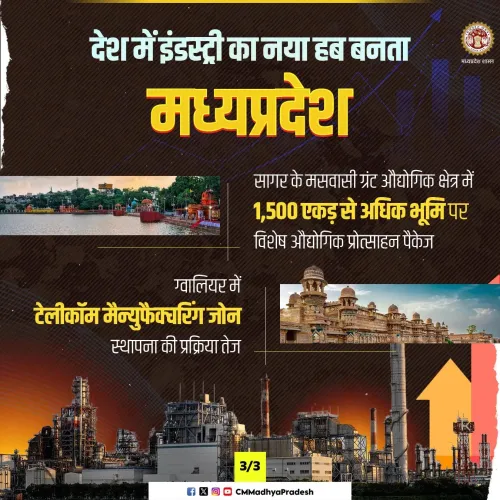
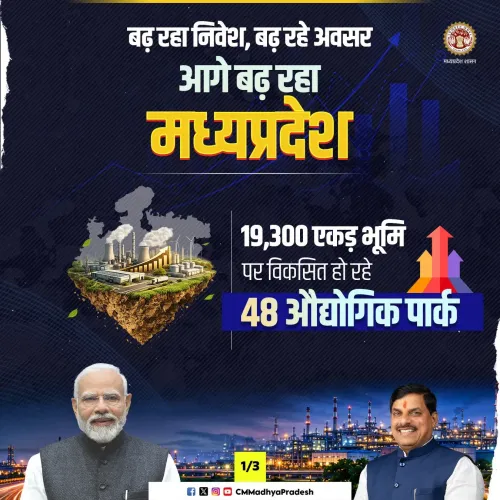
CM Mohan Yadav: 21 New Industrial Zones Across 18 MP Districts
Synopsis
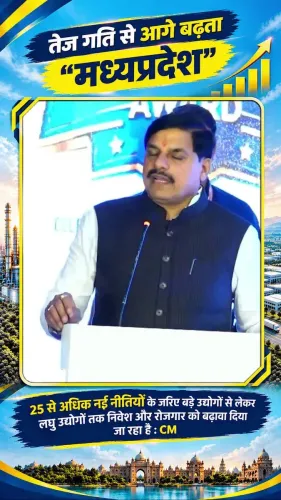
Madhya Pradesh CM Dr. Mohan Yadav announced the development of 21 new industrial areas across 18 districts, aiming to accelerate investment, entrepreneurship, and job creation in the state.
Key Takeaways
21 new industrial areas will be developed across 18 districts of Madhya Pradesh.
The initiative aims to generate new opportunities for investment, entrepreneurship, and employment .
The move aligns with the state's long-standing Industrial Promotion Policy (2014) and the national Make in India initiative.
Mohan Yadav , who took office in December 2023 , framed this as fresh momentum in the state's industrial development drive.
Specific district locations, timelines, and incentive packages are yet to be detailed in official orders.
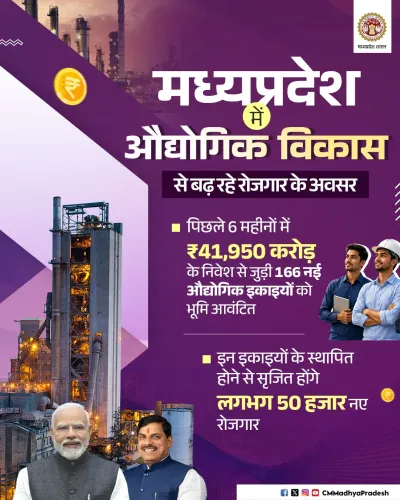
Madhya Pradesh is building its next industrial chapter — one zone at a time. Madhya Pradesh Chief Minister Dr. Mohan Yadav announced on Saturday, November 14, 2026, that the state government will develop 21 new industrial areas across 18 districts, aiming to unlock fresh waves of investment, entrepreneurship, and employment across the state.
Posting on X, Dr. Yadav wrote: 'मध्यप्रदेश सरकार के प्रयासों से प्रदेश में औद्योगिक विकास को मिल रही नई गति' — 'Industrial development in Madhya Pradesh is gaining new momentum through the state government's efforts' — adding that the new zones will create new avenues for investment, entrepreneurship, and employment.
21 Zones, 18 Districts — Spreading the Industrial Map
The scale of the rollout is deliberate. By spreading 21 industrial areas across 18 districts, the government signals an intent to decentralise industrial activity beyond the state's established hubs, pulling smaller and mid-sized districts into the investment orbit. Each new zone represents potential land, logistics, and labour linkages that entrepreneurs and manufacturers can plug into directly.
Madhya Pradesh has historically lagged behind more industrialised Indian states in manufacturing output, a gap successive BJP governments have worked to close. The state's Industrial Promotion Policy of 2014 laid the groundwork — prioritising infrastructure development as the primary lever for attracting both domestic and foreign capital.
The Make in India Tailwind
This push fits squarely within the national Make in India framework, launched in 2014 to raise manufacturing's share of India's GDP. States have been competing aggressively to position themselves as preferred investment destinations — and industrial zones with ready infrastructure are the sharpest competitive tool available. Madhya Pradesh, sitting at India's geographic centre, has a logistics argument to make to manufacturers eyeing pan-India distribution.
Industrial investors, local entrepreneurs, and job seekers stand to be the primary beneficiaries — but the real test will come when specific district locations, development timelines, land acquisition frameworks, and incentive packages are formalised in official orders. Watch for follow-up investment summits or MoU signings with private players as the next signpost of execution.
Point of View
Pre-investment signal to attract capital — particularly significant as Madhya Pradesh seeks to close the manufacturing gap with more industrialised rival states. Distributing 21 zones across 18 districts rather than concentrating them in established corridors is a politically smart move too, widening the optics of development geographically. The real measure of this initiative will be execution speed: zone announcements without fast-tracked land clearances and utility connections historically stall. The alignment with Make in India gives the state a national-level narrative hook, but investor confidence will ultimately hinge on the incentive packages and administrative bandwidth that follow.
NationPress
14 Nov 2026
Frequently Asked Questions
How many new industrial areas is Madhya Pradesh planning to develop?
Madhya Pradesh plans to develop 21 new industrial areas spread across 18 districts of the state, as announced by Chief Minister Dr. Mohan Yadav.
What is the aim of Madhya Pradesh's new industrial zones?
The new industrial zones are aimed at creating fresh opportunities for investment, entrepreneurship, and employment across Madhya Pradesh.
Which districts in MP will get the new industrial areas?
The specific district locations for the 21 industrial areas have not yet been officially detailed. The announcement covers 18 districts in total, with further information expected in official government orders.
How does this relate to Make in India?
Madhya Pradesh's industrial zone expansion aligns with the national Make in India initiative launched in 2014 , which encourages states to build manufacturing infrastructure to raise India's industrial output and attract domestic and foreign investment.
What is Madhya Pradesh's industrial policy background?
The state's Industrial Promotion Policy of 2014 set the foundation for attracting investment through infrastructure development, a direction that successive BJP governments — including Dr. Yadav's administration — have continued to pursue.