CM Mohan Yadav Hails Indore Double-Decker Bridge as Urban Milestone
Synopsis
Chief Minister Dr. Mohan Yadav has highlighted Indore's newly built double-decker bridge as a symbol of the city's development, calling it an outstanding example of modern technology that will significantly improve urban traffic movement in Madhya Pradesh's largest city.
Key Takeaways
Mohan Yadav declared that Indore has become 'synonymous with development' in remarks shared by the Chief Minister's Office on 24 July 2026 .
A double-decker bridge has been constructed in Indore , described by the Chief Minister as an outstanding example of modern engineering technology.
The bridge is intended to make Indore's traffic management system more convenient for daily commuters.
Indore was selected under the Smart Cities Mission (2015) , which has channelled funding into urban mobility upgrades across the city.
Madhya Pradesh has pursued elevated corridors and modern bridge solutions as a state-wide strategy to combat congestion in its largest urban centres.
Traffic impact assessments and timelines for further urban projects in Indore and Bhopal remain to be watched in the current budget cycle.
The Chief Minister's Office of Madhya Pradesh on Thursday, 24 July 2026 shared remarks by Chief Minister Dr. Mohan Yadav calling Indore a synonym for development, highlighting the city's newly constructed double-decker bridge as a landmark achievement in modern urban infrastructure.
Posting on X, the Chief Minister's Office quoted CM Dr. Mohan Yadav: 'Indore aaj vikas ka paryay ban chuka hai' ('Indore has today become synonymous with development'). He described the double-decker bridge built in the city as 'an outstanding example of modern technology' that 'will make the city's traffic system more convenient.'
Context
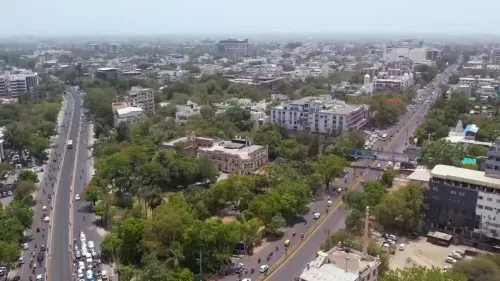
Indore is Madhya Pradesh's largest city and its primary commercial and industrial engine. Rapid urbanisation and a surge in vehicle ownership have placed significant pressure on the city's road network over the past decade, making elevated and grade-separated infrastructure a priority for city planners.
A double-decker bridge — one that carries two levels of traffic on a single structure — represents an engineering solution designed to maximise throughput on constrained urban corridors without requiring additional land acquisition.
Policy Backdrop
Indore was among the cities selected under the Smart Cities Mission, the Central government programme launched in 2015 to drive integrated urban infrastructure upgrades. The mission provided a framework and funding channel for mobility projects, including elevated corridors and junction improvements, across participating cities.
Madhya Pradesh has pursued a broader state-level emphasis on modern engineering solutions — elevated corridors, flyovers, and bridges — to address congestion in its fastest-growing urban centres. Indore and Bhopal have been the primary focus cities under this approach, which mirrors similar strategies adopted by several other Indian states managing tier-2 city growth.
Stakeholders and Impact
The most direct beneficiaries are Indore's daily commuters and residents who navigate the city's busiest arterial routes. Improved traffic flow on those corridors can reduce travel times, lower vehicle emissions, and ease the strain on parallel roads.
Businesses operating along the affected corridors stand to benefit from smoother logistics, while the project also signals to investors that the state is committed to maintaining Indore's liveability as the city grows. Indore has consistently ranked at or near the top of national cleanliness surveys, and infrastructure quality is increasingly part of its competitive identity.
What's Next
Attention will now turn to traffic impact assessments and the rollout timelines for additional urban mobility projects announced in Indore and Bhopal during the current state budget cycle. Whether the double-decker bridge model is replicated on other congested corridors in the state will be a key indicator of the government's long-term urban infrastructure strategy.
As Madhya Pradesh positions its cities for economic growth, the pace and quality of such projects will be closely watched by urban planners and citizens alike.
Frequently Asked Questions
What is the double-decker bridge in Indore?
The double-decker bridge in Indore is a two-level road structure built to increase traffic capacity on a single corridor, highlighted by Chief Minister Dr. Mohan Yadav as an example of modern urban engineering in Madhya Pradesh.
What did CM Mohan Yadav say about Indore's development?
CM Dr. Mohan Yadav said that Indore has today become synonymous with development and called the newly built double-decker bridge an outstanding example of modern technology that will make the city's traffic system more convenient.
Is Indore part of the Smart Cities Mission?
Yes, Indore was selected under the Central government's Smart Cities Mission launched in 2015, which has supported multiple urban mobility and infrastructure upgrades in the city.
How will the double-decker bridge help Indore commuters?
The bridge is designed to ease traffic congestion by carrying two levels of vehicles on a single structure, reducing travel times and improving flow on key corridors without requiring additional land.
What are Madhya Pradesh's urban infrastructure plans?
Madhya Pradesh has been investing in elevated corridors, flyovers, and modern bridges in Indore and Bhopal to manage congestion caused by rapid urbanisation, with further projects expected in the current state budget cycle.