CM Mohan Yadav Launches Property Rights Drive in Murena Village
Synopsis
On Dhanteras, Madhya Pradesh CM Dr. Mohan Yadav visited Gram Karua in Murena to advance the Mukhyamantri Rajistri Yojana, which registers rural house ownership with the state absorbing all stamp and registration fees, unlocking formal credit access for village families.
Key Takeaways
Mohan Yadav visited Gram Karua, Murena on Dhanteras, November 6, 2026 for a property-registration campaign.
The Mukhyamantri Rajistri Yojana provides legally registered house ownership documents to rural families at zero cost — the state pays all stamp duty and registration fees.
Registered ownership documents will enable beneficiaries to access bank loans and formal financial services for the first time.
Outstanding tehsildars and patwaris were felicitated at the event, highlighting the scheme's dependence on field-level revenue officials.
The scheme builds on the central government's SVAMITVA scheme (2020) and the Digital India Land Records Modernisation Programme .
BJP MP state president H.
Khandelwal , cabinet minister Aidal Singh Kanjee , and MP Shiv Mangal Singh Tomar were present at the event.
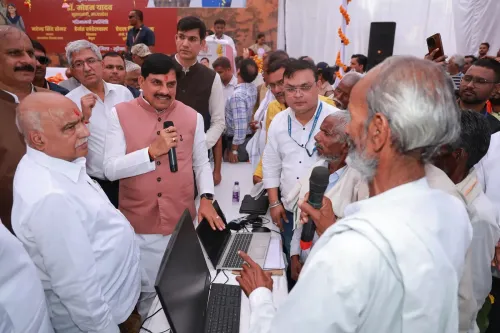
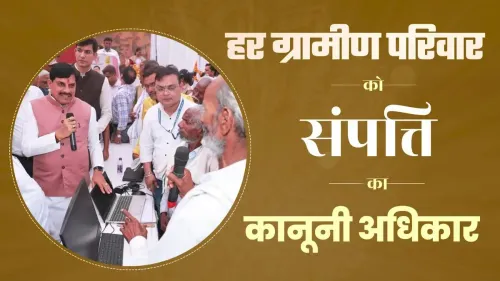
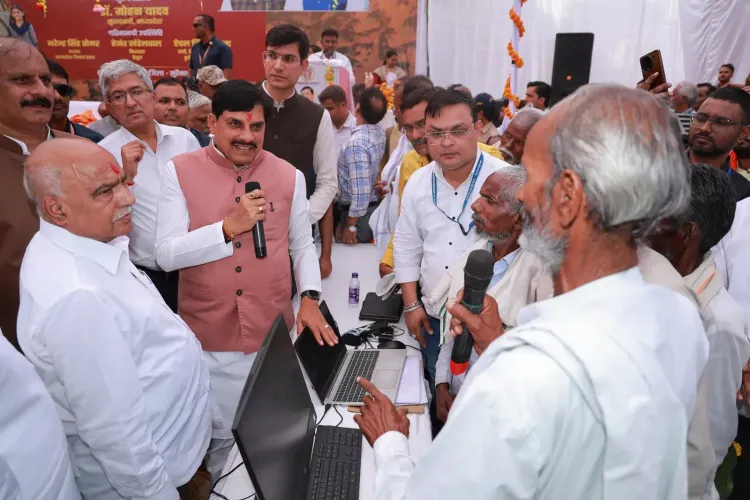
On the auspicious occasion of Dhanteras, Madhya Pradesh Chief Minister Dr. Mohan Yadav travelled to Gram Karua in Murena district on Friday, November 6 to personally engage with beneficiaries of the Mukhyamantri Rajistri Yojana — a state scheme designed to give rural families legally registered ownership documents for their homes, with the government footing the entire stamp duty and registration fee bill.
What the Mukhyamantri Rajistri Yojana actually does for a village family
The scheme's promise is deceptively simple but historically elusive for millions of rural households: a pakka vaidhanik adhikar — a firm, legally registered title to the house they already live in. Under the Mukhyamantri Rajistri Yojana, the state government absorbs all stamp duty and registration charges that would ordinarily fall on the beneficiary, eliminating the single biggest financial barrier to formalising land ownership at the village level.
Once a family holds that ownership document, the downstream effect is significant. Banks can extend formal credit against a registered property title — something previously impossible for households whose land rights existed only in custom, not in record. Dr. Mohan Yadav underscored this directly, stating the documents would make it 'easier for rural residents to access bank loans and other financial facilities.'
Dhanteras timing, Murena field visit, and the officials honoured
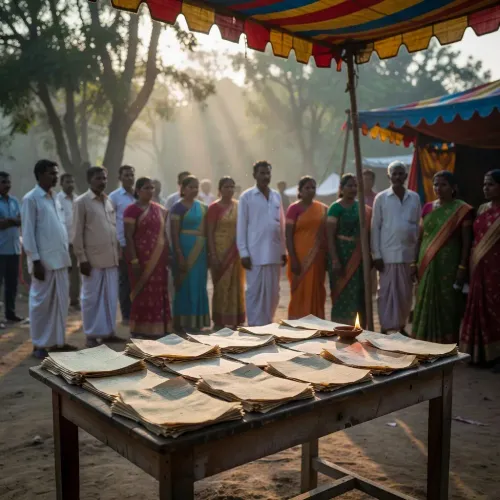
Choosing Dhanteras — the festival traditionally associated with wealth and prosperity — to hold a property-registration drive was deliberate symbolism. Gram Karua in Murena, a northern Madhya Pradesh district that borders both Rajasthan and Uttar Pradesh, served as the launch site for the district-level registration campaign. The Chief Minister held what he described as an aatmiya samvad — an intimate dialogue — with beneficiaries on the ground.
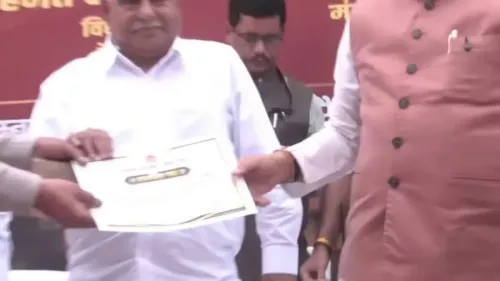
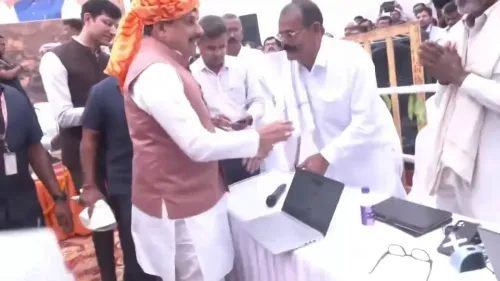
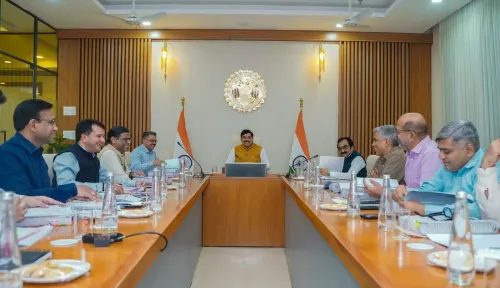
Tehsildars and patwaris who performed outstanding work in the campaign were formally felicitated at the event — a pointed signal that field-level revenue officials are central to the scheme's execution. BJP Madhya Pradesh state president H. Khandelwal, cabinet colleague Aidal Singh Kanjee, and MP Shiv Mangal Singh Tomar were also present.
Where this fits: from SVAMITVA to state-level delivery
The scheme builds on the architecture laid by the central government's SVAMITVA scheme, launched in 2020, which used drone surveys to map village habitations and issue property cards to rural households. Madhya Pradesh's Mukhyamantri Rajistri Yojana extends that logic by handling the registration and legal formalisation step — the part SVAMITVA stopped short of fully solving — and removing cost as a deterrent. It also aligns with the national Digital India Land Records Modernisation Programme, which has long identified disputed or unregistered rural land as a drag on credit access and rural economic mobility.
The broader pattern in Madhya Pradesh under the BJP government has been to pair land record modernisation with financial inclusion — the theory being that a registered title is not just a legal document but a financial asset that unlocks formal banking for families previously locked out of it. Whether rising rural bank loan disbursals follow the registration numbers will be the real measure of the scheme's impact.
A Chief Minister travelling to a village on the morning of a major festival to hand over property titles is a political image — but the documents being handed over are legally real. For the families of Gram Karua, Dhanteras 2026 may mark the first time their homes exist on paper.
Point of View
The scheme removes the principal friction point that left earlier land-titling drives undersubscribed. The Dhanteras timing and CM-level field visit signal that this is being positioned as a flagship welfare delivery ahead of a cycle where rural consolidation matters for the BJP. The real policy test will come when registration volumes translate — or fail to translate — into measurable upticks in rural credit disbursal.
NationPress
6 Nov 2026
Frequently Asked Questions
What is the Mukhyamantri Rajistri Yojana in Madhya Pradesh?
It is a Madhya Pradesh state scheme that registers legal ownership documents for rural households' homes, with the state government paying all stamp duty and registration charges on behalf of the beneficiaries.
What is the benefit of getting a property registration under this scheme?
Once a family holds a registered ownership document, they can use it as collateral to access bank loans and other formal financial services — credit that was previously unavailable to unregistered rural households.
How is the Mukhyamantri Rajistri Yojana related to the central SVAMITVA scheme?
The central SVAMITVA scheme, launched in 2020, used drone surveys to map villages and issue property cards. The Mukhyamantri Rajistri Yojana takes the next step by handling formal legal registration of those titles and waiving associated fees.
Where did CM Mohan Yadav hold the property registration event on Dhanteras 2026?
CM Dr. Mohan Yadav held the registration campaign event at Gram Karua in Murena district, northern Madhya Pradesh, on November 6, 2026.
Who pays the stamp duty and registration fee under Mukhyamantri Rajistri Yojana?
The Madhya Pradesh state government pays the full stamp duty and registration fee on behalf of the rural beneficiaries — there is no cost to the household.