CM Mohan Yadav Leads BJP's 'Save Democracy' March in Bhopal
Synopsis
Madhya Pradesh CM Dr. Mohan Yadav and Union Minister J.P. Nadda led the 'Save Democracy, Remove Anarchy' march in Bhopal on November 4, 2026, drawing a large crowd and directly targeting Congress and Rahul Gandhi in a show of BJP's organisational strength.
Key Takeaways
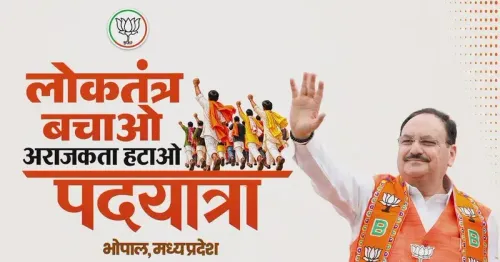
The 'Loktantra Bachao-Arajakta Hatao' march was held in Bhopal on November 4, 2026 .
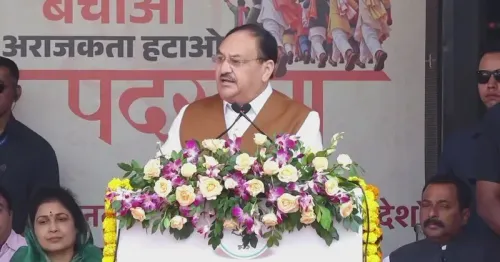
Nadda addressed the gathering, lending national-level weight to the state event.
Mohan Yadav framed the march as public endorsement of Prime Minister Narendra Modi's leadership.
Senior BJP leaders including state president Hitendra Khadelwal , national vice-president Lal Singh Arya , and MP V.D.
Sharma participated.
The event directly targeted Congress and Rahul Gandhi , accusing them of spreading anarchy.
The march fits BJP's established pattern of large-scale state mobilisations to reinforce central leadership support between election cycles.
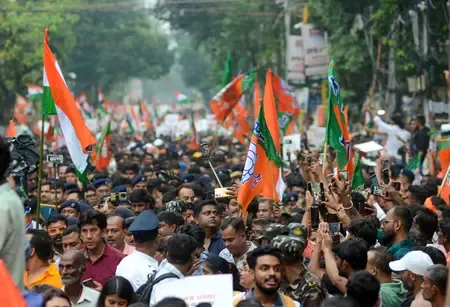
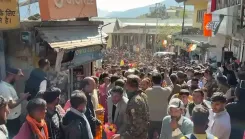
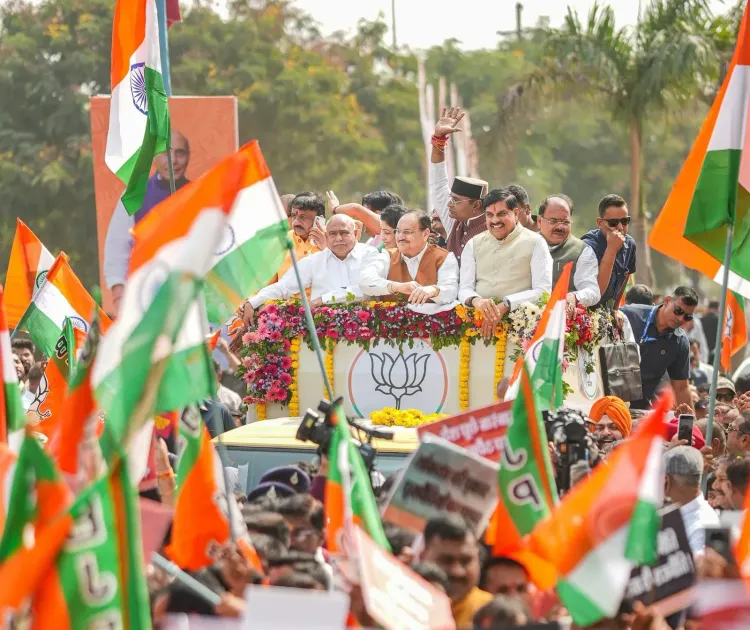
Thousands flooded the streets of Bhopal on Wednesday, November 4, 2026, as Madhya Pradesh Chief Minister Dr. Mohan Yadav joined the 'Loktantra Bachao-Arajakta Hatao' ('Save Democracy, Remove Anarchy') march — a mass mobilisation that the BJP is positioning as a direct public verdict on Prime Minister Narendra Modi's leadership and a rebuttal to what the party calls Congress's destabilising politics.
A Capitol Walkthrough with National Weight
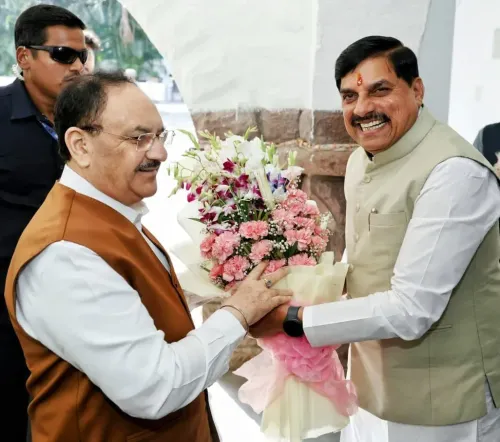
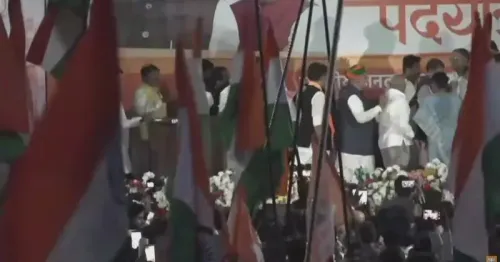
Union Minister J.P. Nadda anchored the event's national dimension, his address drawing what CM Yadav described as 'new energy' into the assembled crowd. Nadda's presence was no accident — it signals the central BJP leadership's deliberate alignment with the state unit, lending the march a stature well beyond routine party activity. When a sitting Union Minister walks alongside a Chief Minister in a state capital, the optics carry a message of their own.
Marching alongside Dr. Yadav were Madhya Pradesh BJP state president Hitendra Khadelwal, BJP national vice-president Lal Singh Arya, and national cell cluster convener and MP V.D. Sharma — a concentration of party hierarchy that underscores how seriously the organisation is treating this mobilisation.
BJP's Frame: Modi's Mandate vs. Congress 'Anarchy'
The hashtag #SaveDemocracyRemoveAnarchy and the march's name both centre the same contrast the BJP has consistently deployed since 2019: a stable, trusted central government on one side and an opposition characterised as chaotic and disruptive on the other. CM Yadav stated plainly that 'the public will give a crushing reply to Congress and Rahul Gandhi's attempts to spread anarchy.' That is combative political language — but it is the language the party chose, and the march's scale in the state capital amplifies it.
Madhya Pradesh, a state the BJP has held with only brief interruptions, remains a key pillar of the party's Hindi heartland strategy. Organising a high-profile street demonstration here — with both state and national leadership present — reinforces that the party intends to keep its base energised well between electoral cycles, not just during campaign season.
A Playbook Seen Across BJP States
This march fits a recognisable BJP template: deploy large-format public events in states where the party governs to demonstrate ground-level strength, neutralise opposition narrative momentum, and signal to the rank-and-file that the organisation is active. Similar marches have been staged across BJP-governed states since 2019, often timed to counter opposition-led protests or high-profile Congress campaigns.
Whether Congress responds with counter-mobilisation in Madhya Pradesh — and whether this pattern spreads to other states in the weeks ahead — will determine whether today's march is a standalone statement or the opening move in a wider political sequence.
The streets of Bhopal have delivered BJP's answer. The next move belongs to the opposition.
Point of View
Demonstrate organisational depth, and control the political narrative in a key Hindi heartland state. Nadda's physical presence converts a state-level rally into a nationally-sanctioned statement, reinforcing the vertical alignment between Delhi and Bhopal that has been central to BJP's post-2019 dominance. The explicit targeting of Rahul Gandhi and Congress by name suggests the party is content to keep the opposition in the role of foil, a framing Congress will need to actively contest if it hopes to regain ground in Madhya Pradesh.
NationPress
4 Nov 2026
Frequently Asked Questions
What is the 'Loktantra Bachao-Arajakta Hatao' march?
It is a BJP-organised public march held in Bhopal on November 4, 2026, translated as 'Save Democracy, Remove Anarchy,' aimed at demonstrating public support for PM Modi's leadership and countering what the party characterises as Congress's disruptive politics.
Who attended the Save Democracy march in Bhopal?
Madhya Pradesh Chief Minister Dr. Mohan Yadav, Union Minister J.P. Nadda, state BJP president Hitendra Khadelwal, BJP national vice-president Lal Singh Arya, and national cell convener and MP V.D. Sharma all participated.
Why did J.P. Nadda attend the Bhopal BJP march?
As a Union Minister and senior BJP leader, Nadda's presence at the Bhopal march signalled central leadership's backing for the event, amplifying its national significance and reinforcing BJP's central-state political alignment.
What did CM Mohan Yadav say about Congress at the march?
CM Yadav stated that the public will give a 'crushing reply' to Congress and Rahul Gandhi's alleged attempts to spread anarchy, framing the large turnout as a direct show of faith in PM Modi's governance.
Is this BJP march related to any upcoming election in Madhya Pradesh?
No specific election has been cited as the trigger. The march fits BJP's broader pattern of organising mass mobilisation events in governed states to maintain organisational momentum and reinforce political narratives between electoral cycles.