CM Mohan Yadav orders monthly drug-free drives across MP districts

Synopsis
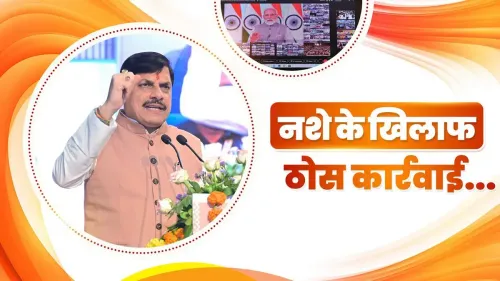
Madhya Pradesh CM Dr. Mohan Yadav has directed all District Collectors and Superintendents of Police via video conference to conduct monthly reviews of the Nasha Mukt Bharat Abhiyan and take strict joint Police-Excise action against drug offenders.
Key Takeaways
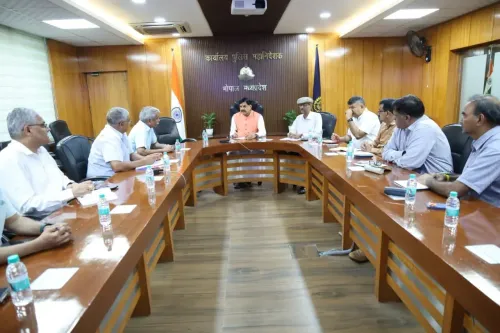
Mohan Yadav chaired a video conference from Mantralaya on 29 September 2026 with all District Collectors and SPs across Madhya Pradesh.
Monthly district-level reviews of the Nasha Mukt Bharat Abhiyan are now mandated, creating a formal accountability loop for district officials.
The CM directed the Police and Excise Department to take joint, strict action against drug offenders wherever required.
The Nasha Mukt Bharat Abhiyan was launched in 2020 by the Ministry of Social Justice and Empowerment to address substance abuse through awareness, prevention and rehabilitation.
The directive attempts to close long-standing coordination gaps between police and excise agencies at the field level.
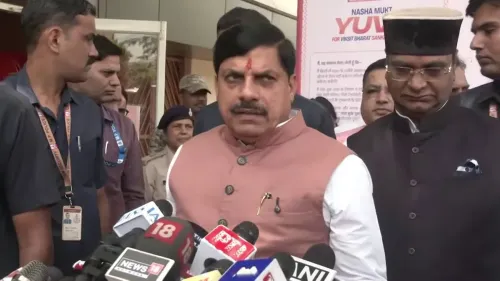
Drug enforcement just got a direct line to the top. Madhya Pradesh Chief Minister Dr. Mohan Yadav on Tuesday, 29 September 2026, chaired a video conference from the Mantralaya — the state secretariat in Bhopal — directing every District Collector and Superintendent of Police in the state to conduct monthly reviews of the Nasha Mukt Bharat Abhiyan (Drug-Free India Campaign) and ensure its effective implementation on the ground.
Direct orders from Mantralaya to every district
The Chief Minister's instruction was unambiguous: monthly review meetings are now mandatory at the district level, and enforcement cannot be left to routine bureaucratic momentum. Dr. Yadav specifically directed that the Police and the Excise Department act jointly and strictly against offenders wherever the situation demands — a clear signal that siloed functioning between the two agencies will not be tolerated.
Translating his directive, he stated: 'दोषियों के विरुद्ध पुलिस और आबकारी विभाग आवश्यकतानुसार संयुक्त रूप से सख्त कार्रवाई करें' — 'The Police and Excise Department should, as necessary, take strict joint action against the guilty.' The emphasis on jointness matters: drug networks rarely respect departmental boundaries, and so enforcement, the CM made clear, cannot either.
What the Nasha Mukt Bharat Abhiyan is — and why monthly reviews matter
The Nasha Mukt Bharat Abhiyan was launched in 2020 by the Ministry of Social Justice and Empowerment to combat substance abuse through a combination of awareness, prevention, and rehabilitation. Like many centrally sponsored programmes, its real-world impact depends heavily on how rigorously it is operationalised at the district level — which is precisely where momentum tends to stall.
By anchoring monthly reviews at the Collector and SP level, the state creates a formal accountability loop: district officials must now track progress, report back, and defend outcomes. That is the administrative machinery behind the headline. In BJP-governed states, similar enforcement frameworks combining awareness drives with NDPS Act prosecutions have been periodically activated, but a direct Chief Minister-level video conference raises the political stakes and the administrative urgency in one move.
Police and Excise: the joint enforcement equation
The instruction to deploy Police and Excise together is more than procedural. The Excise Department controls licensing, inspections and prohibition enforcement, while the Police hold arrest and investigation powers under the Narcotic Drugs and Psychotropic Substances (NDPS) Act. Coordination gaps between the two have historically allowed offenders to exploit jurisdictional ambiguity. Dr. Yadav's directive attempts to close that gap at the field level, with district heads now explicitly responsible for making it work.
The months ahead will reveal whether this directive translates into measurable joint operations — or remains a directional signal. District-level monthly review meetings and any follow-through in the form of coordinated raids and prosecutions are the benchmarks to watch from October 2026 onward.
The message from Mantralaya is simple and hard to misread: on drug enforcement, the Chief Minister is watching — and so is the calendar.
Point of View
He converts a centrally sponsored scheme into a state-owned political commitment — one with his name and cadence attached to it. The joint Police-Excise mandate is analytically significant: it acknowledges that single-agency enforcement has structural limits against sophisticated drug networks. Whether this produces sustained operational output or fades after the first review cycle will be a telling test of Madhya Pradesh's governance machinery in the months ahead.
NationPress
30 Sept 2026
Frequently Asked Questions
What is the Nasha Mukt Bharat Abhiyan?
The Nasha Mukt Bharat Abhiyan is a national campaign launched in 2020 by the Ministry of Social Justice and Empowerment to combat substance abuse in India through awareness, prevention and rehabilitation programmes.
What did CM Mohan Yadav direct on 29 September 2026?
CM Dr. Mohan Yadav directed all District Collectors and Superintendents of Police in Madhya Pradesh to conduct monthly reviews of the Nasha Mukt Bharat Abhiyan and ensure strict joint action by Police and the Excise Department against drug offenders.
Why are Police and Excise Department being asked to act jointly in Madhya Pradesh?
The Excise Department handles licensing and prohibition enforcement while Police hold powers under the NDPS Act. Joint action closes jurisdictional gaps that drug offenders have historically exploited between the two agencies.
How will district officials in MP be held accountable for the drug-free campaign?
District Collectors and Superintendents of Police are now required to hold monthly reviews of the Nasha Mukt Bharat Abhiyan, creating a regular reporting and accountability mechanism directly tied to the Chief Minister's directive.
What is the NDPS Act and how does it apply to this campaign?
The Narcotic Drugs and Psychotropic Substances Act is India's primary law governing drug offences. Police use it to arrest and prosecute drug traffickers and users, making it a central legal instrument in campaigns like the Nasha Mukt Bharat Abhiyan.