CM Nayab Saini backs VECV-Volvo-Eicher skill push for Haryana youth
Synopsis
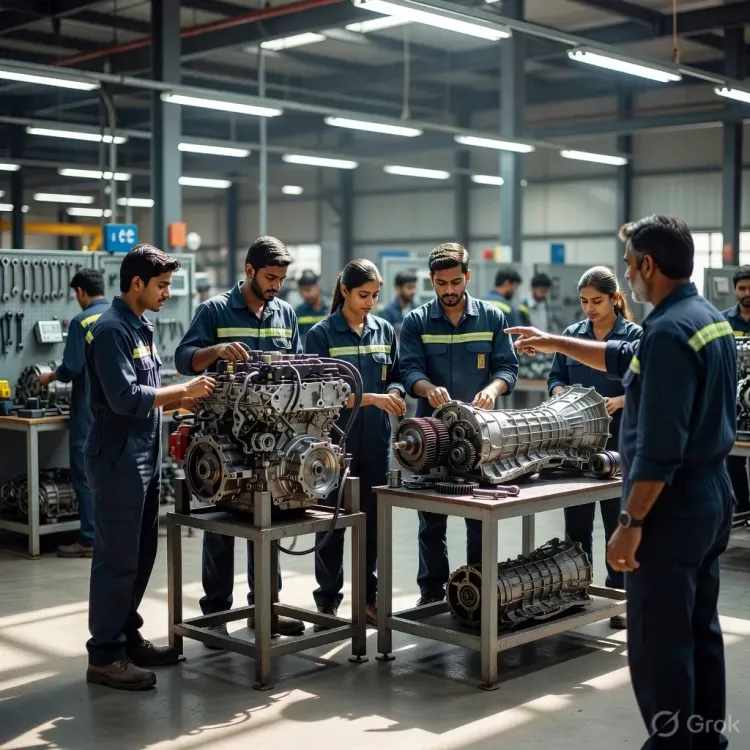
Haryana CM Nayab Singh Saini has backed a skill development initiative connecting state universities with VECV, Volvo Group, and Eicher Motors, aiming to make youth self-reliant and employment generators through modern vocational training in the commercial vehicle manufacturing sector.
Key Takeaways
Haryana CM Nayab Singh Saini publicly endorsed a new skill development initiative on 13 August 2026 .
The initiative involves VE Commercial Vehicles Limited (VECV) , the Volvo Group , and Eicher Motors partnering with Haryana universities.
The stated goal is to make Haryana's youth both self-reliant and capable of generating employment for others.
The initiative aligns with India's National Skill Development Mission launched in 2015 and Haryana's existing industry-academia linkage policies.
Specific curriculum details, university names, and placement timelines have not yet been publicly disclosed.
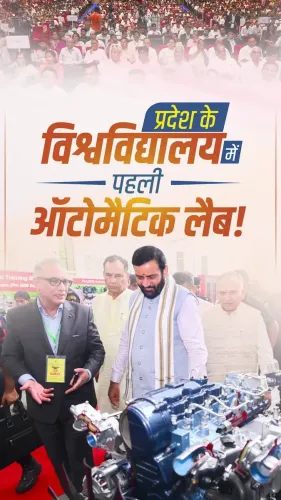
Haryana's young workforce just got a powerful new ally in the private sector. Haryana Chief Minister Nayab Singh Saini on Thursday, 13 August 2026, publicly backed a skill development initiative linking the state's universities with VE Commercial Vehicles Limited (VECV), the Volvo Group, and Eicher Motors — a partnership aimed squarely at turning students into job-ready professionals and, eventually, job creators.
Posting on X, CM Saini said: 'Empowering Haryana's youth with modern skills to make them self-reliant and employment generators is our priority. I extend my heartfelt congratulations and best wishes to VE Commercial Vehicles Limited (VECV), the Volvo Group, Eicher Motors, and the university family for this important initiative.'
VECV, Volvo and Eicher: why this industry trio matters
VECV is a joint venture between the Volvo Group — the Swedish commercial-vehicle giant — and Eicher Motors, one of India's most recognisable automotive names. Together, they represent a rare blend of global manufacturing standards and deep Indian market roots. When a consortium of this calibre plugs into a state's university system, the curriculum it brings is not textbook-generic — it is factory-floor specific, aligned with actual hiring pipelines in commercial vehicle manufacturing and logistics.
That is precisely the gap India's National Skill Development Mission, launched in 2015, was designed to close. Haryana has since built a track record of industry-academia linkages in manufacturing sectors, and this initiative fits that pattern — but with a notably high-profile corporate partner.
Self-reliance framed as an economic strategy, not just a slogan
CM Saini's use of 'aatmanirbhar' (self-reliant) and 'rojgar srijankar' (employment generator) is deliberate. The framing signals a shift in ambition: the state is not merely trying to place graduates in existing jobs — it wants to produce individuals capable of creating employment for others. That is a higher bar, and it points toward entrepreneurship and technical leadership as outcomes, not just vocational certification.
Haryana's industrial belt — spanning Gurugram, Faridabad, Manesar and beyond — already hosts some of the country's densest concentrations of automotive and manufacturing activity. Skilling youth locally for that sector reduces migration pressure and keeps economic value within the state.
What comes next for students and universities
The specific university or universities involved, the curriculum structure, and placement timelines have not yet been publicly detailed. Those rollout specifics will determine whether this initiative delivers measurable outcomes or remains a well-intentioned announcement. Placement numbers, apprenticeship slots, and curriculum co-development depth will be the metrics worth watching in the months ahead.
For now, the signal from Chandigarh is clear: Haryana is betting that modern vocational training — built with industry, not just for industry — is the fastest route from classroom to career. The corporate muscle behind this bet makes it one worth tracking.
Point of View
But the involvement of VECV — a Volvo-Eicher joint venture — gives it industrial credibility that purely government-run programs often lack. Haryana's location at the heart of India's automotive manufacturing corridor makes this a strategically logical move, not just political optics. The real test will be whether the initiative produces verifiable placement outcomes or fades into the crowded landscape of announced-but-untracked skilling programs. If it delivers, it becomes a replicable model for other industrial states.
NationPress
13 Aug 2026
Frequently Asked Questions
What is the VECV Haryana skill development initiative about?
It is a partnership between VE Commercial Vehicles Limited (VECV), the Volvo Group, Eicher Motors, and Haryana universities to provide modern vocational training to state youth, with the aim of making them job-ready and capable of creating employment in the commercial vehicle and manufacturing sectors.
What did Haryana CM Nayab Singh Saini say about the VECV initiative?
CM Saini said that empowering Haryana's youth with modern skills to make them self-reliant and employment generators is the state's priority, and he congratulated VECV, the Volvo Group, Eicher Motors, and the university partners for the initiative.
What is VE Commercial Vehicles Limited (VECV)?
VECV is a joint venture between the Swedish multinational Volvo Group and Indian automotive manufacturer Eicher Motors, focused on commercial vehicles, engines, and related manufacturing.
How does this fit into India's national skill development policy?
India launched the National Skill Development Mission in 2015 to scale vocational training and improve employability. Haryana has since promoted industry-academia linkages in manufacturing, and this VECV partnership extends that approach with high-profile corporate involvement.
Which Haryana university is part of the VECV skill initiative?
The specific university or universities involved have not been publicly named in the available details of the announcement. Curriculum and placement specifics are also yet to be disclosed.