CM Nayab Saini Orders Faster Jobs Push for Haryana Youth
Synopsis
Chief Minister Nayab Singh Saini chaired a review meeting on 29 July 2026 and ordered accelerated employment and skilling for over 5.4 lakh CET-qualified Haryana youth, with 100 hours of work or a Sashakt Yuva Yojana stipend guaranteed from 1 November, alongside a new Fatehabad skill centre and AI-based training.
Key Takeaways
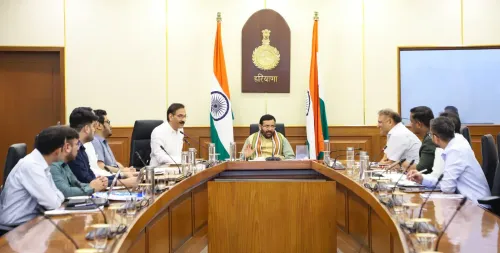
CM Nayab Singh Saini chaired a review of the Employment, Skill Development and Industrial Training Department on 29 July 2026 .
Haryana has ranked among the top-10 states under the Pradhan Mantri Viksit Bharat Yojana.
A regional centre of Shri Vishwakarma Skill University will be established in Fatehabad .
5,40,428 CET-qualified youth will receive 100 hours of work ; those unemployed for two years get a stipend under Sashakt Yuva Yojana .
Benefits are to be rolled out from 1 November .
AI-based skill training will be introduced to modernise vocational education in the state.
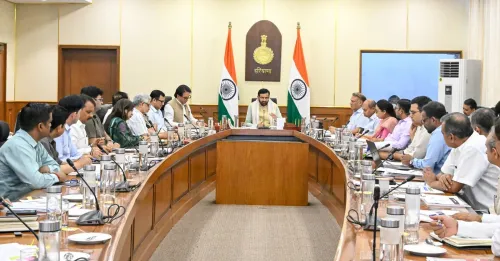
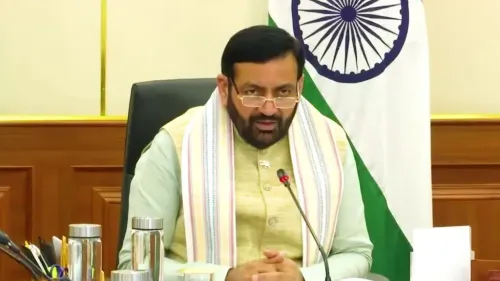
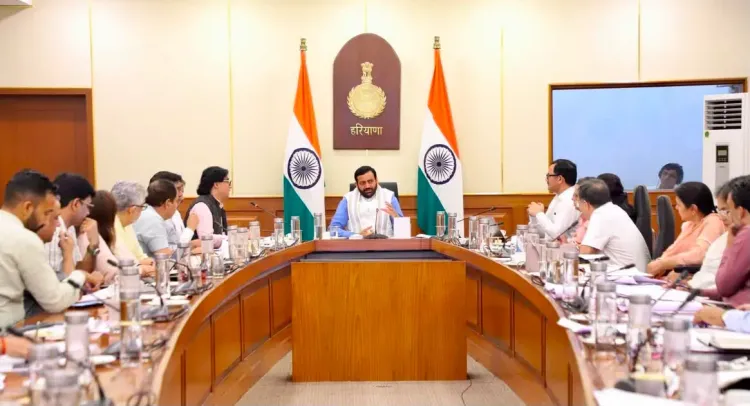
Over 5.4 lakh young people who cleared Haryana's Common Eligibility Test are now at the centre of a high-stakes employment drive — and Chief Minister Nayab Singh Saini has set a hard deadline of 1 November to get them into the system. Chairing a review meeting of the Employment, Skill Development and Industrial Training Department on 29 July 2026, Saini directed officials to sharply accelerate job creation and skilling under the Viksit Bharat Vision 2047 framework.
Haryana cracks the national top-10 on Viksit Bharat rankings
Saini opened the meeting with a marker of progress: under the Pradhan Mantri Viksit Bharat Yojana, Haryana has secured a place among the top-10 states in India. That ranking is now the floor, not the ceiling. The Chief Minister's directive was clear — the pace of employment generation and skills training must accelerate, not plateau.
Fatehabad regional centre, AI training, and new job avenues
The meeting drilled into three concrete expansion moves. First, a regional centre of Shri Vishwakarma Skill University will be established in Fatehabad, extending the institution's vocational reach into a district that has historically lagged in skilling infrastructure. Second, the state will roll out AI-based skill training — a signal that Haryana intends to future-proof its youth pipeline beyond conventional trades. Third, officials were asked to map and create fresh employment avenues aligned with emerging industry demand.
Shri Vishwakarma Skill University, set up by the Haryana government to align vocational education with live industry needs, has been the state's flagship institution for this push. A Fatehabad centre would bring that ecosystem closer to rural and semi-urban youth who currently have to travel for quality training.
The CET safety net: 100 hours of work — or a stipend
The sharpest directive of the meeting targets the 5,40,428 CET-qualified youth identified in a state survey. Saini ordered that each of them be provided 100 hours of work. The guarantee does not stop there: any candidate who remains unemployed for two years will be entitled to a stipend under the Sashakt Yuva Yojana — Haryana's scheme designed to provide financial support to eligible jobless youth while they remain in the employment queue.
Benefits under both tracks are to be ensured from 1 November. The combination of a short-term work assignment and a longer-term stipend fallback creates a two-layer safety net that the state is betting will keep skilled, certified youth from falling through the cracks between qualification and placement.
What the November deadline means
Haryana's pattern over recent years has been to announce targeted youth-employment interventions and then face scrutiny over delivery timelines. The explicit 1 November rollout date raises the political and administrative stakes — it gives both officials and observers a fixed accountability moment. With over half a million CET passers in the pipeline, even modest implementation gaps will be visible. The Fatehabad skill centre and the AI training module will take longer to materialise, but the stipend and work-hour directives are immediate commitments that the state now owns publicly.
Point of View
But the real test is the 1 November rollout for over half a million CET passers, a cohort large enough that any shortfall becomes a political liability. The Fatehabad skill centre and AI training module signal an attempt to shift the state's skilling story from quantity to quality. Whether the administrative machinery can execute at this scale — and at this speed — will define whether this meeting is remembered as a turning point or a well-publicised directive that stalled in implementation.
NationPress
28 Oct 2026
Frequently Asked Questions
What did CM Nayab Saini announce for CET-qualified youth in Haryana?
CM Nayab Saini directed that all 5,40,428 CET-qualified youth in Haryana be provided 100 hours of work , and that those who remain unemployed for two years receive a stipend under the Sashakt Yuva Yojana , with benefits starting from 1 November .
What is the Sashakt Yuva Yojana in Haryana?
Sashakt Yuva Yojana is a Haryana government scheme that provides financial support — a stipend — to eligible unemployed youth while they await placement, acting as a safety net for those who have not found work within two years of qualifying.
Where will the new Vishwakarma Skill University regional centre be set up?
A regional centre of Shri Vishwakarma Skill University will be established in Fatehabad , a district in Haryana, to expand vocational training access for youth in the region.
What is Viksit Bharat Vision 2047 and how does Haryana rank under it?
Viksit Bharat Vision 2047 is a national development framework launched by the central government targeting India's growth goals by 2047. Haryana has secured a place among the top-10 states under the associated Pradhan Mantri Viksit Bharat Yojana rankings.
Will Haryana introduce AI-based skill training for youth?
Yes. The 29 July 2026 review meeting chaired by CM Saini discussed introducing AI-based skill training as part of the state's push to modernise vocational education and prepare youth for emerging job markets.