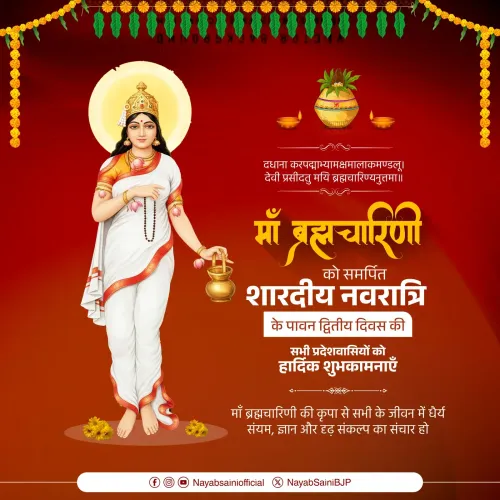
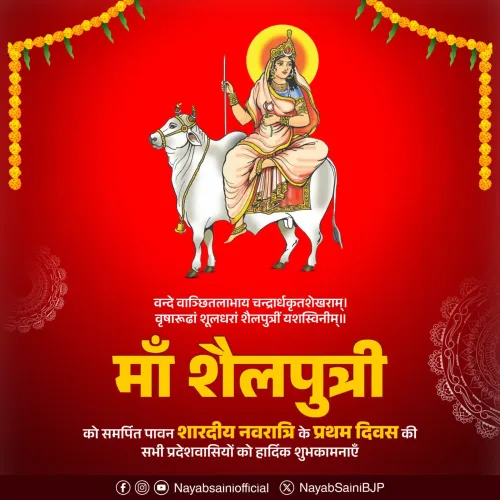
CM Nayab Saini greets Haryana on Navratri's seventh day
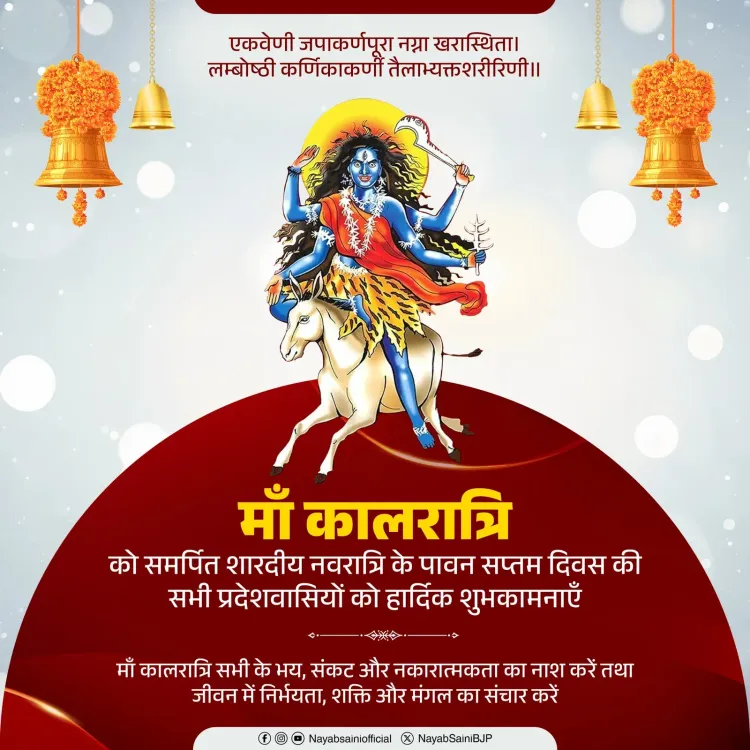
Synopsis
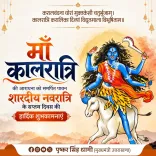
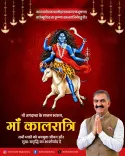
Haryana Chief Minister Nayab Singh Saini marked the seventh day of Sharadiya Navratri with a Sanskrit shloka and warm greetings for all Haryana residents, praying that Maa Kalratri destroy fear and negativity and bestow fearlessness and strength.
Key Takeaways
Haryana CM Nayab Singh Saini posted Navratri greetings on 17 October 2026 , the festival's seventh day ( Saptami ).
The message opened with a classical Sanskrit shloka describing the fierce goddess Maa Kalratri .
Saini prayed for the destruction of fear, crisis, and negativity, and for courage and auspiciousness for all Haryana residents.
Sharadiya Navratri is a nine-night autumn festival honouring the nine forms of Goddess Durga, widely observed across Haryana.
The festival continues toward Mahanavami and Vijayadashami (Dussehra) , the two remaining major observances.
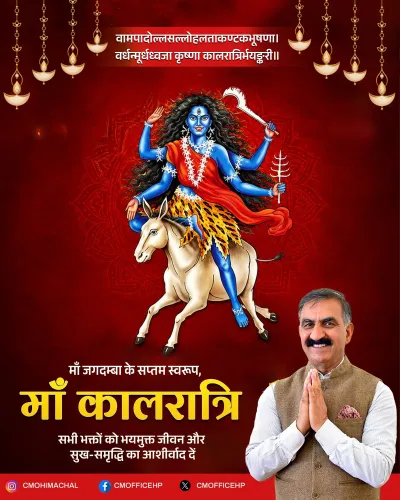
On the seventh and most fierce day of Sharadiya Navratri 2026, Haryana Chief Minister Nayab Singh Saini extended heartfelt greetings to every resident of the state, invoking the blessings of Maa Kalratri — the goddess worshipped on Saptami, the seventh night of the nine-day festival.
Saini opened his message with a classical Sanskrit shloka describing Maa Kalratri: 'Ekaveni japakarnapura nagna kharasthita, lamboshthi karnikakarni tailabhyaktasharirini' — verses that paint the goddess as a fierce, unadorned form of divine energy, riding a donkey, her body anointed with oil, a form that Hindu scripture associates with the destruction of fear and evil.
The seventh goddess and what she represents
Among the nine forms of Goddess Durga honoured across Navratri, Kalratri is considered the most powerful and terrifying. Tradition holds that she destroys demons, darkness, and all negative forces, granting her devotees fearlessness. Saini's message captured this precisely: he prayed that the goddess 'sab ke bhay, sankat aur nakaratmakata ka naash karen' — 'destroy the fear, crisis, and negativity of all' — and fill lives with courage, strength, and auspiciousness.
Sharadiya Navratri and Haryana's cultural moment
Sharadiya Navratri, the autumn edition of the festival, is one of the most widely observed Hindu celebrations across northern India, including Haryana. Communities gather for jagrans (night-long devotional sessions), dandiya and garba dances, and elaborate temple rituals through all nine nights. For elected officials across parties, Navratri greetings are a regular and expected form of cultural engagement with constituents — but the choice to lead with a Sanskrit shloka gives Saini's message a devotional rather than merely ceremonial character.
The remaining two days of the festival build toward Mahanavami and Vijayadashami (Dussehra), when celebrations in Haryana typically peak with Kanya Pujan rituals and the symbolic burning of effigies marking the victory of good over evil.
Point of View
But leading with a Sanskrit shloka — rather than a generic 'best wishes' — signals a deliberate positioning of the message within devotional tradition rather than mere political courtesy. For the BJP, cultural fluency around Hindu festivals is a consistent strand of governance communication, and Navratri offers a nine-day window for sustained public engagement. With Dussehra approaching, the remaining Navratri days will likely see further state-level programming that keeps Saini visible in Haryana's public square.
NationPress
17 Oct 2026
Frequently Asked Questions
Which goddess is worshipped on the seventh day of Navratri?
Maa Kalratri is worshipped on the seventh day ( Saptami ) of Navratri. She is considered the fiercest of the nine forms of Goddess Durga and is believed to destroy fear, evil, and negativity.
What did Haryana CM Nayab Singh Saini say on Navratri Saptami 2026?
CM Saini posted a Sanskrit shloka describing Maa Kalratri and wished all Haryana residents a blessed seventh day of Sharadiya Navratri 2026 , praying for the goddess to eliminate fear and bring courage and auspiciousness to everyone's life.
What is the meaning of the shloka 'Ekaveni japakarnapura nagna kharasthita'?
The shloka describes Maa Kalratri's fearsome form: a single braid of hair, ear ornaments of hibiscus flowers, riding a donkey, with large lips, large ears, and a body anointed with oil — imagery from classical Hindu scripture that underlines her role as a destroyer of evil.
What is Sharadiya Navratri?
Sharadiya Navratri is the nine-night autumn festival honouring nine forms of Goddess Durga. It is among the most widely observed Hindu festivals in northern India, culminating in Vijayadashami (Dussehra) on the tenth day.
What comes after Navratri Saptami?
After Saptami come Ashtami (eighth day) and Mahanavami (ninth day), followed by Vijayadashami (Dussehra) on the tenth day — the festival's grand finale marking the victory of good over evil.