CM Nayab Saini: Haryana stands with farmers from seed to market
Synopsis
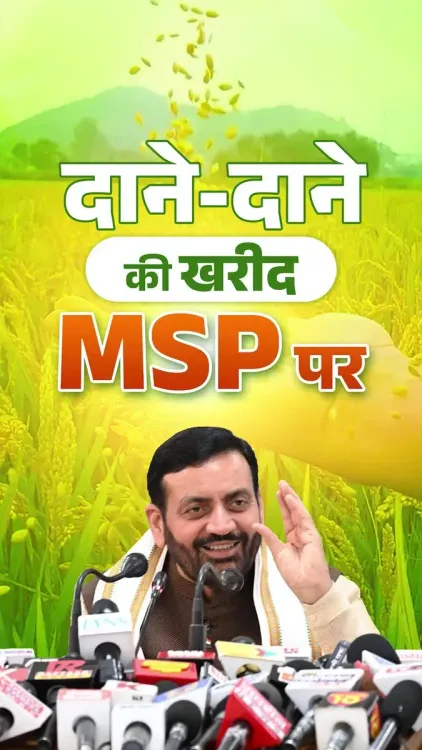
Haryana CM Nayab Singh Saini declared on 17 October 2026 that Haryana is India's first state to procure every grain at MSP, reaffirming a cradle-to-sale commitment to farmers ahead of the rabi sowing season.
Key Takeaways
CM Nayab Singh Saini posted on 17 October 2026 that Haryana stands with farmers 'from seed to market.' Saini claimed Haryana is the first state in India to purchase every grain of a crop at Minimum Support Price (MSP) .
Haryana has been a major wheat and paddy procurement state since the Green Revolution era of the 1960s-70s , contributing heavily to India's central foodgrain pool.
The post arrives ahead of the rabi sowing season (October-December), when wheat — Haryana's key crop — is planted for April-May harvest and procurement.
Haryana and Punjab together account for a dominant share of national MSP-based wheat and rice procurement, making state-level signals nationally significant for food security.
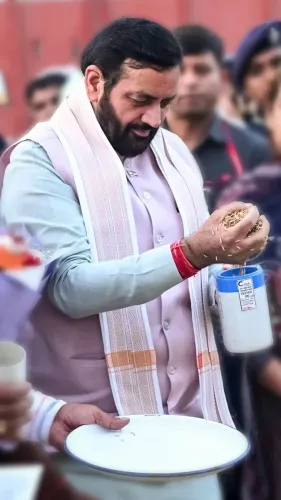
From the first seed in the soil to the last grain sold at a guaranteed price — Haryana Chief Minister Nayab Singh Saini declared on Saturday, 17 October 2026 that his state stands unwaveringly beside its farmers at every step of the agricultural journey, reaffirming Haryana's claim as the country's foremost state for Minimum Support Price procurement.
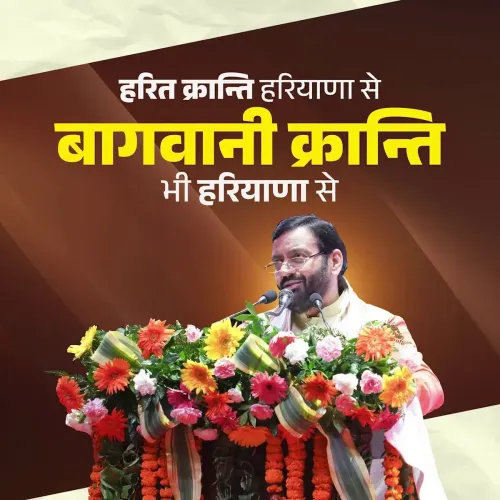
Posting on X in Hindi, Saini wrote: 'Beej se baazaar tak annadata'on ke saath khade hain' — 'We stand with the farmers from seed to market' — and asserted that Haryana is the first state in India to purchase every single grain of a crop at MSP.
Haryana's long history as India's procurement powerhouse
The claim carries weight rooted in decades of agricultural policy. Haryana, alongside Punjab, has been one of India's premier surplus foodgrain states since the Green Revolution era of the 1960s and 1970s, when the MSP mechanism for wheat was formally institutionalised to stabilise farmer incomes and incentivise production. State agencies and the Food Corporation of India (FCI) have operated large-scale wheat and paddy procurement operations in Haryana for over half a century, feeding the central pool that underpins the Public Distribution System across the country.
Together, Haryana and Punjab consistently account for a commanding share of national MSP-based wheat and rice procurement — making any policy signal from Chandigarh a matter of national food-security consequence, not just local politics.
The 'seed to market' promise and what it means for farmers
The phrase 'beej se baazaar tak' — seed to market — is a deliberate political framing that positions the state government as a cradle-to-sale guarantor for the farming community, referred to with reverence as annadata (provider of food). It signals intent to cover the full agricultural lifecycle: input support, crop insurance, and assured purchase at MSP rather than leaving farmers exposed to volatile mandi prices.
Farmer income and price realisation have been flashpoints in Indian politics for years, with periodic agitations — including large-scale protests on Delhi's borders — demanding legally guaranteed MSP for all crops. Saini's post lands squarely in that charged conversation, with Haryana positioning itself as a model of what full MSP coverage can look like in practice.
Rabi season procurement in focus
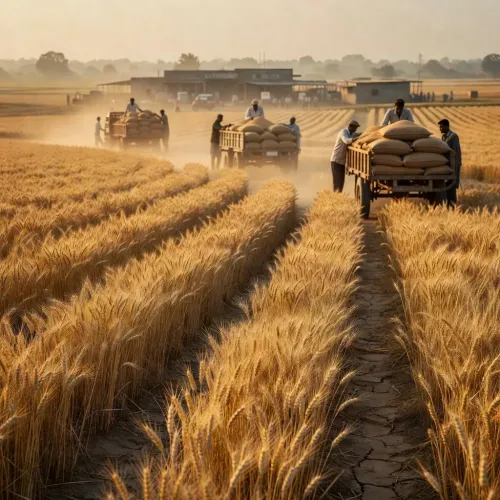
The timing of the post — ahead of the winter rabi sowing season — is unlikely to be accidental. Wheat, Haryana's signature rabi crop, is typically sown between October and December and harvested in April-May, when state procurement machinery swings into action at thousands of mandis across the state. Any new procurement guidelines or expanded coverage ahead of that cycle would be the concrete test of the assurance Saini is now making publicly.
For millions of Haryana farmers watching the next procurement season take shape, the Chief Minister's words are both a promise and a benchmark — one the state will be measured against grain by grain.
Point of View
The state government is both pre-empting opposition criticism and setting a replicable template that the party can point to nationally. The timing — ahead of rabi sowing — suggests the messaging is designed to build farmer confidence before procurement season, when the claim will face its most direct real-world test. Whether the assertion survives scrutiny will depend on ground-level procurement data that independent analysts and farmer unions are certain to track closely.
NationPress
18 Oct 2026
Frequently Asked Questions
What did Haryana CM Nayab Singh Saini say about MSP for farmers?
CM Nayab Singh Saini declared on 17 October 2026 that Haryana stands with farmers from seed to market and claimed the state is the first in India to purchase every grain of a crop at Minimum Support Price (MSP).
What is MSP and why does it matter to Haryana farmers?
MSP, or Minimum Support Price, is a government-guaranteed floor price for key crops, introduced in the 1960s during the Green Revolution. It protects farmers from market price crashes. Haryana is one of India's largest wheat and paddy producers, so MSP rates and procurement coverage directly determine farmer incomes in the state.
Is Haryana really the first state to buy every grain at MSP?
This is the claim made by CM Nayab Singh Saini. Haryana has a long history of large-scale MSP-based procurement through state agencies and the FCI, but the specific claim of being the first state to cover every grain cannot be independently verified from established public records.
What is the rabi season and how does it connect to this announcement?
The rabi season refers to the winter crop cycle, with sowing typically between October and December and harvesting in April-May. Wheat is Haryana's primary rabi crop, and state MSP procurement machinery activates at harvest time — making Saini's pre-season statement a direct signal to farmers about the upcoming procurement drive.
How much does Haryana contribute to India's national foodgrain procurement?
Haryana and Punjab together account for a substantial share of India's central pool wheat and rice procurement under the MSP regime, underpinning the Public Distribution System that feeds millions of Indians. Haryana has been a key surplus state since the Green Revolution era of the 1970s.