CM Nitish Kumar Directs Officials on NEET-2026 Standards
Synopsis
Bihar Chief Minister Nitish Kumar has directed state officials to strictly comply with prescribed standards in the conduct of NEET-2026, signalling heightened administrative oversight of the national medical entrance examination within the state.
Key Takeaways
Chief Minister Nitish Kumar issued a directive to Bihar officials on 5 June 2026 for strict NEET-2026 compliance.
The directive calls for adherence to 'prescribed standards' in the organisation of the national medical entrance exam.
NEET has been India's single national medical entrance examination since 2016 , conducted by the National Testing Agency established in 2017 .
Bihar has previously been involved in investigations into examination irregularities, making such directives significant.
State officials and examination centre administrators are the primary recipients of the compliance order.
The move reflects a wider pattern of centre-state coordination on examination integrity across India .
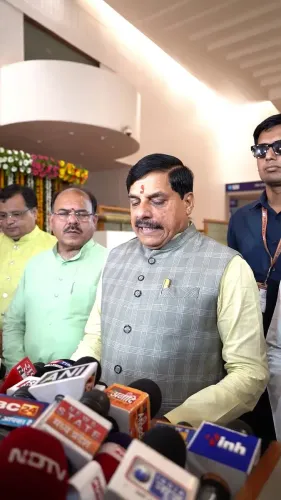
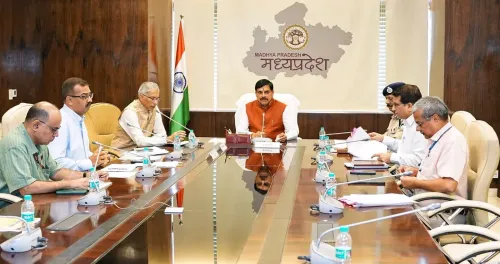
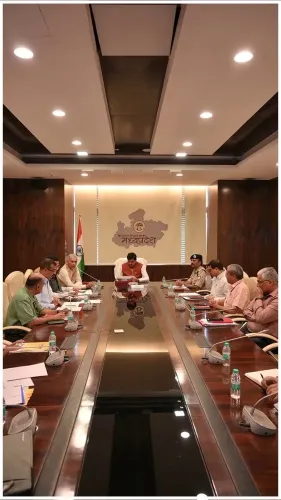
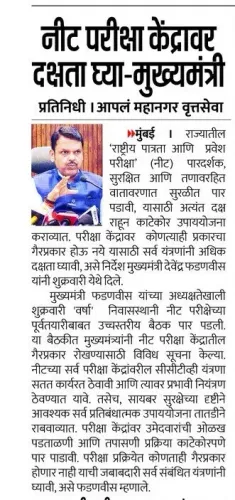
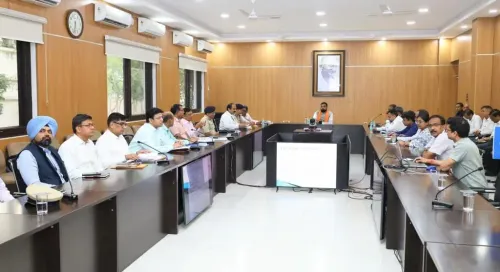
The Chief Minister's Office of Bihar, posting on Friday, 5 June 2026, shared that Chief Minister Nitish Kumar issued directions to state officials to ensure strict compliance with prescribed standards in the conduct of NEET-2026.
The post, in Hindi, quoted the Chief Minister as saying: 'NEET-2026 ke aayojan mein nirdharit maanakon ka kadaai se anupaalan sunishchit kiya jae' — ['Ensure strict compliance with prescribed standards in the conduct of NEET-2026.']
Context
The directive was issued by Chief Minister Nitish Kumar during an occasion where he addressed officials responsible for overseeing examination-related administration in the state. The statement underscores Bihar's intent to align local machinery with national protocols ahead of the next cycle of the medical entrance examination. The Chief Minister's emphasis on 'strict compliance' signals heightened administrative attention to the exam's conduct within the state.Policy Backdrop
NEET, the National Eligibility cum Entrance Test, was introduced in 2013 and became the single national medical entrance examination by 2016 following Supreme Court directions, replacing a patchwork of state and institution-level tests. The National Testing Agency (NTA), established in 2017 under the Union Ministry of Education, is the autonomous body mandated to conduct NEET and other high-stakes national examinations to uniform standards. Indian states are expected to extend administrative support for exam logistics, venue oversight, and local enforcement of NTA guidelines. Bihar has previously been drawn into investigations concerning examination irregularities, making compliance directives from the Chief Minister's level particularly significant. The state has a large population of medical aspirants for whom NEET outcomes carry decisive weight.Stakeholders and Impact
The primary stakeholders are Bihar's medical aspirants, who number in the hundreds of thousands annually, and the state education officials who are now formally directed to adhere to prescribed norms. For aspirants, the credibility and fairness of the examination process directly determines admission to undergraduate medical programmes across India. District-level administrators and examination centre coordinators will bear the operational responsibility of translating the Chief Minister's directive into on-ground compliance measures. The directive also has implications for the broader national conversation on examination integrity. Periodic controversies over paper security and procedural lapses have made state-level compliance signalling a routine but necessary part of the pre-examination cycle. CM Nitish Kumar's public statement reinforces accountability at the state tier of a centrally administered process.What's Next
Attention will now turn to whether Bihar issues specific audit or training directives for examination centre staff ahead of the NEET-2026 rollout. Observers will also watch for any formal communication between the state government and the NTA regarding logistical coordination. A robust compliance framework at the state level could serve as a model for other states seeking to strengthen the integrity of centrally conducted examinations.Point of View
The government elevates examination integrity from a bureaucratic checklist to a political commitment. This fits a broader national pattern in which state governments, under pressure from past controversies over paper leaks and procedural failures, are increasingly making pre-emptive compliance statements ahead of high-stakes exams. The directive also positions Bihar's administration as a cooperative partner to the NTA rather than a passive bystander, which matters for the state's standing in centre-state education governance.
NationPress
21 Oct 2026
Frequently Asked Questions
What did Bihar CM Nitish Kumar say about NEET 2026?
Chief Minister Nitish Kumar directed state officials to ensure strict compliance with prescribed standards in the conduct of NEET-2026, as shared by the Chief Minister's Office of Bihar on 5 June 2026.
Who conducts NEET in India?
NEET is conducted by the National Testing Agency (NTA), an autonomous body under the Union Ministry of Education, established in 2017 to standardise high-stakes national entrance examinations.
Why is Bihar issuing a NEET compliance directive?
Bihar has previously been involved in investigations into examination irregularities, and state governments routinely issue compliance directives to align local administration with national standards and deter malpractice.
When did NEET become the single national medical entrance exam?
NEET became the sole national medical entrance examination in 2016 following Supreme Court directions, replacing earlier state and institution-specific tests.
What does the Bihar NEET-2026 directive mean for students?
For medical aspirants in Bihar, the directive signals that the state government is committed to ensuring a fair and standardised examination process, which directly affects admissions to undergraduate medical programmes across India.