CM Nitish Kumar directs officials for time-bound scheme execution

Synopsis
Chief Minister Nitish Kumar has directed Bihar's state officials to ensure time-bound action on all proposals and schemes, reinforcing his government's long-standing focus on administrative accountability and faster delivery of development programmes.
Key Takeaways
The Chief Minister's Office of Bihar shared the directive on June 13, 2026 .
CM Nitish Kumar instructed officials to complete all proposals and schemes in a time-bound manner .
The order emphasises speed and accountability across state departments and district administrations.
Bihar's Saat Nischay (Seven Resolves) programme, launched in 2015 , forms the policy backbone against which such directives are measured.
Beneficiaries include rural households, women's groups, and youth covered under state welfare and infrastructure schemes.
Follow-up review meetings and departmental progress reports are expected in the coming weeks.
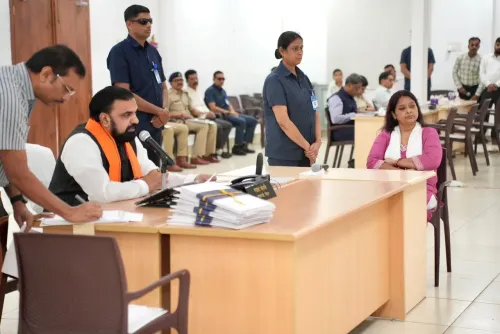
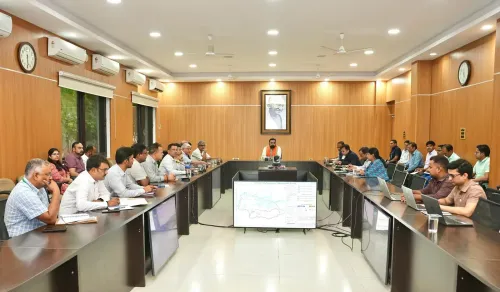
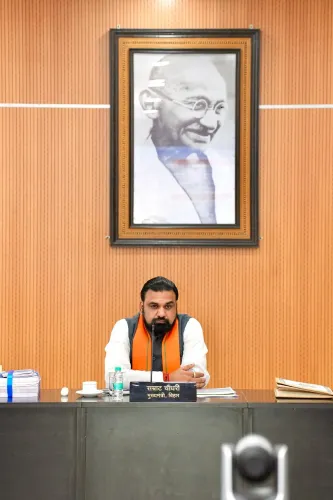
The Chief Minister's Office of Bihar announced on Saturday, June 13, 2026, that Chief Minister Nitish Kumar has directed state officials to ensure time-bound action on all pending proposals and schemes, emphasising that work must be completed swiftly and without delay.
The post, shared in Hindi, quoted the Chief Minister as instructing officials: 'Sabhi prastavon evam yojanaon par samayabaddh karvai sunishchit karte hue karyon ko teji se poorn kiya jaye' — ('All proposals and schemes must be acted upon in a time-bound manner and work completed at pace').
Context
Nitish Kumar, who has led Bihar as Chief Minister for the better part of two decades since 2005, has periodically convened review meetings with senior bureaucrats to track the status of development projects. Such directives are typically issued following assessments of administrative bottlenecks or slow-moving government schemes. Saturday's instruction follows this established pattern of top-down accountability drives.
Policy Backdrop
Bihar's governance framework has long revolved around structured programmes such as the Saat Nischay (Seven Resolves) initiative, launched in 2015, which targets youth employment, women's empowerment, and basic infrastructure delivery. The programme set measurable outcomes across sectors, making time-bound execution a core administrative commitment rather than a discretionary goal. Delays in scheme implementation have historically been a pressure point for the state government, given Bihar's development indicators relative to the national average.
The Chief Minister's renewed emphasis on speed and accountability signals an intent to tighten the execution pipeline across departments. Officials have been placed on notice to prevent proposals from languishing at any stage of the approval or implementation cycle.
Stakeholders and Impact
The directive directly concerns Bihar's state bureaucracy, including district-level officers and departmental heads responsible for translating government schemes into on-ground outcomes. For ordinary citizens — particularly beneficiaries of welfare and infrastructure programmes — faster execution translates into quicker access to roads, housing, scholarships, and livelihood support.
Civil society groups and development observers tracking Bihar's governance have noted that administrative efficiency reviews of this nature, when followed through with monitoring mechanisms, can meaningfully accelerate project completion rates. The broader beneficiary base includes rural households, women self-help groups, and youth covered under state employment schemes.
What's Next
Follow-up review meetings and progress reports on pending proposals are the immediate next steps to watch. The Chief Minister's Office is expected to track compliance with this directive through departmental status updates. Whether this instruction leads to a formal review calendar or targeted action on specific lagging schemes will determine its administrative impact in the weeks ahead.
Point of View
Their lasting impact depends on whether they are backed by structured monitoring and consequences for non-compliance. Bihar's development trajectory under Nitish Kumar has been built substantially on this model of announced resolve followed by review cycles. The real test, as always, will be whether this round of directives produces measurable progress on the ground before the next political milestone.
NationPress
27 Oct 2026
Frequently Asked Questions
What did Bihar CM Nitish Kumar instruct officials to do?
CM Nitish Kumar directed Bihar state officials to ensure time-bound action on all pending proposals and schemes and to complete work at a faster pace.
When did Bihar CM issue the scheme execution directive?
The directive was issued on Saturday, June 13, 2026 , and shared by the Chief Minister's Office of Bihar on X.
What is Bihar's Saat Nischay programme?
Saat Nischay (Seven Resolves) is a flagship Bihar government programme launched in 2015 targeting youth employment, women's empowerment, and basic infrastructure delivery across the state.
Who is affected by Nitish Kumar's time-bound scheme directive?
The directive directly affects Bihar's state bureaucracy and district officers, while citizens — including rural households, women's self-help groups, and youth — stand to benefit from faster scheme implementation.
What is the next step after CM Nitish Kumar's directive to officials?
Follow-up review meetings and departmental progress reports are expected to track compliance with the directive in the coming weeks.