CM Bhupendra Patel Hails Porbandar's Maniyaro Ras on Navratri
Synopsis
Gujarat Chief Minister Bhupendra Patel celebrated the Maher community of Porbandar on Navratri 2026, praising their Maniyaro Ras — an ancient warrior-rooted folk dance — as a living symbol of Gujarat's cultural pride and the Vibrant Gujarat identity.
Key Takeaways
Gujarat CM Bhupendra Patel posted praise for the Maniyaro Ras on 16 October 2026 during Navratri.
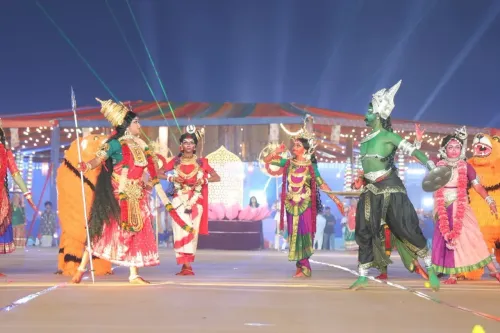
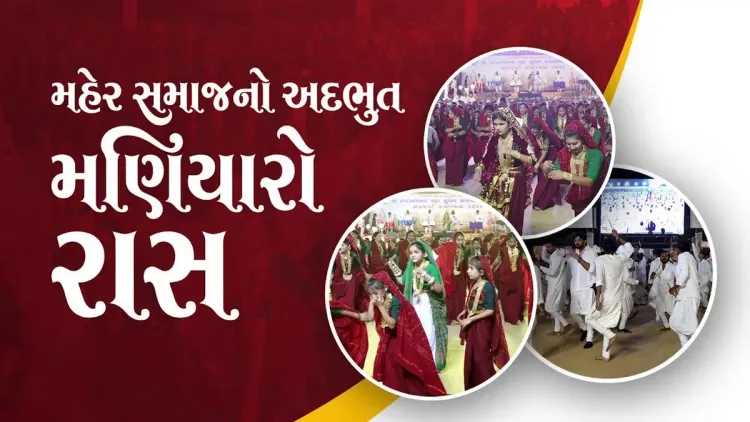
The Maher Samaj of Porbandar performs this traditional Ras dance with full costume, silver jewellery and dhol drumming.
The dance carries a martial heritage, reflecting the Maher community's warrior lineage in Saurashtra.
CM Patel linked the tradition to the Vibrant Gujarat identity, a state branding initiative running since 2003 .
The Maher community has preserved the form across generations without formal institutional support.
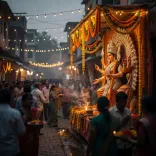
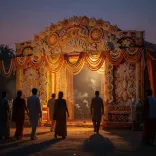
Thousands of members of the Maher community dressed in traditional attire, jewellery clinking, drums thundering — this is the Maniyaro Ras of Porbandar, and Gujarat Chief Minister Bhupendra Patel used the auspicious occasion of Navratri 2026 to celebrate it as a living testament to the state's folk heritage.
In a post on X on Friday, 16 October 2026, CM Patel wrote in Gujarati: 'શૌર્ય, સંસ્કાર અને સાંસ્કૃતિક ગૌરવનો જીવંત વારસો એટલે પોરબંदरना મહેર સમાજનો ભવ્ય મણિયારો રાસ' — 'The grand Maniyaro Ras of the Maher community of Porbandar is the living heritage of valour, culture and cultural pride.' He praised the community for keeping this ancient tradition intact even amid the currents of modernity, and signed off with the iconic salutation: Jai Jai Garvi Gujarat.
What makes Maniyaro Ras distinct
The Maniyaro Ras is not your typical Navratri Garba. Performed exclusively by the Maher Samaj — a community historically rooted in the Porbandar coastal belt of Saurashtra — the dance is accompanied by the deep, rhythmic beat of the dhol and performed in full traditional costume: layered garments, heavy silver ornaments, and headgear that carry centuries of community identity. The form has been passed down orally and through practice across generations, without formal institutional support.
What sets it apart further is the martial undertone embedded in its choreography — a reminder of the Maher community's warrior lineage. The word shaurya (valour) is not decorative in this context. It is stitched into the dance itself.
Porbandar's folk tradition on the Vibrant Gujarat map
Porbandar, Gujarat's coastal district and the birthplace of Mahatma Gandhi, carries outsized symbolic weight for the state. The district's Maher Samaj has been one of the more visible custodians of Saurashtra's living folk culture — precisely the kind of community-rooted tradition that the state has consistently amplified as part of its cultural identity since the Vibrant Gujarat initiative was launched in 2003. That initiative has always paired economic outreach with a pride-in-heritage message, and posts like CM Patel's during Navratri are a direct extension of that long-running cultural diplomacy.
Gujarat governments have made a consistent pattern of recognising community-level dance forms and festivals, especially during Navratri, as markers of distinct Gujarati identity amid rapid urbanisation. The Maher community's continued practice of Maniyaro Ras — without state scaffolding — makes it an unusually authentic data point in that story.
Navratri as Gujarat's cultural centrepiece
Navratri, the nine-night festival celebrated with Garba and Ras across Gujarat, is the state's single largest cultural event by participation. Saurashtra's regional variants — of which Maniyaro Ras is among the most visually distinctive — represent the diversity within that larger canvas. CM Patel's congratulations to the Maher Samaj for preserving this heritage 'generation after generation' signals official recognition without bureaucratic intervention: the community has done it on its own terms.
The kicker from his post says it plainly: 'Aa j chhe aapna Vibrant Gujaratni gauravvanti olakh' — 'This is the proud identity of our Vibrant Gujarat.' In four words, he fuses a centuries-old community ritual with a modern state brand. That is deliberate, and it lands.
Point of View
Community-specific, and explicitly tied to the Vibrant Gujarat brand. By spotlighting a community-preserved dance rather than a state-organised event, he amplifies an authenticity that top-down cultural schemes cannot manufacture. The framing of Maniyaro Ras as proof of 'Vibrant Gujarat's proud identity' continues a long BJP-Gujarat strategy of weaving folk heritage into modern state identity narratives. It also serves as quiet outreach to Saurashtra's Maher community ahead of any local political cycle.
NationPress
17 Oct 2026
Frequently Asked Questions
What is Maniyaro Ras?
Maniyaro Ras is a traditional folk dance performed by the Maher community of Porbandar in Gujarat during Navratri. Dancers wear traditional costumes and silver ornaments and perform to the rhythm of the dhol drum, embodying the community's cultural and warrior heritage.
Who are the Maher Samaj?
The Maher Samaj is a community historically rooted in the Porbandar coastal belt of Saurashtra, Gujarat. They are known for their warrior lineage and for preserving the Maniyaro Ras folk dance tradition across generations.
Why did CM Bhupendra Patel praise Maniyaro Ras?
CM Bhupendra Patel praised Maniyaro Ras on Navratri 2026 to recognise the Maher community's role in keeping an ancient folk tradition alive amid modernisation, tying it to Gujarat's cultural identity under the Vibrant Gujarat narrative.
What is Navratri and how is it celebrated in Gujarat?
Navratri is a nine-night Hindu festival dedicated to the goddess Durga. In Gujarat it is the state's largest cultural event, celebrated through Garba and Ras dances, with Saurashtra's regional variants like Maniyaro Ras adding distinct folk character.
What is the Vibrant Gujarat initiative?
Vibrant Gujarat is a state initiative launched in 2003 that has promoted Gujarat as an investment and cultural destination. Beyond economic outreach, it consistently links local folk customs and community heritage to the state's modern identity.