CM Bhupendra Patel Enrolls Children at Sanand School Festival
Synopsis
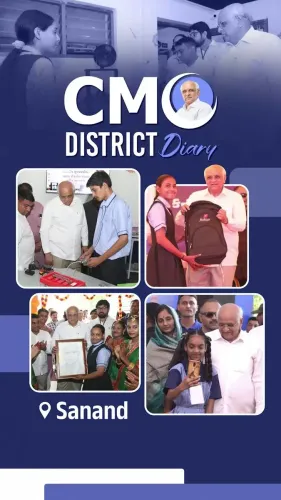
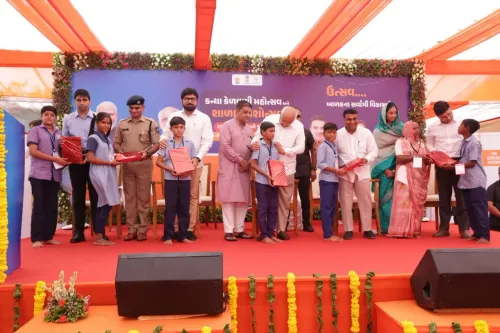
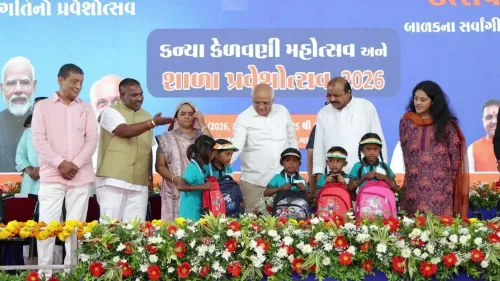
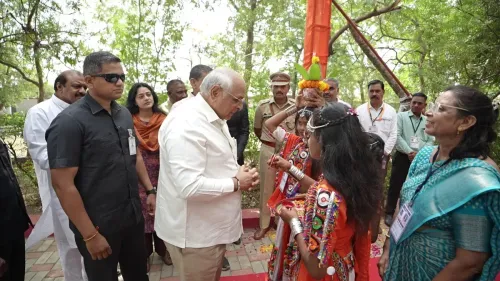
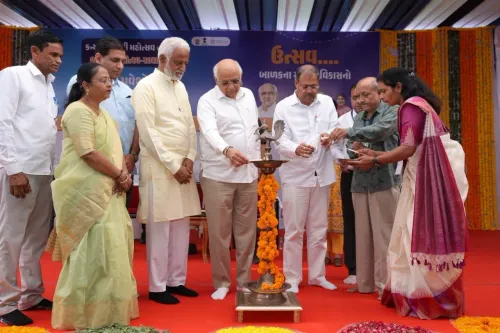
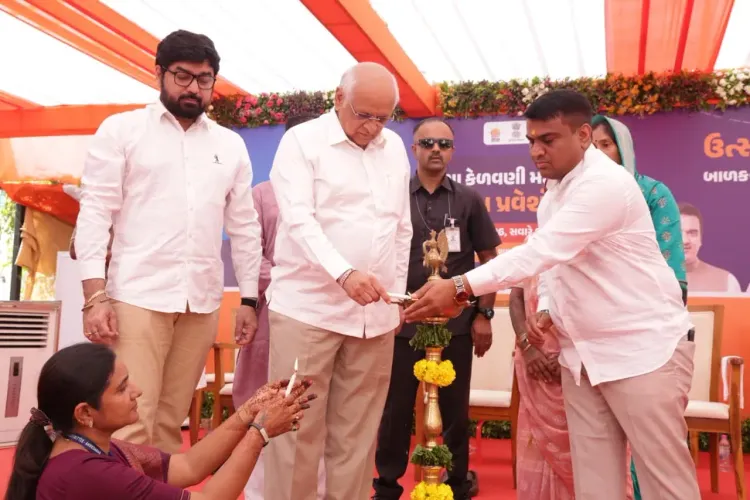
Chief Minister Bhupendra Patel personally enrolled anganwadi, Balvatika, and Grade-1 children at Adarsh Pimpan Primary School in Sanand Taluka on Day 3 of Gujarat's annual Shala Praveshotsav and Kanya Kelavani Mahotsav, distributing educational kits and felicitating high-achieving students on 25 June 2026.
Key Takeaways
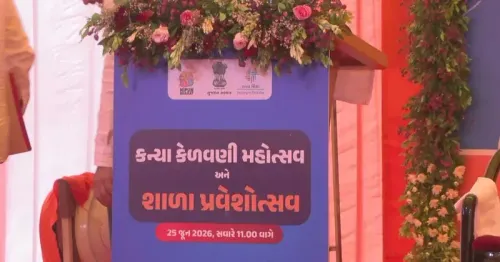
CM Bhupendra Patel participated in Day 3 of Shala Praveshotsav and Kanya Kelavani Mahotsav 2026 on 25 June 2026 .
The event was held at Adarsh Pimpan Primary School in Sanand Taluka, Ahmedabad district .
Educational kits were distributed to children from anganwadi centres, Balvatika, and Standard 1 .
Students who achieved distinction in education and other activities were felicitated by the Chief Minister.
Shala Praveshotsav is Gujarat's annual flagship drive to boost primary enrollment and address gender gaps, running since the early 2000s.
The programme aligns with Samagra Shiksha and NEP 2020 provisions for pre-primary Balvatika classes.
The Chief Minister's Office of Gujarat announced on Thursday, 25 June 2026 that Chief Minister Bhupendra Patel personally enrolled children into Adarsh Pimpan Primary School in Sanand Taluka on the third day of the Shala Praveshotsav and Kanya Kelavani Mahotsav, distributing educational kits to anganwadi, Balvatika, and Standard-1 students.
Context
The post states that CM Bhupendra Patel distributed educational kits — shaikshanik kit (educational kits) — to young children from anganwadi centres, Balvatika classes, and Grade 1, formally enrolling them into school as part of the ongoing festival. Students who had achieved distinction in education and other activities were also felicitated at the event.
The occasion marks the third consecutive day of the 2026 edition of the drive, tagged officially as #ShalaPraveshostav2026. The venue, Adarsh Pimpan Primary School, is located in Sanand Taluka of Ahmedabad district, an area that straddles both industrial corridors and rural settlements.
Policy Backdrop
Shala Praveshotsav and Kanya Kelavani Mahotsav are Gujarat's flagship annual school-enrollment festivals, launched in the early 2000s to raise primary enrollment rates and close gender gaps in foundational education. The programmes have continued every year and now operate alongside central frameworks including Samagra Shiksha and the National Education Policy 2020, which introduced the Balvatika pre-primary stage as a formal bridge to Grade 1.
The Right to Education Act, 2009, which mandates free elementary schooling, gave additional legislative weight to such drives. Gujarat's model of combining kit distribution, student recognition, and direct Chief Minister participation has become a template for signalling state-level priority on foundational literacy and gross enrollment ratios.
Stakeholders and Impact
The immediate beneficiaries are children entering the formal school system for the first time — from anganwadi (pre-school care centres) through Balvatika to Standard 1 — along with their rural and semi-urban families in Sanand Taluka. Anganwadi workers and primary school teachers are central operational stakeholders who facilitate kit handovers and enrollment documentation.
By honouring students who excelled in education and co-curricular activities, the event also reinforces retention incentives, signalling to parents — particularly those of girls — that the state recognises academic achievement at the community level. The Kanya Kelavani Mahotsav component specifically targets female literacy and school retention, a persistent focus of Gujarat's education policy.
What's Next
The drive is expected to continue across further districts and talukas in the coming days, consistent with the multi-day, multi-location format of previous years. The state education department is likely to compile enrollment figures and kit-distribution tallies for a mid-year review. Observers will watch whether the 2026 edition extends coverage to newer Balvatika cohorts in line with NEP 2020 implementation timelines.
Point of View
Giving the annual drive fresh policy relevance beyond its traditional optics. The simultaneous Kanya Kelavani Mahotsav component reflects an acknowledgement that female dropout risk begins at the point of first enrollment, not later. Whether this year's drive translates into sustained retention gains will depend on follow-through from district-level education machinery in the months ahead.
NationPress
24 Sept 2026
Frequently Asked Questions
What is Shala Praveshotsav in Gujarat?
Shala Praveshotsav is Gujarat's annual school-entry festival, held at the start of the academic year, where senior officials including the Chief Minister personally enroll children and distribute educational kits to boost primary enrollment and raise awareness about the importance of education.
What is Kanya Kelavani Mahotsav?
Kanya Kelavani Mahotsav is a statewide girls' education festival integrated with Gujarat's enrollment drive to improve female literacy rates and encourage parents to enroll and retain their daughters in school.
Where did CM Bhupendra Patel attend Shala Praveshotsav 2026?
On 25 June 2026 , CM Bhupendra Patel attended the event at Adarsh Pimpan Primary School in Sanand Taluka , Ahmedabad district, on the third day of the 2026 drive.
Who received educational kits at the Sanand event?
Children from anganwadi centres , Balvatika (pre-primary), and Standard 1 (Grade 1) received educational kits from Chief Minister Bhupendra Patel at the event.
What is Balvatika and how does it relate to this event?
Balvatika is a pre-primary class introduced under the National Education Policy 2020 to bridge early childhood care and formal schooling. Gujarat has incorporated Balvatika enrollment into its Shala Praveshotsav drive, reflecting the state's alignment with NEP 2020 implementation.