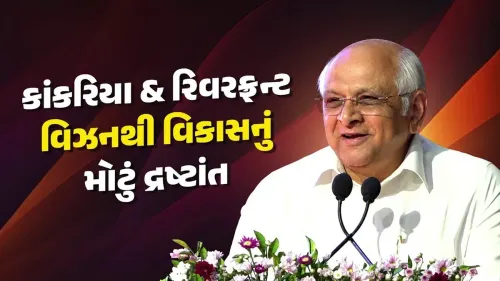
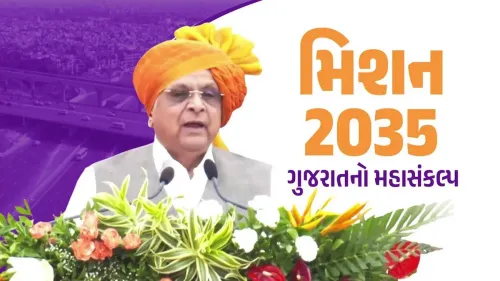
CM Bhupendra Patel Hails Ahmedabad's Urban Transformation
Synopsis
Gujarat CM Bhupendra Patel invoked Ahmedabad's world-class Kankaria and Sabarmati waterfront transformations to celebrate PM Modi's development vision, calling for quality maintenance and cleanliness under the #SevaSankalpAbhiyan campaign on September 24, 2026.
Key Takeaways
CM Bhupendra Patel posted on September 24, 2026 hailing Ahmedabad's urban development under the #SevaSankalpAbhiyan banner.
He cited Kankaria Lakefront and Sabarmati Riverfront as flagship examples of 'strong political will' converting vision into reality.
The Sabarmati River Front Development Corporation was established in 1997 , with major implementation accelerating after 2001 under then-CM Modi.
Kankaria Lake was redeveloped in the mid-2000s under the Ahmedabad Municipal Corporation 's urban renewal programme.
Patel credited 'strong financial management and sound planning' for placing Gujarat at the forefront of India's development rankings.
The CM also appealed for quality upkeep in public infrastructure and prioritisation of cleanliness in civic spaces.
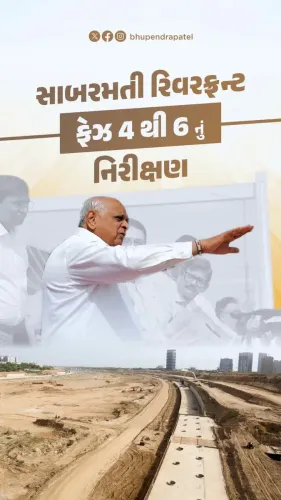
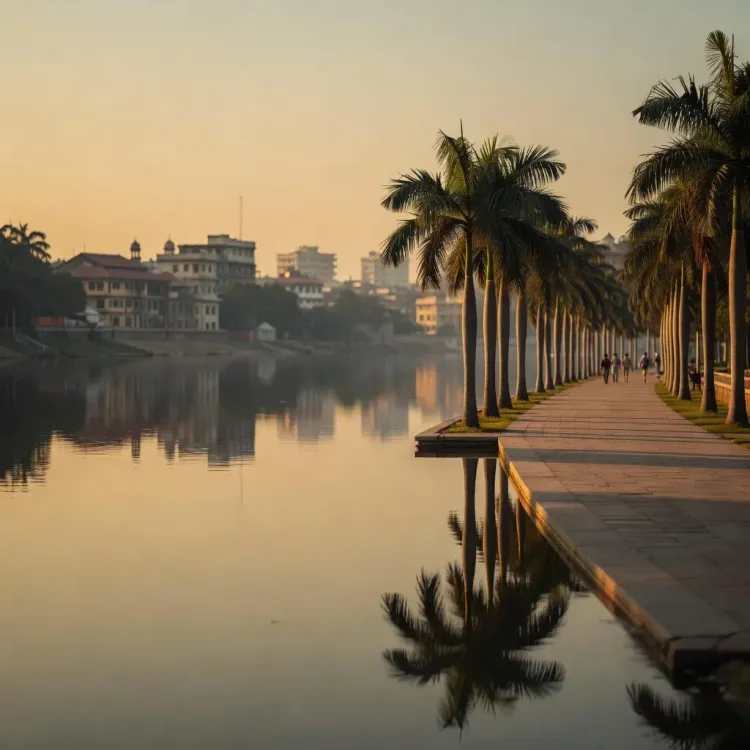
From the manicured shores of Kankaria Lakefront to the sculpted promenades of Sabarmati Riverfront, Gujarat Chief Minister Bhupendra Patel held up Ahmedabad's decade-long urban makeover as proof that political will can turn the improbable into concrete reality — posting his remarks on Thursday, September 24, 2026, under the hashtag #SevaSankalpAbhiyan.
Writing in Gujarati, the Chief Minister declared: 'વિકાસનો ઉત્સવ' — 'a festival of development' — framing Ahmedabad's transformation as the direct fruit of Prime Minister Narendra Modi's vision. 'The results of development have reached every sector, every city, every village, right up to the last person,' he wrote, pointing to the twin waterfront projects as 'the finest example that impossible tasks can be achieved with strong political will.'
Kankaria to Sabarmati: Two Projects, One Governing Argument
Kankaria Lake, a historic 15th-century reservoir in south Ahmedabad, was reborn in the mid-2000s under the Ahmedabad Municipal Corporation's urban renewal drive — ring-fenced with walkways, gardens, and leisure infrastructure that turned a neglected waterfront into a city landmark. The Sabarmati Riverfront Development Corporation, established in 1997, gathered serious momentum after 2001, eventually reclaiming and landscaping kilometres of riverbank into promenades, event lawns, and commercial nodes that now anchor Ahmedabad's identity as a planned metropolis.
Both projects carry the fingerprints of Narendra Modi's tenure as Gujarat's Chief Minister from 2001 to 2014, and the BJP has consistently deployed them as signature exhibits of governance-through-infrastructure. CM Patel continued that tradition Thursday, adding that 'strong financial management and sound planning' have placed Gujarat at the forefront of India's development rankings.
Quality and Cleanliness: Patel's Call to Citizens
Beyond the celebratory tone, the Chief Minister folded in a civic appeal — urging that quality be maintained in every development project, and that cleanliness be prioritised in public spaces. The appeal was embedded in the broader #SevaSankalpAbhiyan campaign framing, positioning citizen participation as the next layer of governance after physical infrastructure is built.
It is a calculation Gujarat's ruling establishment has made repeatedly: visible urban transformation builds political capital, but sustaining it requires behavioural buy-in from residents. The riverfront and lakefront, heavily photographed and widely visited, are the state's most legible argument that the two can go together.
Gujarat's Urban Brand and What It Signals
Ahmedabad — India's first city to receive UNESCO World Heritage City status, in 2017 — has become the physical centrepiece of the Gujarat development narrative that travels with PM Modi to every national and international platform. For CM Patel, reiterating that story on a public platform is both a governance statement and a reinforcement of the ideological continuum between the state capital and New Delhi.
The next test will be whether the #SevaSankalpAbhiyan push translates into measurable cleanliness and quality benchmarks — or remains an aspirational hashtag. Ahmedabad's waterfronts are world-class. Keeping them that way is the harder half of the promise.
Point of View
Patel ensures the claim is immediately verifiable by citizens rather than abstract. The citizen-participation appeal embedded in #SevaSankalpAbhiyan is also significant: it attempts to extend ownership of development outcomes beyond the state apparatus to voters themselves. Longer-term, how Gujarat scores on independent urban quality and sanitation audits will determine whether these waterfronts remain political assets or become accountability pressure points.
NationPress
24 Sept 2026
Frequently Asked Questions
What is the Sabarmati Riverfront project in Ahmedabad?
The Sabarmati Riverfront is a major urban redevelopment initiative that transformed the banks of the Sabarmati river in Ahmedabad into landscaped promenades, event spaces, and commercial areas. The Sabarmati River Front Development Corporation was established in 1997, with large-scale public-space creation accelerating after 2001.
What is Kankaria Lakefront and when was it redeveloped?
Kankaria Lakefront is a historic lake area in south Ahmedabad that was redeveloped in the mid-2000s under the Ahmedabad Municipal Corporation's urban renewal programme, adding walkways, gardens, and leisure infrastructure around the 15th-century reservoir.
What is #SevaSankalpAbhiyan?
#SevaSankalpAbhiyan is a campaign hashtag used by Gujarat CM Bhupendra Patel in the context of citizen-oriented appeals for quality upkeep and cleanliness in public infrastructure. Specific details of the full campaign cannot be independently confirmed from established public records.
Why does Gujarat BJP frequently cite Ahmedabad's waterfront projects?
The BJP has consistently used the Kankaria Lakefront and Sabarmati Riverfront redevelopments as signature exhibits of governance quality and financial discipline — both projects were advanced significantly during PM Modi's tenure as Gujarat Chief Minister between 2001 and 2014.
What did CM Bhupendra Patel say about Gujarat's development on September 24, 2026?
CM Patel said development's fruits had reached 'every sector, every city, every village, right up to the last person' as a result of PM Modi's vision, and credited strong financial management and sound planning for placing Gujarat at the forefront of India's development. He also urged citizens to maintain quality in projects and prioritise cleanliness.