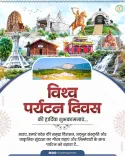
CM Bhupendra Patel Pitches Gujarat on World Tourism Day
Synopsis
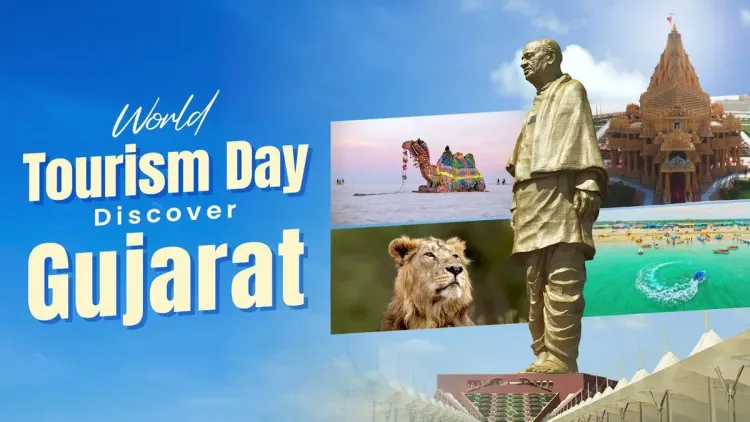
On World Tourism Day 2026, Gujarat Chief Minister Bhupendra Patel highlighted the state's UNESCO-listed sites, Statue of Unity, Gir's Asiatic lions, and Rann of Kutch, calling for sustainable tourism that generates local employment while preserving Gujarat's natural and cultural heritage.
Key Takeaways
World Tourism Day, 27 September 2026 : CM Bhupendra Patel used the occasion to promote Gujarat's tourism assets and call for sustainable travel.
Gujarat holds two UNESCO World Heritage inscriptions — Ahmedabad (city, 2017) and Dholavira (archaeological site, 2021).
The Statue of Unity in Narmada district, inaugurated in October 2018 , is the world's tallest statue at 182 metres and anchors the state's tourism pitch.
Gir National Park is the sole wild habitat of Asiatic lions, giving Gujarat a conservation tourism draw no other Indian state can replicate.
Patel framed tourism as a driver of cultural exchange, local employment, and global unity — linking heritage assets to an economic argument.
The Chief Minister called explicitly for environment-friendly, sustainable tourism as Gujarat expands its global visitor footprint.
On World Tourism Day, 27 September 2026, Gujarat Chief Minister Bhupendra Patel turned the global occasion into a pointed pitch for his state — invoking everything from the world's tallest statue to a salt desert that stretches to the horizon, and calling on citizens to embrace sustainable travel as both a civic duty and an economic engine.
Writing in Gujarati, the Chief Minister framed tourism as far more than leisure: 'પ્રવાસન એ આનંદપ્રમોદની સાથોસાથ સંસ્કૃતિઓના આદાન-પ્રદાન, સ્થાનિક રોજગારીના સર્જન અને વૈશ્વિક એકતાનો મજબૂત સેતુ છે' — 'Tourism is a strong bridge not only for enjoyment but for cultural exchange, local employment creation, and global unity.' That framing places Gujarat's heritage assets squarely inside a jobs-and-growth argument, not merely a feel-good one.
Gujarat's UNESCO double — and what it took to get there
Patel's roll-call of attractions is anchored by two UNESCO World Heritage inscriptions that required years of documentation and advocacy. Ahmedabad became India's first UNESCO World Heritage City in 2017, recognised for its historic walled city, step-wells, and layered urban fabric stretching back to the fifteenth century. Four years later, Dholavira — the Indus Valley Civilisation site in the Rann of Kutch — joined the list in 2021, giving Gujarat a second global stamp of archaeological significance. Two UNESCO inscriptions in one decade is a credential few Indian states can match.
The Statue of Unity in Narmada district, inaugurated in October 2018 as the world's tallest statue at 182 metres, was always conceived as a tourism magnet alongside its symbolic tribute to Sardar Vallabhbhai Patel. It draws millions of visitors a year and anchors the state's pitch to domestic and international travellers alike. Patel's post names it first — deliberately.
Gir's lions, Kutch's white sands, and a tradition built into the message
Gir National Park, the sole wild habitat of Asiatic lions, adds a conservation dimension that no other Indian state can replicate. The Rann of Kutch, with its seasonal white salt desert and the Rann Utsav festival, has become a cornerstone of Gujarat's domestic tourism calendar. Together these sites form a circuit that spans ecology, archaeology, spirituality, and modern infrastructure — giving the state a diversified offer rare in any single geography.
The Chief Minister's invocation of 'Atithi Devo Bhava' — 'the guest is god' — is a deliberate cultural signal, connecting Gujarat's brand to a Sanskrit tradition of hospitality that the state has made central to its tourism identity for over a decade. Gujarat's state tourism policy frameworks since 2015 have explicitly emphasised heritage circuits and sustainable visitor growth, so this message lands inside an established policy posture, not as a one-off.
The sustainability call — and what it actually means for visitors
Patel closes with an explicit pledge to adopt environment-friendly, sustainable tourism — and that word choice matters. Gujarat's UNESCO-listed sites face the classic heritage dilemma: more visitors mean more revenue but also more pressure on fragile structures and ecosystems. A Dholavira that draws global footfall must also be protected from it. The call to 'preserve our heritage while taking Gujarat to new heights in global tourism' is, in effect, an acknowledgement of that tension — and a signal to the tourism industry and conservation bodies that the two goals must move together.
Gujarat's tourism ambitions are increasingly calibrated to a global audience. The state that put the world's tallest statue on a riverbank is now asking that same world to come responsibly — and to leave the salt flat and the lion habitat intact for the next generation of travellers.
Point of View
A record-breaking infrastructure project, and a wildlife conservation story into a single, emotionally resonant pitch. The sustainability framing is politically significant — it signals to both heritage bodies and environmental groups that Gujarat is not chasing visitor numbers at any cost. This fits a broader BJP pattern of linking cultural nationalism with economic growth, using sites like the Statue of Unity as proof-points that aspiration and heritage can be commercially scaled. The message also quietly positions Gujarat as India's most credentialed tourism state ahead of any new policy or budget cycle.
NationPress
27 Sept 2026
Frequently Asked Questions
Why did Gujarat CM Bhupendra Patel post about tourism on 27 September?
27 September is World Tourism Day , observed annually by the United Nations. CM Patel used the occasion to promote Gujarat's tourism landmarks and call for sustainable travel practices.
What is the Statue of Unity and where is it located?
The Statue of Unity is the world's tallest statue at 182 metres , depicting Sardar Vallabhbhai Patel. It is located in Narmada district, Gujarat , and was inaugurated in October 2018 .
How many UNESCO World Heritage Sites does Gujarat have?
Gujarat has two UNESCO World Heritage inscriptions : Ahmedabad , designated India's first UNESCO World Heritage City in 2017 , and Dholavira , an Indus Valley Civilisation site inscribed in 2021 .
Where can I see Asiatic lions in India?
Gir National Park in Gujarat is the sole wild habitat of Asiatic lions in the world. It is a protected area and a major wildlife tourism destination.
What is 'Atithi Devo Bhava' and why does Gujarat use it?
Atithi Devo Bhava is a Sanskrit phrase meaning 'the guest is god' . Gujarat has made it central to its tourism brand for over a decade, framing the state's hospitality tradition as a cultural identity and competitive advantage.