CM Pema Khandu Hails PM Modi's Direct Connect with Students
Synopsis
Arunachal Pradesh Chief Minister Pema Khandu on 24 July 2026 lauded Prime Minister Narendra Modi for directly engaging with students, saying genuine human connection outweighs grand optics. The remarks echo the BJP government's sustained youth outreach strategy anchored by initiatives like Pariksha Pe Charcha and the National Education Policy 2020.
Key Takeaways
CM Pema Khandu praised PM Modi on 24 July 2026 for directly engaging with students, sharing a video on X.
Khandu said 'no grand optics or carefully crafted visuals' can replace genuine human connection and direct interaction.
PM Modi 's Pariksha Pe Charcha , launched in 2018 , is the flagship annual programme for direct student dialogue on exam stress and education concerns.
The National Education Policy 2020 underpins the government's broader commitment to transparency and holistic development in education.
The endorsement reflects a wider BJP pattern of state Chief Ministers amplifying the Prime Minister's youth outreach moments.
Arunachal Pradesh 's young demographic makes youth-focused governance messaging especially salient for CM Khandu 's political communication.
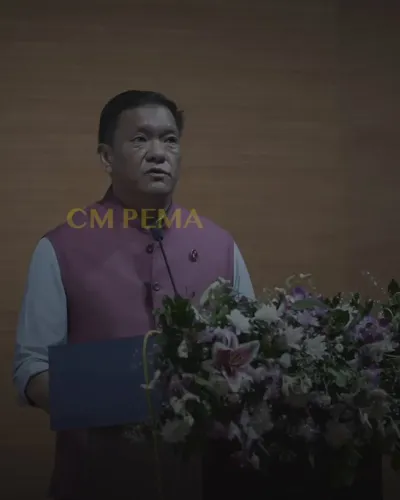
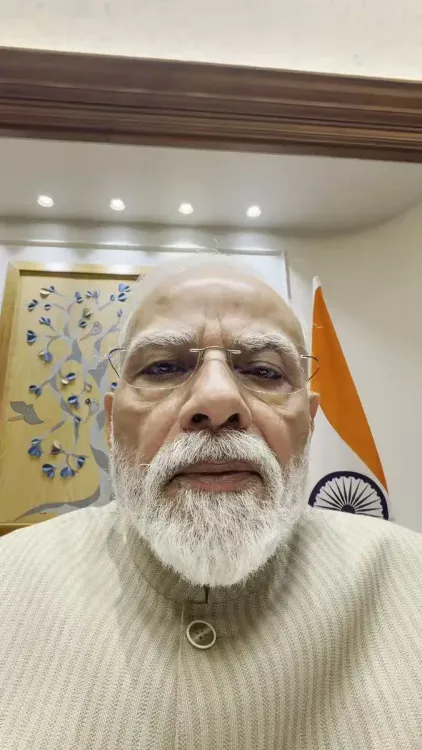
Arunachal Pradesh Chief Minister Pema Khandu on Friday, 24 July 2026, praised Prime Minister Narendra Modi for engaging directly with young students, calling the interaction a demonstration of 'the power of meaningful conversation and human connection.' Khandu's remarks, shared on X, underscored what he described as the Prime Minister's sustained effort to connect with India's youth beyond formal ceremonies or scripted visuals.
Context
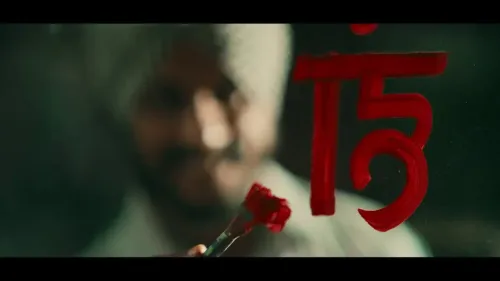
In his post, CM Khandu wrote that 'no grand optics or carefully crafted visuals can replace the power of genuine human connection and direct interaction.' He framed the moment as evidence of PM Modi's 'continued effort to connect with students, understand their concerns, and reaffirm the government's commitment towards building a fair and transparent system for the youth of India.' The post was accompanied by a video, though the specific event or venue was not identified in the post itself.
The remarks come against the backdrop of the Central government's repeated emphasis on accessible governance and youth-focused outreach — a pattern that has defined much of PM Modi's public communication strategy since 2014.
Policy Backdrop
PM Modi's direct engagement with students is most closely associated with Pariksha Pe Charcha, an annual programme launched in 2018 that brings the Prime Minister face-to-face with students to discuss examination stress, academic pressure, and the broader education ecosystem. The initiative was designed to signal accessibility and to address grievances around exam fairness — concerns that have periodically surfaced in public discourse around competitive examinations.
The National Education Policy (NEP) 2020 further reinforced this direction, introducing reforms aimed at holistic development, transparency, and skill-building. Together, these initiatives form a policy arc that positions direct student engagement not merely as optics but as a governance tool for shaping education reform priorities.
Alongside Pariksha Pe Charcha, programmes such as Mann Ki Baat — the Prime Minister's monthly radio address — reflect a broader communications architecture built around unmediated outreach to citizens, bypassing conventional institutional channels.
Stakeholders and Impact
The primary beneficiaries of such interactions are India's student community, particularly those preparing for competitive examinations who have, in recent years, raised concerns about transparency and fairness in testing systems. Direct engagement from the highest executive office carries symbolic weight, signalling that student concerns are heard at the top of the government hierarchy.
CM Khandu's endorsement also reflects a pattern among BJP-governed states, where Chief Ministers frequently amplify the Prime Minister's public outreach moments to reinforce a shared governance narrative. For Arunachal Pradesh — a frontier state with a young demographic — the message of a government committed to youth welfare carries particular resonance.
What's Next
Subsequent editions of Pariksha Pe Charcha will be closely watched as indicators of whether the government deepens its engagement on specific student grievances, including calls for reform in examination regulatory frameworks. Parliamentary discussions on education legislation and any amendments to examination oversight bodies are also expected to reflect the priorities surfaced through such direct interactions.
As the BJP continues to position youth outreach as a pillar of its governance identity ahead of state and national electoral cycles, moments like these — amplified by party leaders such as CM Khandu — are likely to remain a consistent feature of the political communication landscape.
Point of View
' Khandu implicitly contrasts the current administration's style with a more distant, ceremonial mode of governance — a framing that serves electoral as much as administrative purposes. The timing, mid-2026, places this within a period when the ruling party has strong incentive to consolidate its youth-centric narrative ahead of upcoming electoral cycles. The reference to 'a fair and transparent system' is also notable: it directly addresses anxieties around examination integrity that have been politically charged in recent years, suggesting the outreach is calibrated to specific pressure points in public opinion.
NationPress
24 Jul 2026
Frequently Asked Questions
Why did CM Pema Khandu praise PM Modi's student interaction?
CM Pema Khandu praised the interaction because he sees it as evidence of PM Modi's genuine commitment to engaging with young people beyond scripted events, calling it a demonstration of 'meaningful conversation and human connection.'
What is Pariksha Pe Charcha?
Pariksha Pe Charcha is an annual programme launched by PM Modi in 2018 in which he engages directly with students to discuss examination stress, academic concerns, and education system issues.
What is the National Education Policy 2020?
The National Education Policy 2020 is a comprehensive reform framework approved by the Indian government that focuses on holistic development, transparency, and skill-building in the education system.
How does PM Modi engage with students?
PM Modi engages with students primarily through Pariksha Pe Charcha sessions and broader formats like Mann Ki Baat, designed to enable direct, unmediated dialogue between the Prime Minister and citizens including young people.
What role does Pema Khandu play in BJP?
Pema Khandu is the Chief Minister of Arunachal Pradesh and a senior BJP leader who frequently aligns his public communication with the party's national governance narrative.