Uddhav Thackeray's three-pronged Sena (UBT) revival: Ram, NEET, courts
Synopsis
With six Lok Sabha MPs gone to the Shinde camp, Uddhav Thackeray is not playing defence — he is attacking the BJP on its own Hindutva ground, rallying youth over NEET, and keeping rebel MPs in legal jeopardy. Whether this three-front gambit can hold a fractured party together before the BMC polls is the defining question of Maharashtra's most consequential political battle.
Key Takeaways
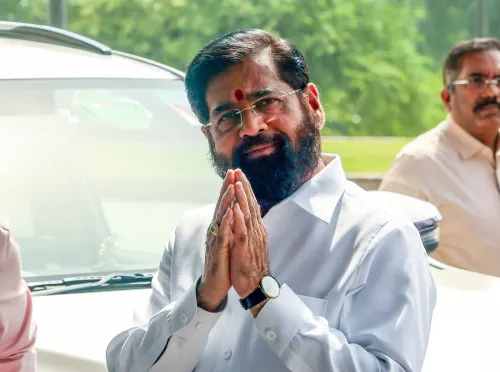
Six Lok Sabha MPs defected from Shiv Sena (UBT) to the Eknath Shinde faction, triggering an existential crisis for Uddhav Thackeray .
Thackeray launched a 'Ram Raksha' campaign questioning financial accountability in Shri Ram Temple donations, targeting the BJP 's core Hindutva base.
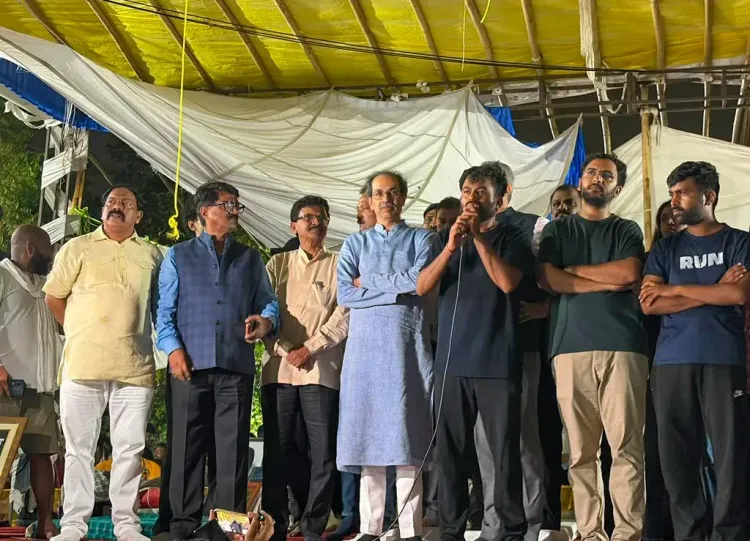
He visited Jantar Mantar to condemn the police lathi-charge on NEET paper leak protesters, broadening the party's appeal to youth and urban voters.
The Supreme Court declined an interim stay on 22 July 2026 but issued show-cause notices to the Speaker , Secretariat , and rebel MPs under the anti-defection law .
A potential realignment with Raj Thackeray could consolidate the Marathi vote ahead of BMC and state-level elections.
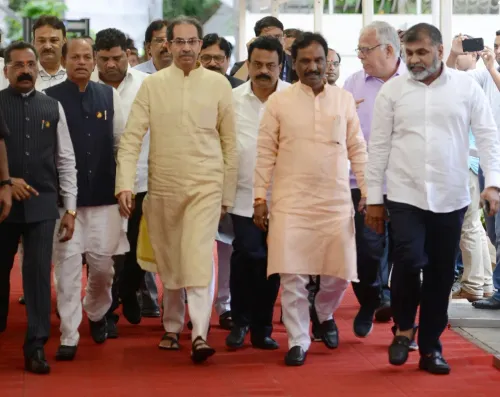
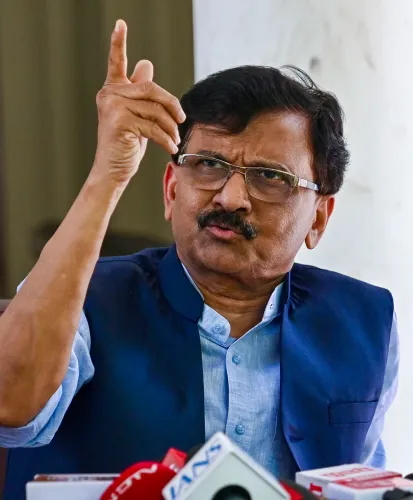
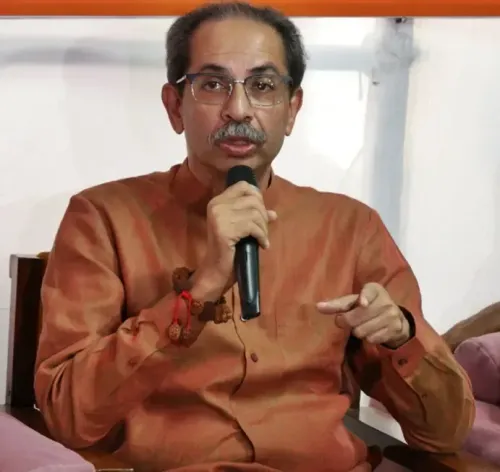
Shiv Sena (UBT) chief Uddhav Thackeray is mounting a three-front counter-offensive to arrest the party's slide following the defection of six Lok Sabha MPs to the Eknath Shinde faction — combining ideological reclaiming on Hindutva turf, issue-based youth mobilisation, and constitutional litigation in the Supreme Court. Rather than retreating into a defensive posture, the UBT faction is attempting to seize political momentum from the ruling BJP-led Mahayuti alliance.
Reclaiming the Ram Narrative
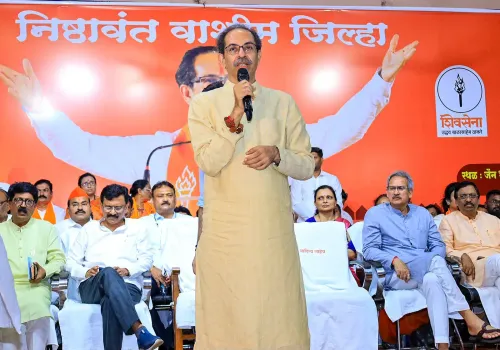
Thackeray has launched a statewide 'Ram Raksha' campaign and a 'BJP-free Ram movement', directly targeting alleged financial irregularities in Shri Ram Temple donations — including questions over accountability for silver bricks contributed by devotees. This is a calculated strike at the Bharatiya Janata Party (BJP)'s core ideological stronghold: Hindutva. By questioning the financial integrity of the Ram Temple movement, Thackeray has forced the BJP onto the defensive on its own terrain.
Challenging the BJP in its organisational bastion of Nagpur is designed to signal to traditional Sena voters that the UBT faction has not abandoned its ideological roots despite the political realignments of recent years.
Youth Mobilisation Beyond Ethno-Nationalism
In a notable tactical shift, Thackeray visited Jantar Mantar in New Delhi to stand with protesters against the NEET paper leak, condemning the police lathi-charge on demonstrators and comparing the ruling alliance's conduct to that of Colonial rulers. The party has also set up free legal aid cells for affected students.
This marks a deliberate broadening of the UBT's traditional hyper-ethno-nationalist appeal toward younger, urban, and middle-class voters. By invoking governance failures in education and exam integrity — and drawing comparisons to past democratic benchmarks under Indira Gandhi and Manmohan Singh — Thackeray is framing the Mahayuti government as autocratic, seeking traction among neutral and youth voters hit by systemic administrative failures.
Constitutional Battle in the Supreme Court
On the legal front, the Supreme Court declined to grant an interim stay on 22 July 2026, but the issuance of show-cause notices to the Speaker, the Secretariat, and the rebel MPs keeps a legal sword hanging over the Shinde faction. The litigation tests the boundaries of the anti-defection law — specifically, the distinction between a 'split' and a 'merger' when the original party retains its independent legal identity.
Politically, the court proceedings frame the six defecting MPs as opportunists who betrayed the public mandate under which they were elected. However, political observers note that constitutional litigation in the Supreme Court often stretches over extended periods, and without immediate legal relief, ground realities — including recognised mergers — can become practically difficult to reverse before the next major election cycle.
The Raj Thackeray Equation
Analysts point to a potential realignment between Uddhav Thackeray and Raj Thackeray as a significant variable. Historically, the split between the two cousins fragmented the traditional Sena voter base across the Mumbai-Thane-Konkan belt. A reunion, or even a tactical understanding, could consolidate the Marathi vote ahead of Brihanmumbai Municipal Corporation (BMC) polls and state-level contests — presenting a unified regional front that national parties would find harder to divide.
Vulnerabilities and the Road Ahead
Despite the aggressive posture generating immediate momentum, the UBT faces structural vulnerabilities. The continued defection of elected MPs and MLAs undermines organisational stability at the constituency level, even as public sympathy reportedly tilts toward the UBT faction. Political observers argue that balancing hardline Hindutva messaging through the Ram Temple campaign with broader social and youth issues — while managing coalition partners who lean secular — requires careful calibration to avoid alienating either constituency.
Nonetheless, Thackeray's recent actions signal a party refusing to be reduced to regional irrelevance. By weaving together ideological counter-attacks, constitutional challenges, youth mobilisation, and tactical regional unity, the UBT is attempting to reframe the broader conflict as a battle for democratic accountability and local identity against centralised power.
Point of View
Meanwhile, is a slow clock — legal timelines rarely align with electoral ones, and the Shinde faction's ground organisation will keep consolidating while the cases proceed. The real test is the BMC election: if Thackeray can hold Mumbai, the defections become a manageable wound; if he cannot, the litigation and the campaigns will read as the final acts of a party in managed decline.
NationPress
24 Jul 2026
Frequently Asked Questions
Why are six Lok Sabha MPs leaving Shiv Sena (UBT)?
Six Lok Sabha MPs defected from the Shiv Sena (UBT) to join the Eknath Shinde faction, reportedly drawn by the Shinde group's alignment with the ruling BJP-led Mahayuti coalition. The defections have posed an existential threat to Uddhav Thackeray's faction, weakening its parliamentary strength.
What is the 'Ram Raksha' campaign launched by Uddhav Thackeray?
The 'Ram Raksha' campaign is a statewide initiative by Shiv Sena (UBT) demanding financial accountability for donations to the Shri Ram Temple in Ayodhya, including questions over silver bricks contributed by devotees. It is framed as a 'BJP-free Ram movement', targeting the BJP's core Hindutva voter base.
What is the Supreme Court case involving Sena (UBT) rebel MPs?
Shiv Sena (UBT) has challenged the defection of rebel MPs in the Supreme Court under the anti-defection law, arguing that the departures constitute a split rather than a legitimate merger. The court declined an interim stay on 22 July 2026 but issued show-cause notices to the Speaker, the Secretariat, and the rebel MPs.
Why did Uddhav Thackeray visit Jantar Mantar over the NEET issue?
Thackeray visited Jantar Mantar in New Delhi to stand in solidarity with students protesting the NEET paper leak and condemn a police lathi-charge on demonstrators. The move is part of a broader strategy to appeal to younger, urban, and middle-class voters beyond the party's traditional Hindutva base.
How could a Uddhav-Raj Thackeray realignment affect Maharashtra politics?
A tactical understanding between Uddhav and Raj Thackeray could consolidate the Marathi vote in Mumbai, Thane, and the Konkan belt, where the historic split between the two cousins had fragmented the traditional Sena electorate. Such a bloc would be harder for national parties to divide, particularly ahead of the Brihanmumbai Municipal Corporation (BMC) polls.